Private company in Bengaluru found selling bulk voter data to candidates in Karnataka Assembly polls
Cyber Crime Branch officials file FIR against company
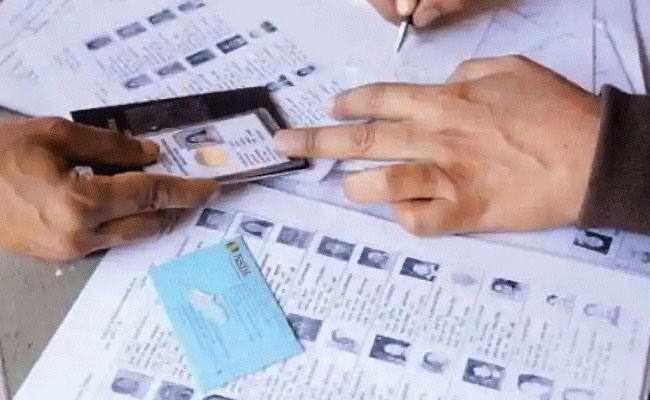
New Delhi: At the threshold of the Assembly elections in the state, a private firm in Bengaluru has been found selling voter data in bulk.
While the owners are yet to be traced, the company has been found advertising on its website openly that it has ‘sensitive information’ related to voters, including their mobile phone numbers and WhatsApp numbers, reports The News Minute.
The potential clients are given login access by the company and can purchase the voters’ information and other services from the website, for as low a price as Rs 25,000.
Investigation on the domain details of the website revealed that it was registered in Delhi in April this year, but all other details on the website had been redacted by the company.
The Election Commission has been investigating if the company could have been used to bribe the voters to provide such information, by crediting funds into the voters’ accounts through the Unified Payments Interface (UPI).
The matter of the data sale by the company came to light when Raju, an independent candidate, informed the EC after he was called on phone and offered voter data for a price. Raju spoke to Srinivas, the officer in-charge of enforcement of the Model Code of Conduct, about the matter. The officer, in turn, roped in the police, who registered a complaint on April 24.
An FIR has also been registered by the Cyber Crime Branch (Southeast Division) officers in Bengaluru against the private company in this regard.
On logging in to the website of the private company, it was found that the dashboard declared that the website contained data of up to 6.5 lakh voters, including 3.45 lakh male, 2.93 lakh female and 5,600 other voters. It is yet to be confirmed about the total data that the company has and if the data pertains to specific constituencies, says The News Minute.
Sources in the EC have expressed concern that the format of the data being sold is similar to what is stored on Eronet, the government portal with the EC data on voters and which only election officials can access.
This is the second voter scam discovered in Karnataka in the last six months. In November 2022, ‘Chilume’, a private company, was found to have collected personal data from lakhs of Bengaluru voters. The company staff had posted it as officials of the Bruhat Bengaluru Mahanagara Paliker (BBMP).
Let the Truth be known. If you read VB and like VB, please be a VB Supporter and Help us deliver the Truth to one and all.
Edgy Real Madrid president Florentino Pérez calls for new elections at club and seeks another term
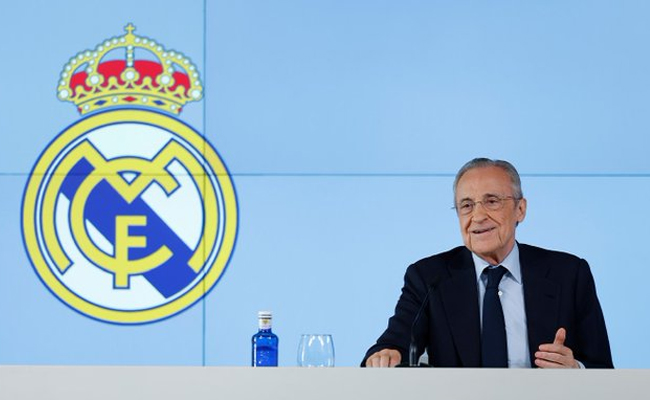
Madrid (AP): An edgy Real Madrid president Florentino Pérez confronted journalists in a rare news conference on Tuesday and claimed he was the victim of an “organized campaign” to unseat him.
Pérez called for new club elections and told his opponents to present themselves and challenge him and his board of directors.
Usually calm and soft-spoken, Pérez appeared agitated and got into discussions with journalists during the hastily scheduled news conference at the club's training center, two days after Madrid lost 2-0 at Barcelona and saw its Catalan rival clinch its second straight Spanish league title.
“I made this decision because of this absurd situation of campaigns against me,” the 79-year-old Pérez said. “The results haven't been the greatest, but that has happened other times before. But they are taking advantage to attack me.”
He said the campaign against him was being “orchestrated by bad journalists and non journalists.”
“Some journalists and people want to destroy Real Madrid,” he said. “I'll always defend the interest of the Madrid members.”
The president spoke after a meeting of the club's board of directors.
Madrid has endured a second consecutive season without a major trophy, despite having France star Kylian Mbappé in the squad.
Pérez did not speak about the team's results, saying his appearance was solely to defend Madrid club members from attacks. He did not want to talk about a potential coaching change when asked about the possibility of José Mourinho returning next season.
Pérez said the leak of the fighting between players during training last week — which led to Federico Valverde and Aurélien Tchouaméni being fined 500,000 euros ($586,000) each — was worse than the actual fight itself.
“It's not the first time that players fight with each other,” Pérez said. “It happens almost every season. But someone leaked it for the first time. And we know who it was. It should have stayed within the club.” He gave no further details.
Pérez dismissed rumors that he was tired of the job, or sick, saying they had been spread by his detractors.
“They said I have cancer and that it was terminal," he said. “It was the most undignified thing that has ever happened to me. They said I didn't go out, that I couldn't walk.”