Priyank Kharge claims VB-G RAM G act undermines MGNREGA's rights-based framework
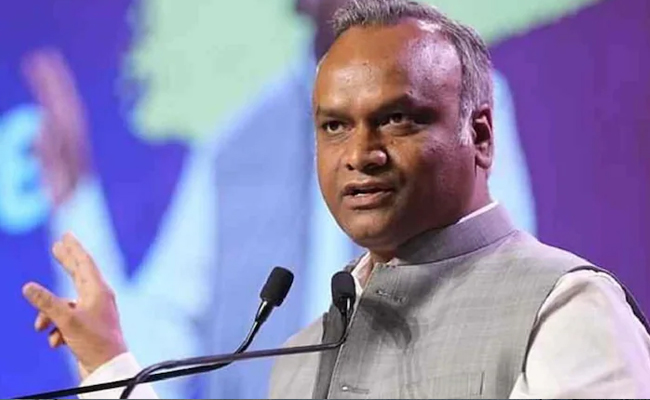
Bengaluru (PTI): Karnataka Minister Priyank Kharge on Monday strongly criticised the Union government's VB-G RAM G act 2025 that replaced MGNREGA, claiming that changes in the new legislation weaken and undermine the previous act's core promise as a rights-based rural employment programme.
In a post on social media platform 'X', Priyank Kharge said the act would gradually make the scheme untenable by transforming it from a demand-driven legal entitlement into a supply-driven arrangement, thereby stripping citizens of their right to demand work.
He observed that while the Centre would retain most decision-making powers, states would be forced to shoulder the bulk of the financial and administrative burden.
ALSO READ: Adani Group emerges lowest bidder for Bengaluru’s 16.75-km tunnel road project
"Much has been spoken about the VB-G RAM G Bill. But beyond everything else, these changes will slowly make the scheme untenable and eventually kill the idea of a rights-based rural employment guarantee," Priyank Kharge, son of Congress president Mallikarjun Kharge, said in his post.
The minister, who holds Rural Development, Panchayat Raj and Information Technology and Bio-technology portfolio, further contended that the proposed changes amounted to a dilution of fiscal federalism, particularly at a time when states are already facing shrinking financial resources.
He pointed out that tax devolution to states had fallen from 34 per cent to 31 per cent, far below the 42 per cent recommended by the Finance Commission, even as centrally sponsored schemes were becoming increasingly restrictive.
By centralising powers and curbing local planning and decentralised governance, the act would weaken the 73rd Constitutional Amendment, which grants constitutional status to Panchayati Raj Institutions, Kharge warned.
According to him, such centralisation would erode the role of local bodies that are critical to the effective implementation of MGNREGA on the ground.
Questioning the Union government's rationale, the Karnataka minister asked how the legislation could be termed a reform when it failed to meaningfully strengthen the scheme for rural workers who depend on it for livelihood security.
He maintained that reducing a legal right to work into what he described as a 'token centrally sponsored scheme', would defeat the very purpose of MGNREGA. Mallikarjun Kharge on Sunday slammed the Centre for doing away with MGNREGA.
Kharge alleged that Modi is purposely destroying that Act as he wants to make poor villagers and farm labourers slaves of rich people. "Therefore, we fought for the retention of the original MGNREGA and whatever provisions are there (in the original Act) should be retained. I condemn the new Act. It is only helping the government," the Congress chief said.
The parliament, on December 18, passed the Viksit Bharat Guarantee for Rozgar and Ajeevika Mission (Gramin) (VB-G RAM G Bill) and President Droupadi Murmu on Sunday gave her assent to the bill and made it an act. This act replaces the 20-year-old Mahatma Gandhi National Rural Employment Guarantee Act (MGNREGA) and guarantees 125 days of rural wage employment every year.
Let the Truth be known. If you read VB and like VB, please be a VB Supporter and Help us deliver the Truth to one and all.
4 workers die after being buried under coal slurry in Jharkhand's Dhanbad
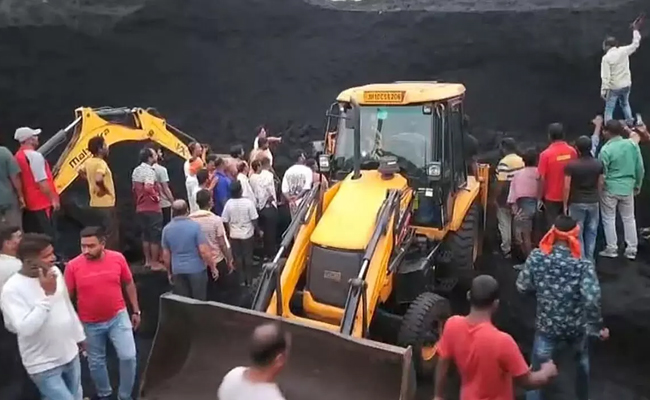
Dhanbad (Jharkhand) (PTI): At least four workers died after being buried under coal slurry in Jharkhand's Dhanbad district on Saturday, a police official said.
The incident took place at Moonidih coal washery in the command area of Bharat Coking Coal Limited (BCCL).
"Bodies of all four workers were dug out of debris during a rescue operation," Putki police station in-charge Waqar Hussain told PTI.
The incident took place when coal slurry was being loaded into trucks by workers, during which a large chunk of slurry fell and trapped several workers underneath, officials said.
The deceased have been identified as Manik Bauri, Dinesh Bauri, Deepak Bauri, and Hemlal Gope.
Meanwhile, the family members of the deceased and local villagers placed the bodies in front of the washery gate and began a protest.
They demanded compensation, jobs for dependents and action against those responsible for the incident.
Police and administration officials are trying to pacify the protesters, an official said.