Prominent Kannada writer, actor Girish Karnad no more
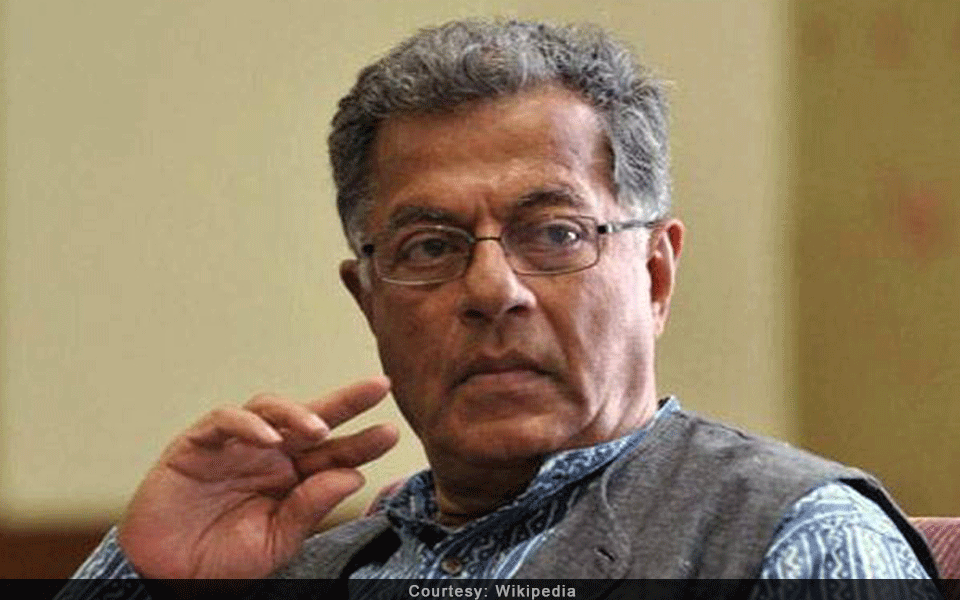
Bengaluru: Noted playwright, actor and director Girish Karnad, a progressive voice that championed the freedom of expression, died at his residence here Monday, official sources said. He was 81.
Karnad was ailing for some time now, they said. A multifaceted personality, Karnad has acted in several plays and movies that have received critical acclamation.
Karnad, a recipient of Jnanpith Award, was also conferred the Padma Shri in 1974 and the Padma Bhushan in 1992. He was also a Rhodes Scholar from Oxford University, in the 1960s that earned him his Master of Arts degree in philosophy, political science and economics.
His plays, written in Kannada, have been translated into English and several Indian languages.
He made his acting debut and screenwriting debut in iconic Kannada movie, "Samskara" (1970), based on a novel by UR Ananthamurthy. It was directed by Pattabhirama Reddy and the film won the first President's Golden Lotus Award for Kannada cinema.
Though he started off his career in cinema as an actor, he is best known as a writer and thinker. Karnad was one of the most prominent artistic voices of his generation.
He was an eminent playwright with works such as "Nagmandala", "Yayati" and "Tughlaq", which was one of the most successfully performed plays, to his credit.
He also worked in Hindi cinema's parallel film movement in movies such as "Swami", and "Nishant".
His TV credits include "Malgudi Days" in which he played Swami's father and a hosting stint in the science magazine "Turning Point" on Doordarshan in the early 1990s.
In later years, Karnad was seen in commercial films such as Salman Khan's "Tiger Zinda Hai" and Ajay Devgn-starrer "Shivaay".
Let the Truth be known. If you read VB and like VB, please be a VB Supporter and Help us deliver the Truth to one and all.
CJI's advice to aspirant: Join the bar, become a lawyer, don't hanker for judicial services post
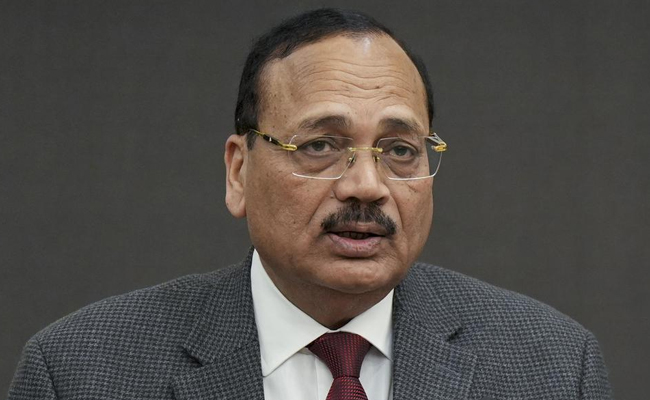
New Delhi (PTI): She came to the Supreme Court seeking a re-evaluation of her paper in the examination for joining judicial services as a magistrate. What she got instead was a rejection — and a candid confession by the Chief Justice that he too had wanted to join the judicial services in his youth but was advised by a senior judge to become a lawyer instead.
A bench comprising Chief Justice Surya Kant and Justice Joymalya Bagchi on Friday dismissed a plea filed by Prerna Gupta, the judicial services aspirant.
As Gupta pressed her case, the CJI intervened and said, "Let me share my personal story and I hope you will go happily as we cannot allow your petition."
He recounted his time as a final-year law student in 1984 when he wanted to become a judicial officer. As per requirement, he cleared the written test and was set to appear for an interview.
Judicial services is one of the two routes to become a judge after initially joining as a magistrate in lower court and thereafter rising through the ranks to become judge in a high court and possibly the Supreme Court.
The other route is to join the Bar, which means becoming a lawyer, and after building a reputation be picked from the Bar to become a judge at a senior level.
By the time the CJI's exam results came out, he had started practising at the Punjab and Haryana High Court when he was called for the interview.
The senior-most judge on the interview panel happened to be a judge before whom he had recently argued two significant matters.
"One of the matters was Sunita Rani vs Baldev Raj, where he had allowed my appeal in a matrimonial case and set aside the decree of divorce granted by the District Judge on the ground of schizophrenia," he noted.
Before the interview could take place, the judge called the young Surya Kant to his chamber and asked, 'Do you want to become a judicial officer?'
"I said 'yes.' He immediately said, 'Get out from (my) the chamber.'"
The courtroom fell silent as the CJI Justice described his initial heartbreak.
“I came out trembling. All my dreams were shattered. I thought he had snubbed me and that my career was over,” the CJI said.
However, the story took another turn the following day and the judge summoned him again, this time offering a piece of advice that would change the trajectory of his life.
“He said, ‘If you want to become (a judge), you are welcome. But my advice is, don’t become a judicial officer. The Bar is waiting for you,’” Justice Surya Kant recalled.
The CJI said he decided to skip his interview and didn't even tell his parents at first, fearing their disappointment, and instead chose to dedicate himself to his practice as an advocate.
“Now tell me did I make a bad right or bad decision,” the CJI asked and the litigant lawyer left the court with a smile on her face despite her case being dismissed.
Encouraging the petitioner to look toward the future rather than dwelling on the re-evaluation of a single paper, Justice Surya Kant said, "The Bar has much to offer."