Protests erupt in Karnataka as SC refuses to interfere with orders to release Cauvery water to TN
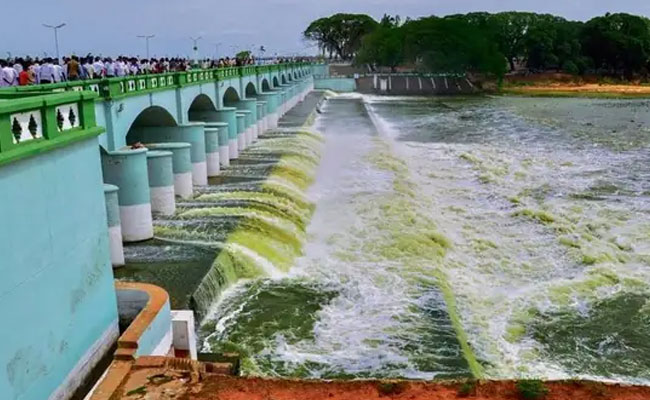
Bengaluru (PTI): Protests erupted in various parts of Cauvery river basin districts of Karnataka after the Supreme Court refused to interfere with orders of the Cauvery Water Management Authority and Cauvery Water Regulation Committee, directing the state to release 5,000 cusecs of water to neighbouring Tamil Nadu.
Farmers organisations and pro-Kannada organisations staged protests in Mysuru, Mandya, Bengaluru and other parts expressing their anger and urging the state government not to release water to Tamil Nadu.
Karnataka Rajya Raitha Sangha and Hasiru Sene (farmers organisation) staged a protest at Basaveshwara circle in Mysuru, and raised slogans: "Where is water to release? And we demand justice."
They have also planned to lay siege to the Command Area Development Authority office in Mysuru, as a mark of protest.
Pointing out that Cauvery and Kabini basin taluks have already been declared as drought hit, a farmer leader alleged, CWMA orders are in favour of Tamil Nadu as it is without taking into account the water level at reservoirs, standing crops and drinking water needs of Karnataka.
Karnataka Rakshana Vedike staged a protest at Gandhinagar, urging the state government not to release water to Tamil Nadu at any cost.
Vedike chief T A Narayana Gowda, terming it as a "black day" for Karnataka, said, "the Supreme Court has shut its door on us, by upholding the orders of the Cauvery Water Management Authority (CWMA) order."
"We have to defy the orders of the Supreme Court and the CWMA, when the orders have come without understanding the ground situation. We (Karnataka) have said that we are not in a position to release water as there is no water in our four dams even for drinking and have asked them to send a team to assess the situation, despite that CWMA sitting in Delhi has issued an order, which has been upheld by SC, it cannot be tolerated," he said.
Gowda and scores of Vedike activists were detained and taken away in police vehicles.
Urging Chief Minister Siddaramaiah to take a strong decision in the interests of the state and not to release water, he said, "all the activists and people are ready to go with him to jail for defying orders. Siddaramaiah has to do what (S) Bangarappa (former CM) did in the past by bringing in an ordinance to defy the orders."
BJP leader and former Minister R Ashoka accused Chief Minister Siddaramaiah and Deputy Chief Minister D K Shivakumar, who is Water Resources Minister, of betraying the people of Karnataka to protect the political interests of the Congress party.
"They (Congress) want (M K) Stalin's (TN CM) cooperation for Parliamentary elections, so they released water betraying the people of Karnataka. Siddaramaiah and Shivakumar neither spoke to the Tamil Nadu government to resolve the issue or made any statement against them," he said, adding, the state government was "negligent" on the Cauvery issue and only took action after Tamil Nadu did.
Holding the Congress government in the state responsible for Karnataka failing on the Cauvery issue, he said the BJP will protest against it and urge the administration to protect the state's interest.
The CWMA on Monday asked Karnataka to continue releasing 5,000 cusecs of water to Tamil Nadu for another 15 days after the CWRC last week made such a recommendation.
Karnataka has been maintaining that it is not in a position to release water to Tamil Nadu taking into account its needs like drinking water and standing crops in the Cauvery basin areas, citing scarcity due to deficit monsoon rains.
Let the Truth be known. If you read VB and like VB, please be a VB Supporter and Help us deliver the Truth to one and all.
ACP arrested in Mumbai for obscene act in front of nine-year-old girl; sent to judicial custody

Mumbai: An assistant commissioner of police was arrested by Worli Police in Central Mumbai under charge of flashing his private parts before a nine-year-old girl.
The arrested officer is reportedly under judicial custody, at present, according to a report by The Times of India.
The incident occurred in a garden on April 23, a police officer has said, adding that they arrested the ACP soon after the complaint was filed. So far, only one party has filed a complaint against the senior officer, the source has informed.
The senior officer has been charged with molestation and under the Protection of Children from Sexual Offences (POCSO) Act, the police officer said.
Further investigation of the case is underway.