Purported sleazy videos case: Action on suspended DGP after dept inquiry, says Home Minister
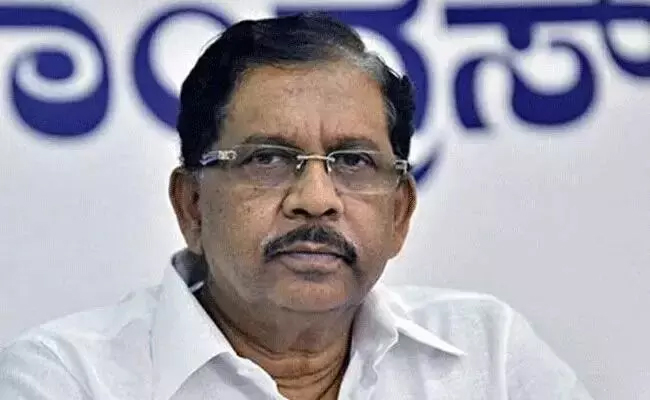
Bengaluru (PTI): Karnataka Home Minister G Parameshwara on Sunday said that the government will decide on further action against the now-suspended DGP K Ramachandra Rao based on recommendations following a departmental inquiry into a case concerning videos purportedly showing him behaving obscenely with women in his office.
The minister's comments followed reports that the special probe committee has ruled out Rao's claims that the clips were fake and AI-generated.
"After further departmental inquiry, whatever they recommend, the government will decide based on that. The department has to give a report to the government, and based on the recommendation made, we will take a decision," Parameshwara told reporters here in response to a question.
Since Rao claimed the circulating videos were fake AI creations, they were sent to the Forensic Science Laboratory (FSL), the minister said in response to a question.
"A team was formed in the department to find the truth. They have submitted a report to the department. The department will have to inform the government about the same, based on which further action will be taken," he added.
The state government had formed a team of four IPS officers, led by R Hitendra, Additional Director-General of Police (Law and Order), to conduct a preliminary inquiry in the case.
The government in January suspended Rao, the 1993-batch IPS officer serving as the DGP, Directorate of Civil Rights Enforcement (DCRE), after viral videos purportedly showing him acting in an obscene manner surfaced.
The videos purportedly show the 59-year-old hugging and kissing women while in office. He was wearing a police uniform in a few videos. Rao had, however, called the videos "fabricated" and vowed to take legal action.
There were even reports that the videos were shot in 2016-17 inside the office of the Inspector General of Police - Belagavi range.
Let the Truth be known. If you read VB and like VB, please be a VB Supporter and Help us deliver the Truth to one and all.
Lebanon appoints new representative for talks with Israel, rejects linkage to Iran
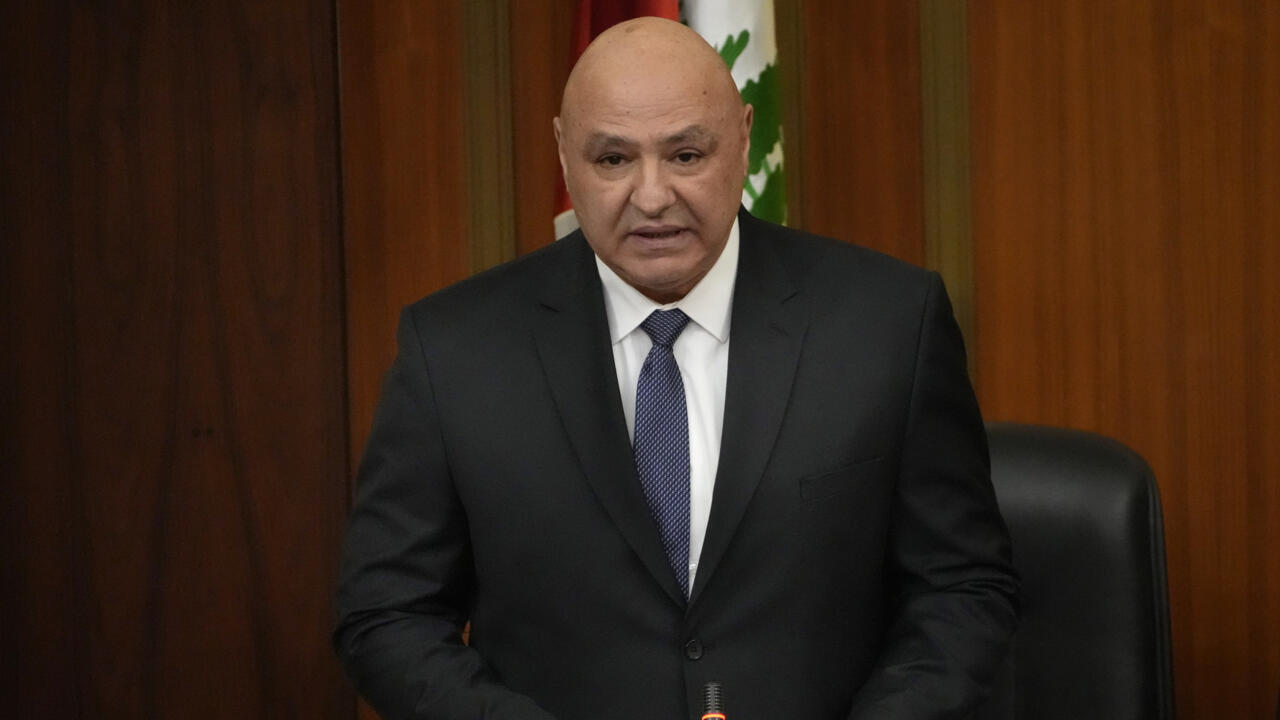
Beirut: Lebanon’s has moved to underline its independent position in ongoing regional developments, amid attempts to link the country to the broader conflict involving Iran, the United States and Israel.
President Joseph Aoun, while announcing the appointment of former US ambassador Simon Karam as Lebanon’s representative in talks with Israel, made it clear that Karam would be the sole representative for Lebanon and that there would be no substitute.
The move comes in response to what the Lebanese officials see as efforts by Iran to tie Lebanon’s situation to the wider regional conflict. Iran had indicated that there would be no ceasefire involving the US, Israel and Iran unless it also included a ceasefire in Lebanon.
Some groups, including Hezbollah and its supporters, had expressed support for linking the situations, citing concerns that the Lebanese government has limited leverage in negotiations with Israel. Lebanon is not formally a party to the conflict, and its army is considered weak.
However, others, including Prime Minister Nawaf Salam, have opposed this approach. They view Iran’s stance as an attempt to influence Lebanon’s internal affairs and see it as undermining the country’s sovereignty.
Officials backing the government’s position say the move is aimed at reaffirming Lebanon’s sovereignty and ensuring that decisions about peace and ceasefire within the country are not dictated externally.
They also see it as a safeguard, so that any breakdown in talks between the US, Israel and Iran does not automatically lead to renewed conflict in Lebanon.