R. Ashok alleges disrespect to Governor during joint session; seeks action after video review
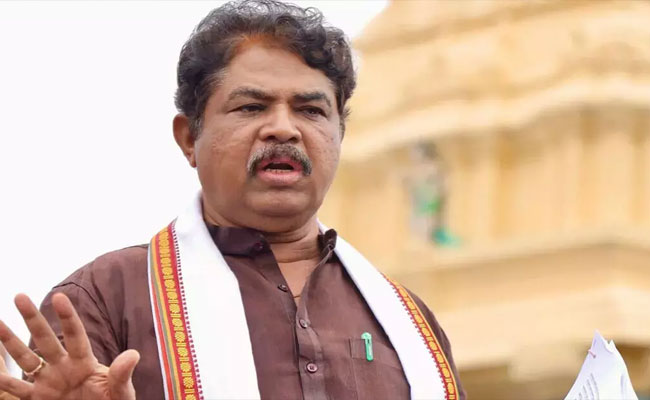
Bengaluru: Leader of the Opposition R. Ashoka on Friday accused the state government of showing disrespect to the Governor during his address to the joint session of the Legislature and demanded action against those responsible after reviewing video footage of the incident.
Speaking in the Legislative Assembly, Ashoka questioned claims that BJP members had torn the clothes of Legislative Council member B.K. Hariprasad during the commotion. “If Hariprasad’s kurta was torn, who did it? Those who blocked the Governor and clashed with marshals were Congress members. Yet, the blame is being put on the BJP,” he said, urging the authorities to verify the footage and take action against the guilty.
Ashoka also rejected allegations from the ruling party that the Governor had disrespected the national anthem. He argued that it was the government’s responsibility to arrange the anthem, not the Governor’s. “The Governor concluded his speech and left after saying ‘Jai Hind’. He was made to leave alone, without anyone accompanying him. Portraying this as him ‘running away’ is unfair,” he said, referring to comments attributed to Law and Parliamentary Affairs Minister H. K. Patil.
The opposition leader maintained that while governments may come and go, legislative traditions and rules must be upheld. He demanded that action be taken against ruling party members for the alleged disrespect shown to the Governor, similar to past instances where BJP legislators were suspended.
Joining the debate, BJP leader Dr C.N. Ashwath Narayan said the Speaker must protect the dignity of the House. Citing Assembly rules, he said those who disrupted the Governor’s address should face action in the next session, and called for a resolution condemning the incident along with an apology to the Governor.
Responding from the treasury benches, ruling party member K.M. Shivalingegowda said the government had welcomed the Governor with due respect but objected to what he termed disrespect to the national anthem while the Governor was leaving. He downplayed the obstruction, saying it did not amount to a serious offence.
Speaker U. T. Khader later said written complaints had been received from both sides the ruling party alleging disrespect to the national anthem, and the opposition alleging disrespect to the Governor. He said the matter would be examined and a ruling would be given, adding that the House should focus on discussion rather than personal hostility.
Let the Truth be known. If you read VB and like VB, please be a VB Supporter and Help us deliver the Truth to one and all.
Man arrested with Rs 2.54-crore heroin in Mumbai

Mumbai (PTI): Police have arrested a man and seized over 500 grams of heroin worth Rs 2.54 crore in the illicit market from him in Mumbai, officials said on Friday.
The police's Anti-Narcotics Cell (ANC) made the drug seizure in Santacruz in the western suburbs. The operation was conducted by the Kandivali unit of the ANC on Thursday as part of a special crackdown against drug trafficking in the area, they said.
Acting on specific inputs, an ANC team conducted a raid in Santacruz (East) and intercepted a man. During a search, the team recovered 508 grams of high-grade heroin from his possession, an official said.
The seized contraband, a highly addictive, opioid drug derived from morphine, is estimated to be worth Rs 2.54 crore in the international market, he informed.
Following the seizure, a case was registered against the man under relevant sections of the Narcotic Drugs and Psychotropic Substances (NDPS) Act, 1985, and he was formally placed under arrest in the early hours of Friday.
The police are currently investigating the source of the drug and trying to identify the intended recipients of the consignment, he said.