Rahul, his family members are fake Gandhis, says Pralhad Joshi
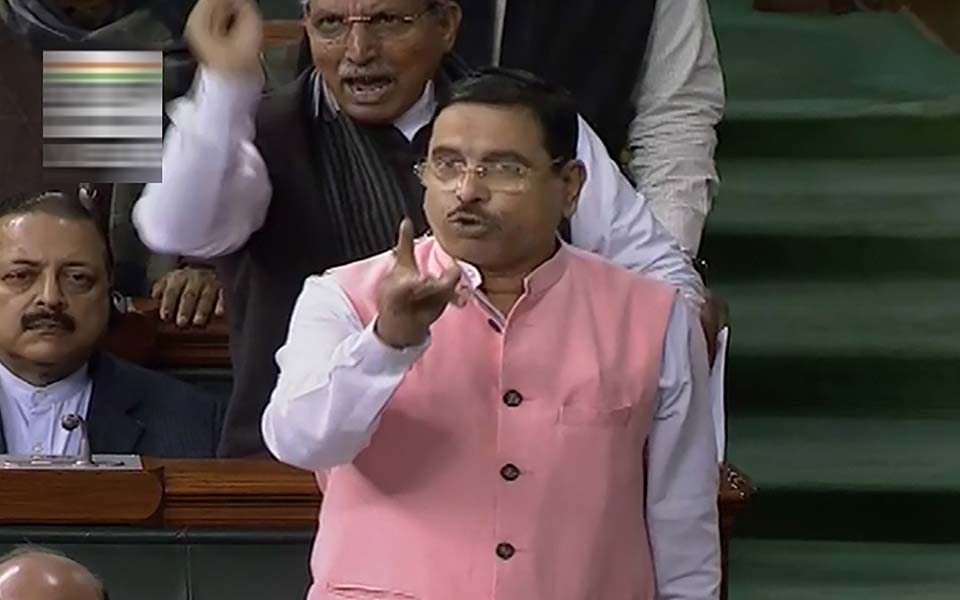
Bengaluru, Dec 15: Hitting out at Congress leader Rahul Gandhi for his Savarkar barb, Union Minister Pralhad Joshi on Sunday termed him and his family members as "fake Gandhis".
He also accused the Congress and other "so called secular parties" of trying to project the Citizenship (Amendment) Act as a Hindu-Muslim issue with an intention to create unrest in the country.
"Rahul Gandhi has said he was not Rahul Savarkar.. it is impossible for you to become Rahul Savarkar," Joshi said.
Speaking to reporters in Hubballi, he said, "as per convenience you enter into an understanding with anyone, you can become Rahul Uddhav Thackrey- we all know what all words you have used against him and what you have done now."
"You (Rahul) become whatever you want, but speaking against a patriot like Vinayak Damodar Savarkar shows the frustration of Congress... they are all nakli (fake) Gandhis- Rahul Gandhi, Sonia Gandhi, and Priyanka Vadra Gandhi- only they can speak such things about others," he added.
Under fire from the BJP over his 'rape in India' remark, Rahul Gandhi on Saturday said he will die but never apologise for speaking truth as he was a Gandhi and not a Savarkar, remarks that drew immediate disapproval from new- found ally Shiv Sena which said the Hindutva icon should not be insulted.
Alleging the "so called secular parties" were trying to instigate violence in the country, Joshi clarified that the Citizenship Amendment Act has nothing to do with stripping anyone of their citizenship, but about providing it.
"Our neighboring Islamic countries, where religious persecutions are occurring against minorities- if they (minorities of those countries) come to India- this will provide citizenship to them.
Congress was indulging in evil tricks of playing it up as a Hindu-Muslim issue," he alleged.
CAA was not an Hindu-Muslim issue at all, but providing citizenship to those who are in this country without it for years together, the Union Parliamentary Affairs Minister said.
Claiming that people who came from Uganda, Bangladesh, and also Sri Lankan Tamils had earlier been granted citizenship, he said if anyone from other countries apply, the government will look into it.
After the Narendra Modi led government came to power, 550 minority refugees were given citizenship, he said.
Let the Truth be known. If you read VB and like VB, please be a VB Supporter and Help us deliver the Truth to one and all.
Karnataka launches India’s first digital grievance system for gig workers
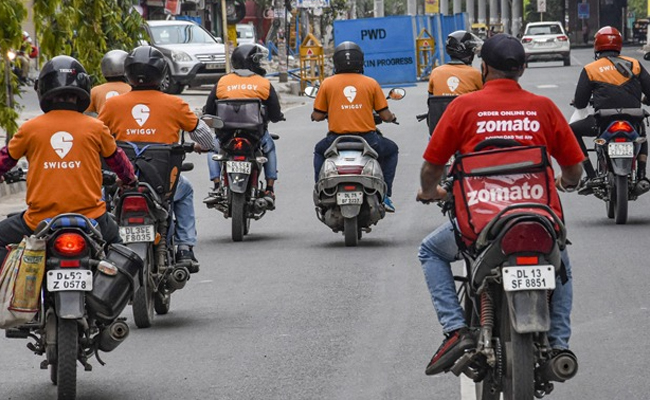
Bengaluru: In a first-of-its-kind initiative in India, the Karnataka government has launched a digital grievance redressal system for gig workers to provide structured support and protection to platform-based workers.
According to The Hindu, the system, developed by the Karnataka Platform-based Gig Workers’ Board in collaboration with the Department of e-Governance, allows workers to file complaints through the Integrated Public Grievance Redressal System (IPGRS).
Gig workers can raise issues related to pay, working conditions, and platform-specific disputes. Complaints will be routed to the Internal Dispute Resolution Committees (IDRCs) of respective platforms and are expected to be resolved within a defined timeframe. This is expected to bring transparency and legal recourse for a workforce that has so far operated without a formal dispute resolution framework.
Under The Karnataka Platform-Based Gig Workers (Social Security and Welfare) Act and Rules, every aggregator platform must constitute an Internal Dispute Resolution Committee (IDRC). Platforms such as Namma Yatri and Yulu have already integrated their IDRC contact details with the government portal.
Around 12 lakh gig workers have been identified in the state, and a unique identification system is being developed to remove duplicate entries. Officials said welfare schemes are also being designed based on type of work, working hours, and contribution.
Labour Minister Santosh Lad said that Karnataka, technology capital of the country, is leveraging this potential for worker welfare as well. “By launching this system, we are ensuring that the gig economy is no longer an informal space, but a structured one where every worker’s voice is heard,” he said.
“The schemes will vary based on the type of platforms. For example, cab rides are mostly undertaken by men whereas urban domestic activity is undertaken mostly by women. It may also be based on the contribution made, and the quantum of gig work done by a gig worker. Some gig workers work for more than eight hours while some may work on a few gigs. So, work load, nature of work, and time period of work could vary,” TH quoted G. Manjunath, Additional Labour Commissioner and CEO of the Board as saying.
“It has to be scientifically structured based on their effort and labour. We are working with experts, including academicians from Briston University, King’s College, and IISc, and other stake holders, including board members,” he said.
Officials added that aggregator platforms will be required to contribute 1 per cent towards worker welfare, with implementation beginning July 5.