Raichur: 4 ex-Congressmen violate defection law, lose Lingasugur Town Municipality membership
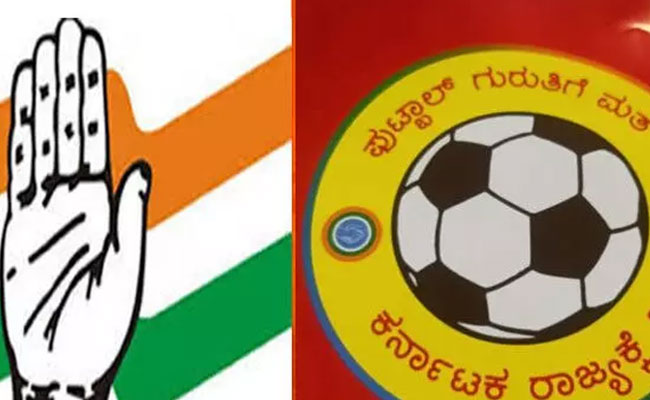
Raichur: The Lingasugur Town Municipality membership of four Congress members has been cancelled by Raichur Deputy Commissioner Chandrashekhar Nayak as the members allegedly joined the Kalyana Rajya Pragathi Paksha (KRPP) during the Assembly elections in May this year, violating the rules for change of party.
The DC, who is also the District Magistrate, said that the Congress Lingasugur Block President had filed a complaint at his office on June 2, 2023 that Congress members Fathima, Moulasaab, A Pramod Kumar and Sharanappa had violated the defection rules while joining the KRPP. He had also submitted necessary records as proof of the same. The Municipality members facing charges had been issued notice to challenge the allegations, but they had failed to do so. The membership of the four in the Municipality was, therefore, being cancelled, Nayak added.
The Magistrate also stated that the order cancelling the membership had been passed in accordance with the Karnataka Local Authorities (Prohibition of Defection) Act 1987.
Let the Truth be known. If you read VB and like VB, please be a VB Supporter and Help us deliver the Truth to one and all.
Right to vote under threat, must be made fundamental right: Cong's Jairam Ramesh
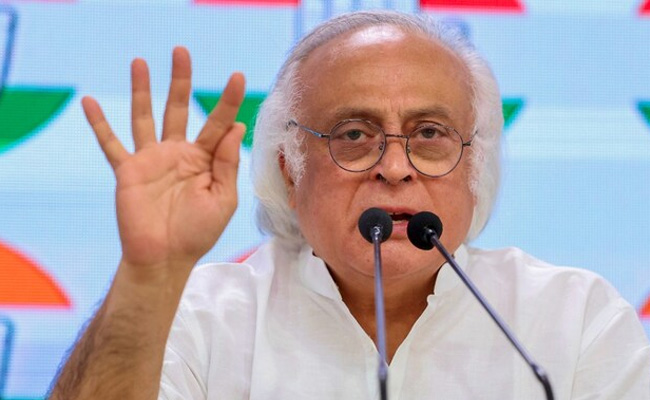
New Delhi (PTI): Congress leader Jairam Ramesh alleged on Thursday that the right to vote is under threat and the time has come when it should be made a fundamental right for citizens.
Speaking with reporters, Ramesh lashed out at Chief Election Commissioner (CEC) Gyanesh Kumar, saying the Election Commission (EC) has never been as compromised as it has been under him.
"The rot started under his predecessor. This man is a player and not a neutral observer," the Congress leader said, slamming Kumar.
Kumar is completely compromised and has become a player in elections, he alleged.
"Home Minister Amit Shah had talked about three Ds -- detect, delete and deport. So we want to know how many non-Indian citizens have been detected, how many have been deleted and how many have been deported," Ramesh said, adding that the right to vote is now under threat.
On opposition parties submitting a fresh notice in the Rajya Sabha, seeking to move a motion for the CEC's removal, the Congress leader said they will continue to make efforts for Kumar's removal as he is "compromised".
Ramesh also batted for the right to vote to be recognised as a fundamental right.
"I believe that the time has come that the right to vote should be made a fundamental right. It is a statutory right, it is not a fundamental right. Fundamental rights are justiciable," he said.
The former Union minister said this was discussed in the Constituent Assembly, but it was eventually decided that it should be made part of the Constitution.
B R Ambedkar and Jagjivan Ram had warned that in the future, governments might try to disenfranchise voters, he added.
"Once and for all, include the right to vote as a fundamental right for Indian citizens," Ramesh asserted.