Raichur: Minor girl killed by father over relationship with youngster of different caste
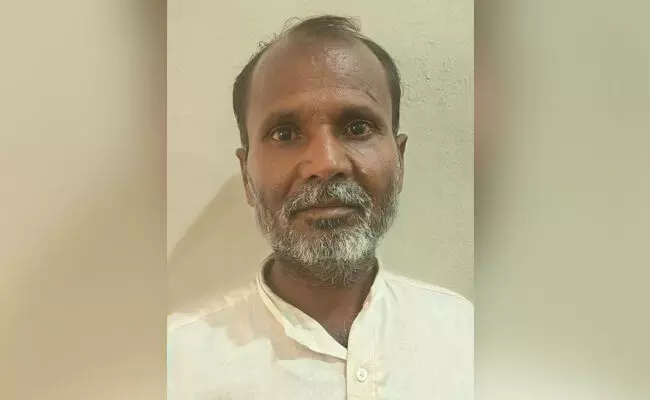
Raichur: A case of honour killing has been reported from Hanchinala village in Lingasugur taluk, where a father allegedly killed his underage daughter over her relationship with a youth from a different caste.
According to the police, 17-year-old Renuka, who belonged to the Kuruba community, was killed by her father, Lakkappa Kambali. After committing the crime, he allegedly disposed of her body by throwing it into the waters of River Krishna.
Reports suggest that Renuka had developed a relationship with Hanumantha, a youth from the Valmiki Nayaka community, despite opposition from her family. Earlier, she had eloped with Hanumantha, following which her family filed a missing complaint. The police traced and brought her back after a few days.
Following the incident, Lakkappa had reportedly warned Renuka to end her relationship, telling her that she would bring shame to the family if she continued. He had also assured her that the family would find a suitable groom for her. However, Renuka is said to have expressed her intention to run away again with Hanumantha once she turned 18.
Enraged by her defiance, Lakkappa allegedly took the extreme step of murdering his daughter, police said.
The Lingasugur Police have registered a case and launched an investigation into the matter.
Let the Truth be known. If you read VB and like VB, please be a VB Supporter and Help us deliver the Truth to one and all.
TN polls: Vijay announces Rs 2,500 monthly assistance, 8 gm gold for women
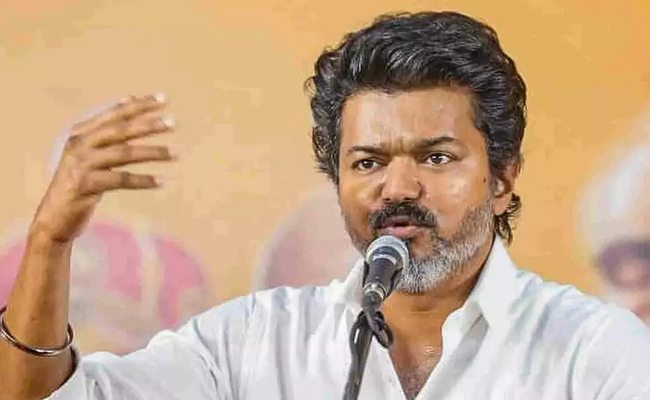
Chennai (PTI): TVK chief Vijay on Thursday unveiled sweeping assurances in the party manifesto ahead of the April 23 Assembly elections in Tamil Nadu that included Rs 2,500 monthly assistance for women below 60 years, 8 gm gold for marriage and six free cooking gas cylinders a year, per family.
The actor-turned-politician also assured a quality silk saree in addition to gold for indigent brides and interest-free loans up to Rs 5 lakh for women-run SHGs. He assured corruption-free good governance if voted to power in his maiden electoral fight.
The manifesto also laid importance on education. To prevent school dropouts, mothers or guardians of children studying in government and state-aided schools will receive Rs 15,000 annually.
Vijay promised 100 special residential schools named after iconic leader K Kamaraj, credited with revolutionising education in the state, and higher education loans of up to Rs 20 lakh. The TVK founder also assured AI Ministry, AI University and AI City.
The manifesto placed a strong emphasis on agrarian welfare, too.
The party promised a full waiver of agricultural cooperative crop loans for farmers owning less than five acres of land, while those holding more than five acres will receive a 50 per cent waiver. Additionally, the party promised a Minimum Support Price (MSP) of Rs 3,500 per quintal for paddy and Rs 4,500 per tonne for sugarcane.
Addressing youth unemployment, Vijay pledged to create five lakh new government jobs and offer as many stipendiary internships. Unemployed graduates will be provided a monthly aid of up to Rs 4,000. For government employees, the party assured consideration of the Old Pension Scheme and the regularisation of contract workers, including nurses.
On the health front, he promised a drug-free Tamil Nadu. Vijay also committed to modernising hospitals, providing free annual health checkups, and introducing a Rs 25 lakh family health insurance scheme.
The manifesto also included a Rs 3,000 monthly pension for the elderly and the differently-abled, 200 units of free power, patta (land deed) regularisation, and 100 per cent piped drinking water supply for all households.
Some of the policy intereventions promised by TVK include a legal guarantee to provide essential government services like community certificates, and land pattas, within a strictly specified timeframe.
Vijay also promised doorstep delivery of governance by implementing a system to deliver services, such as ration supplies, directly to the people. He also assured that ease of doing business will be paramount to his government and promised a strict guarantee that business licences will be issued within 21 days.
Elections to 234 Assembly seats in Tamil Nadu will be held on April 23 and outcome known on May 4. Vijay is facing his maiden electoral battle, billing it as a direct fight between the ruling DMK and his TVK.