Rare blood donor program launched in Karnataka to support patients with uncommon blood types
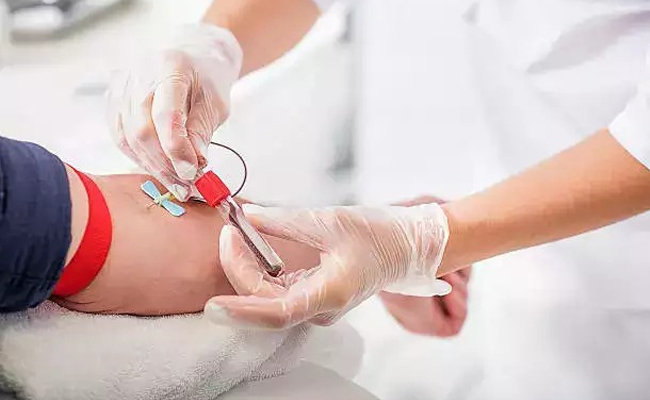
Bangalore: In a significant move to address the blood requirements of patients with rare blood groups, the Rotary Bangalore TTK Blood Centre, part of Bangalore Medical Services Trust (BMST), launched a ‘Rare Blood Donor’ program on Tuesday. This initiative, in collaboration with the Karnataka State Blood Transfusion Council, was unveiled by Health Minister Dinesh Gundu Rao on National Voluntary Blood Donation Day.
The program aims to establish a ‘Rare Blood Donor’ registry, creating a database of voluntary donors with rare blood types and maintaining a repository of frozen red cell units of these uncommon groups. The initiative has the technical support of the National Institute of Immunohematology (NIIH) ICMR Mumbai, New York Blood Center in the U.S., and the International Society of Blood Transfusion (ISBT) in Amsterdam.
Patients with conditions like thalassemia and cancer, who require frequent transfusions, are at particular risk when they have rare blood types, as it is difficult to find precisely matched donors. Pregnant women with rare blood groups are also at a higher risk of complications such as miscarriages and haemolytic disease of the newborn (HDN), which can be fatal if not managed.
Dr. Latha Jagannathan, Medical Director and Managing Trustee of Rotary Bangalore TTK Blood Centre, highlighted that the program will provide training and raise awareness across Karnataka’s blood centers about rare blood groups. She explained that advanced blood group testing using both serology and molecular techniques will help identify rare blood types in patients and their families.
“Out of 500 individuals tested so far, we have identified 60 rare blood donors who have been enrolled in the registry. We will also identify other voluntary donors with rare blood types and share anonymized data with the International Rare Donor Panel,” Dr. Latha stated, noting that BMST’s center, along with the ICMR center in Mumbai, is the only one in India with such a registry.
Ankit Mathur, Additional Medical Director at BMST, explained that there are currently 45 identified blood group systems, with ABO and Rh (Rhesus factor) being the most common. However, rare blood groups, such as the Bombay (Oh) phenotype and Rh-D-/-D-, are present in fewer than one in 1,000 to one in 10,000 people, and can cause complications during transfusions or pregnancies.
The BMST’s Rotary Bangalore TTK Blood Centre is notable for being the only NGO in India with a standalone facility that includes a blood center, tissue bank, HLA lab, and stem cell collection. It is Karnataka’s largest regional blood transfusion center, collecting around 40,000 units of blood annually, with 35% of the donations provided free of charge, all sourced from voluntary donors.
Let the Truth be known. If you read VB and like VB, please be a VB Supporter and Help us deliver the Truth to one and all.
Bengaluru: PUC student dies by suicide, hours after results were declared
Bengaluru (PTI): A second-year Pre-University Course student allegedly died by suicide at her residence here, hours after the exam results were announced, police said on Friday.
Tanushree (17), a science student, reportedly failed in three subjects, which is suspected to be the trigger behind her taking such an extreme step, they said.
However, no suicide note was recovered from the spot, except her hall ticket, which was found lying on the bed.
According to police, the incident came to light on Thursday around 3.30 pm, shortly after the results were announced.
She hung herself from the ceiling fan when no one was at home. Her mother had gone to work, a senior police officer said.
Citing preliminary inquiry, the officer said it is a clear-cut case of suicide. She was apparently distressed over failing in three subjects and had also called her friends to discuss the same.
When she did not respond to their calls and messages later, her friends decided to check on her, he said.
Based on her mother's complaint, a case of unnatural death has been filed, with Hebbal police investigation indicating it to be a case of suicide, police added.
(Assistance for overcoming suicidal thoughts is available on the state’s health helpline 104, Tele-MANAS 14416.)