Ready to enter politics : Prakash Rai
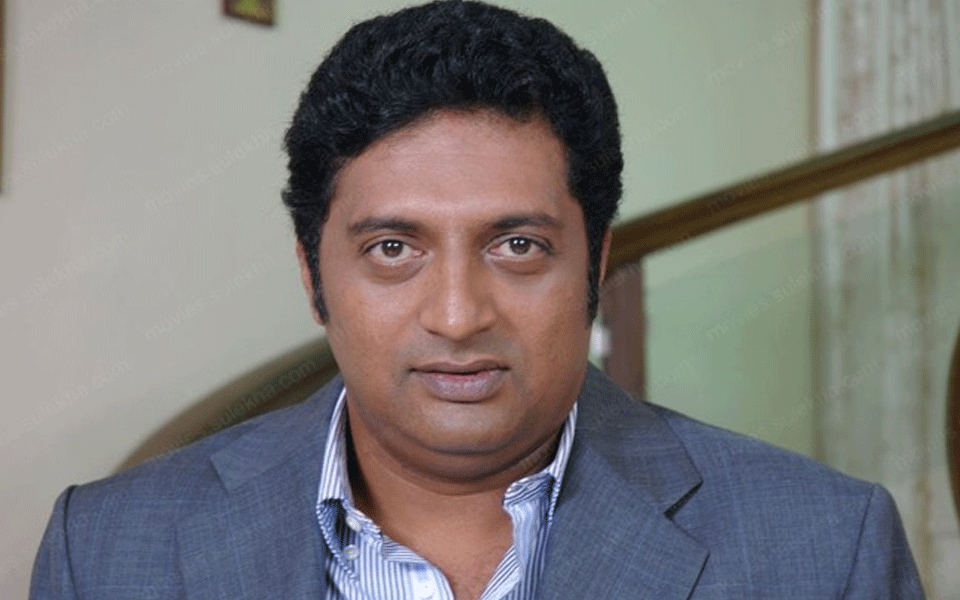
Bengaluru : " I do not have any political aspirations. But, if pressurised I am ready to plunge into politics. It has its own responsibilities and I would not like to shrug them off," said noted multi-lingual actor Prakash Rai.
He was speaking after receiving the Man of the year Award conferred on him by the Press Club here on December 31, Sunday. "Karnataka's capital Bengaluru is also known as Bendakaluru. No scope must be given for peace disruptors to have their way here. No scope must also be given to those who do not belong here to come here and rule us. We must question them and crush the forces that disrupt peace by passing information about them" said Prakash.
"I was disturbed after journalist Gauri Lankesh's murder. It brought much changes in me. Later I began to speak not just as an actor but as a citizen of this nation. Several have criticised me, some even personally,. I do not differentiate between anyone. I have raised several questions through the hash tag Just Asking. I am not in favour of any party," Prakash Rai clarified.
"I have got wealth, success and everything in life. I have raised my conscience through my interactions with my Gurus- Lankesh, Tejaswi and others. This is why I am questioning the present state of affairs," said Rai.
"Today India is haunted by casteist politics. There is dictatorship in a democratic land. Everyone must raise voice against it. Even journalists are living in an atmosphere of fear. Efforts are underway to silence the voices of journalists who raise voice against injustice, oppression and dictatorship. Therefore, as an artiste I am responding to the society. Everyone must fight against injustice," Prakash Rai said.
Let the Truth be known. If you read VB and like VB, please be a VB Supporter and Help us deliver the Truth to one and all.
Allahabad HC orders probe into 'reinstatement' of teacher in UP's Barabanki
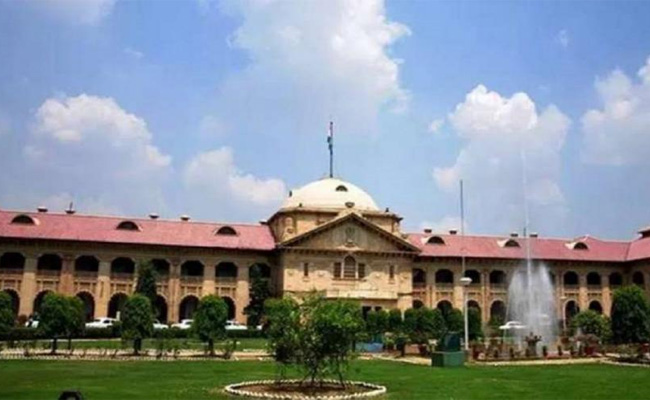
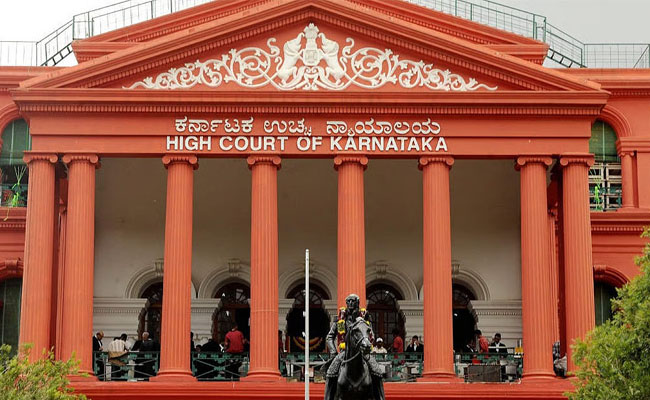
Lucknow (PTI): The Lucknow Bench of the Allahabad High Court on Friday ordered a probe by the special task force (STF) into alleged irregularities in the rejoining of a teacher at City Intermediate College in Barabanki, observing that the reinstatement appeared to be prima facie illegal.
The court also directed the recovery of the salary paid to the teacher during the disputed period.
A bench of Justice Rajeev Singh passed the order on a petition filed by the college management committee. The court expressed doubts over the roles of the District Inspector of Schools (DIOS), Barabanki, the college principal and the teacher concerned and hence, directed a detailed inquiry into the matter.
Taking note of alleged manipulation of records and misleading submissions, the court ordered the immediate transfer of the Barabanki DIOS to ensure a fair probe. It also directed the initiation of disciplinary proceedings against the then joint director of education of the Ayodhya division.
In its order, the court found that the teacher, Abhay Kumar, was initially appointed as an assistant teacher in 2018 but joined an Eklavya Model Residential School in Chhattisgarh as a lecturer in June 2024 without obtaining permission from the management. His subsequent request to retain the lien was rejected.
Despite this, he was allowed to rejoin the Barabanki College in September 2025 on the directions of the joint director of education and the DIOS, and was even paid the salary for October 2025. The court termed the rejoining "wholly illegal" and lacking any legal basis.
The bench also expressed concern over lapses in communication within the education department and directed the Uttar Pradesh chief secretary to ensure that official orders are communicated through email and WhatsApp as well, to prevent disputes.
The matter is next listed for hearing on May 28 when a compliance report is sought.