Ready to form alliance with any party that accepts our condition: HDK after Exit Polls

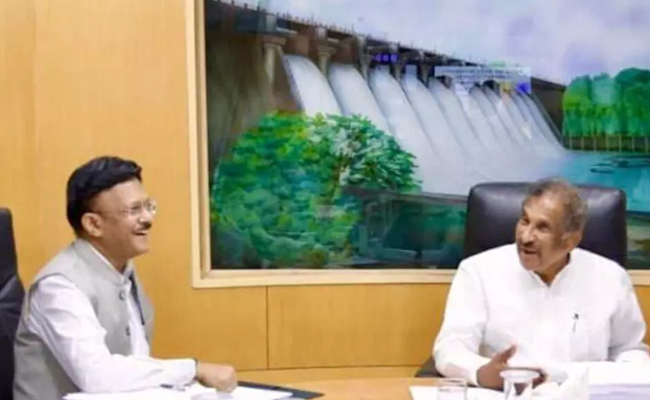
Bengaluru: With the Karnataka assembly election results looming, exit polls have predicted a close three-cornered contest with the possibility of a hung verdict. The Janata Dal (Secular) JD(S) has emerged as a potential kingmaker, and senior party leader H D Kumaraswamy has announced that the party is willing to form an alliance with any political party that accepts their conditions.
In a press conference held on Thursday, Kumaraswamy stated that the JD(S) will not accept a coordination committee similar to the one formed during the coalition government with the Congress in 2018. He emphasized the importance of moving away from the party's traditional strongholds, particularly in the districts of Mandya and Hassan. Kumaraswamy also stressed the significance of open discussions to make rational decisions.
"We are confident of winning 50 seats this time. We will go with the party that accepts our conditions. We will form an alliance only if the conditions are accepted," said former Prime Minister and JD(S) supremo, HD Deve Gowda.
These remarks come after several exit polls predicted a hung assembly in the state. The JD(S), with its small but significant vote bank, has emerged as a potential kingmaker in the state. With neither the Bharatiya Janata Party (BJP) nor the Congress expected to win a clear majority, the JD(S) could play a crucial role in determining the next government in Karnataka.
Let the Truth be known. If you read VB and like VB, please be a VB Supporter and Help us deliver the Truth to one and all.
Four, including two siblings, dead, five injured as truck hits motorcycle and SUV in MP's Damoh
Damoh (PTI): Four persons, including two brothers, died and five others sustained injuries after a truck hit a motorcycle and a sports utility vehicle (SUV) in Madhya Pradesh's Damoh district on Friday, a police official said.
The incident took place near Basa Tarkheda village, around 10 km from the district headquarters, close to a temple along Damoh-Sagar state highway in the evening, Sagar Naka police outpost in charge inspector Vikram Dangi said.
"The truck first hit a motorcycle, killing siblings Jeevan Ahirwar (33) and Suraj Ahirwar (30) on the spot. It then rammed into a Bolero, killing two persons identified as Raju Choudhary (50) and Dharmendra Sikhaiya (32). Five persons sustained injuries and have been hospitalised," he informed.
The truck driver and his assistant fled from the spot and efforts are on to nab them, the official added.