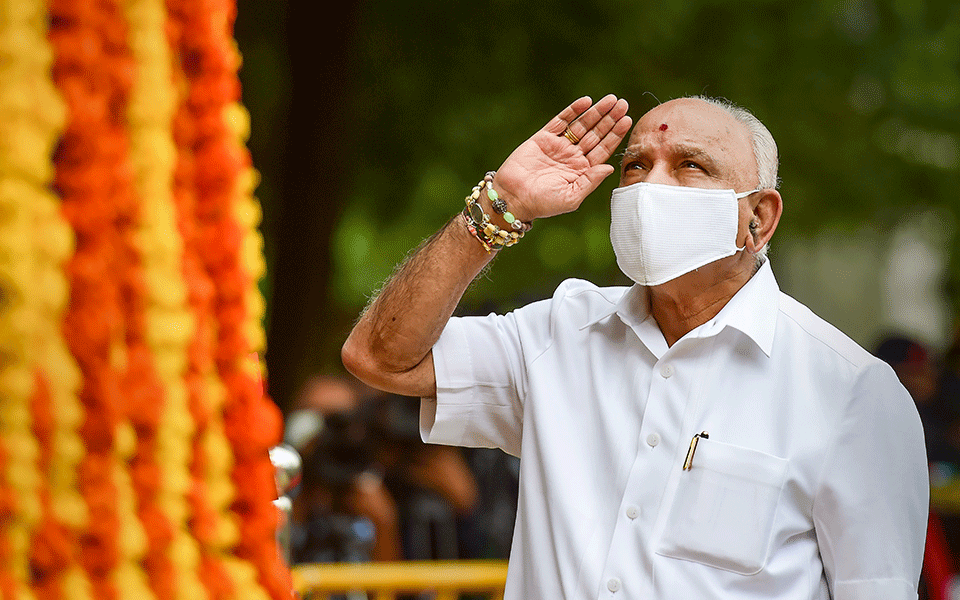
Bengaluru: Karnataka Chief Minister BS Yeddyurappa on Monday met the state governor and submitted his resignation, ending weeks of speculation about the change of leadership in the state government.

Yediyurappa thanked the people of the state for supporting him and stated that he had not received any instructions from the party high command and that he decided to step down as the CM voluntarily.

He said he was not pressured to resign and it was his free decision. He also asserted that he will work with the party to strengthen the party base to bring it back to power again.

He also added that he will be active in politics and that he is not eyeing a Governor post as speculated by some.

He also recalled how former PM Atal Bihari Vajpayee had offered him Union Minister’s post during his term as the PM but he rejected it to strengthen the party in the state.

Let the Truth be known. If you read VB and like VB, please be a VB Supporter and Help us deliver the Truth to one and all.


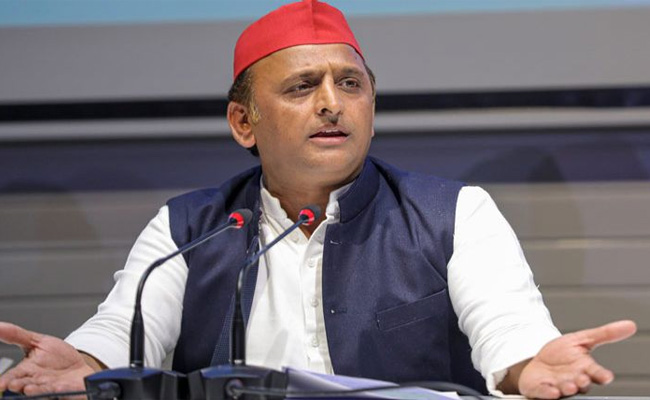
Noida: India TV editor-in-chief Rajat Sharma has drawn sharp criticism on social media following remarks he made on air attributing Delhi’s air pollution partly to its geographical location and the Aravalli hill range.

Speaking during a recent episode of his prime-time show Aaj Ki Baat, Sharma said Delhi’s geography plays a major role in trapping polluted air.

“Geographical location is the main reason. Delhi is a big city and its shape is like a bowl, surrounded by the Aravalli hills on three sides. As a result, polluted air gets trapped and cannot disperse easily. Therefore, the problem of pollution in Delhi cannot be solved in one year or in any particular season,” he said.

His comments came amid a severe deterioration in air quality in the national capital. On Sunday morning, December 21, Delhi woke up to a thick blanket of toxic smog, sharply reducing visibility and causing widespread discomfort. The overall Air Quality Index (AQI) stood at 390 around 7 a.m., placing it in the ‘very poor’ category, according to data from the Central Pollution Control Board (CPCB).

Dense fog and smog also disrupted flight operations at Delhi’s Indira Gandhi International Airport (IGIA). As many as 110 flights were cancelled, while over 370 flights were delayed due to poor visibility. Of the cancelled services, 59 were arriving flights and 51 were departures. Flight-tracking website Flightradar24 showed that departing flights faced an average delay of around 26 minutes.

Netizens troll Sharma

One user wrote on X, “Rajat Sharma is saying due to the Aravalli hills, there is air pollution in Delhi. He is defending mining and destroying the Aravalli hills like this. How can these people call themselves journalists?”

Another user accused him of political hypocrisy, comparing his earlier criticism of the Delhi government with his current remarks, and wrote, “In 2023 he blamed Arvind Kejriwal for Delhi air pollution. In 2025, he is blaming the Aravalli hills because BJP is in power. Hypocrisy = 100%, Journalism = 00%.”

Others termed the comments an example of the “godi media” narrative, alleging that geography was being blamed instead of governance, industrial emissions, vehicular pollution, construction dust, and stubble burning. “When they fail to question power or policy, they conveniently shift the blame to nature,” another post read.

“Friends, what can one even say about today’s godi media? According to them, the reason for Delhi’s pollution is that the Aravalli hills surround the city from three sides, trapping polluted air inside. Seriously? So now Sudhir Chaudhary and Rajat Sharma want us to believe that nature itself is to blame? When they fail to question power or policy, they conveniently shift the blame to geography. Apparently, it’s not years of environmental destruction or administrative failure—it’s the Aravalli hills! Does this explanation make any sense at all?,” wrote another.

What is the Aravali issue?

The controversy arises over the Union government’s revised definition of what constitutes the Aravalli hills.

The decision has drawn protests involving environmental activists across Haryana, Rajasthan, and parts of the Delhi-NCR region, who have raised concerns that the new definition could weaken protection for one of the world’s oldest mountain ranges.

Under the revised definition, an “Aravalli hill” is described as any landform in designated Aravalli districts with an elevation of 100 metres or more above local relief, while an “Aravalli range” is defined as a cluster of two or more such hills within 500 metres of each other. Activists fear this could open the door for mining, construction, and commercial activities in previously protected areas.

Environmentalists argue that the Aravalli range serves as a natural barrier against desertification, dust storms, and pollution, and plays a vital role in maintaining ecological balance in the Delhi-NCR region.

They have demanded that the entire Aravalli range be declared a fully protected area with strict conservation measures.

Meanwhile, Union Environment Minister Bhupender Yadav has stated that the new definition, accepted by the Supreme Court based on a Centre-led panel’s recommendations, would not result in any relaxation of mining norms in the Aravalli region.