SC permits mining baron Janardhan Reddy to visit Bellary in Karnataka
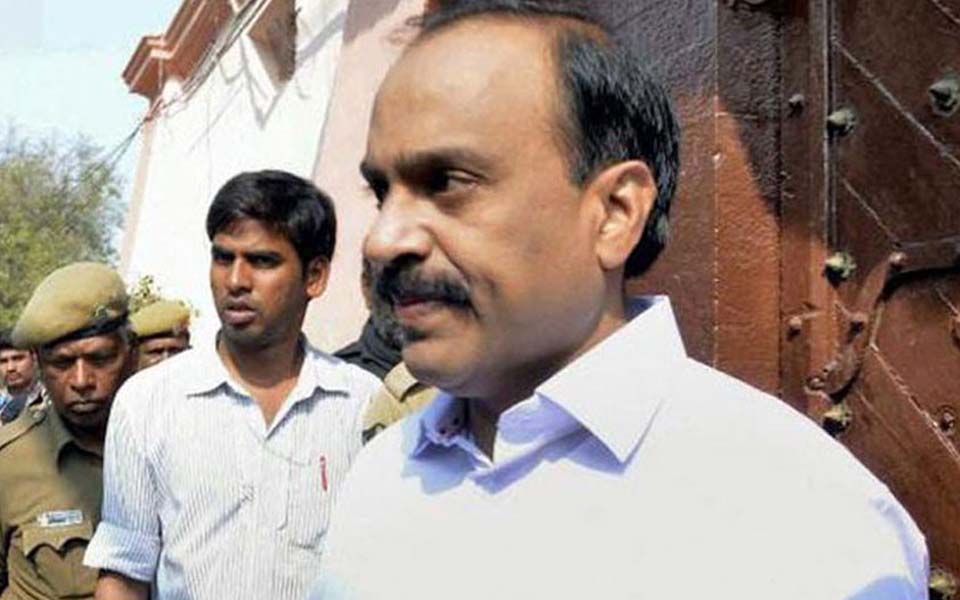
New Delhi, Oct 10: The Supreme Court on Monday permitted Gali Janardhan Reddy, a former Karnataka minister accused in an illegal mining case, to visit and stay till November 6 in Bellary district to meet his daughter.
A bench of Justices M R Shah and Krishna Murari noted that even after a period of 11 years of filing the FIR, the trial in the case has not begun and directed the special court to conduct trial on a day-to-day basis and complete the whole exercise in six months from November 9 without fail.
The top court said that in a case like this, it is always in the larger interest that the trial is concluded at the earliest.
It said that early conclusion of the trial would enhance the faith of people in the justice delivery system and any attempt on the part of the accused to delay the trial of serious offences is to be dealt with iron hands.
More the delay, more the possibilities of influencing the witnesses, it said.
"As it is reported that the daughter of the applicant has delivered a child recently and now she is at Bellary, the applicant is permitted to stay at Bellary up to November 6, 2022.
"It is specifically directed that the applicant shall move out of Bellary and remain out of Bellary in Karnataka and Districts of Anantapur and Cuddapah in Andhra Pradesh from November 7, 2022 till the trial is concluded," the bench said.
The apex court also directed that in the special court proceedings, the prosecution may first examine the witnesses from Bellary in Karnataka and District of Anantapur and Cuddapah in Andhra Pradesh as far as possible.
"It will be the duty of the investigating agency to keep all the witnesses present for the purpose of their depositions/examination.... All the accused are hereby directed to cooperate with the special court in conclusion of the trial at the earliest and within the period stipulated hereinabove and any attempt on the part of the accused to delay the trial shall be viewed very seriously," the bench said.
Reddy, accused in a multi-crore illegal mining case, has been out on bail since 2015 and several conditions were imposed by the apex court in its order, including prohibiting him from visiting Bellary in Karnataka and Anantapur and Kadapa in Andhra Pradesh.
Reddy had sought permission to visit Bellary to meet his daughter who recently gave birth to a girl.
Reddy and his brother-in-law B V Srinivas Reddy, managing director of the Obalapuram Mining Company (OMC), were arrested by CBI on September 5, 2011, from Bellary and brought to Hyderabad.
The company is accused of changing mining lease boundary markings and indulging in illegal mining in the Bellary Reserve Forest area, spread over Bellary in Karnataka and the Anantapur district of Andhra Pradesh.
While granting bail, the top court had directed him to surrender his passport before the trial court concerned and not to leave the country without the permission of the trial judge.
Let the Truth be known. If you read VB and like VB, please be a VB Supporter and Help us deliver the Truth to one and all.
KSCA expresses disappointment over missing IPL playoffs, says it was ready to host matches in B’luru
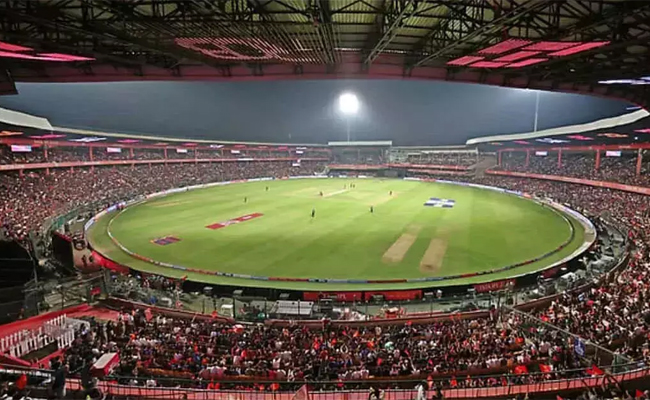
Bengaluru: The Karnataka State Cricket Association (KSCA) has issued a clarification stating that it was fully prepared to host the IPL playoffs and final matches in Bengaluru but the fixtures were allotted to other venues.
In a media note, KSCA said it was disappointed with the decision. The association stated that its president, former India cricketer Venkatesh Prasad, had been in touch with the Board of Control for Cricket in India (BCCI) and had formally conveyed the association’s readiness and interest in hosting the matches at the M. Chinnaswamy Stadium.
KSCA said the IPL matches held in Bengaluru this season were appreciated for smooth conduct, crowd management and overall experience for spectators. It said this reflected its ability to handle high-profile matches.
The association also stated that it had sent a detailed communication to the BCCI explaining its preparedness and the operational arrangements followed during the current IPL season. According to KSCA, these systems have been in place since the start of the Indian Premier League in 2008 and were followed consistently, including during previous playoff matches hosted in Bengaluru.
The clarification added that the communication sent to the BCCI was only meant to provide factual and operational details and to bring clarity on logistical and stakeholder-related requirements involved in hosting such matches.
KSCA said that although it had shown willingness and preparedness, the BCCI has decided to allocate the playoff matches to other venues. It added that the reasons for this decision have not been formally shared with the association, but it respects the authority of the board in taking such decisions.
The association further said it remains ready to host matches of national and international importance and will continue to cooperate with the BCCI, franchises, government authorities and other stakeholders for conducting cricket events.
The statement was issued by KSCA official spokesperson Vinay Mruthyunjaya, who also thanked the media and cricket fans for their continued support.