SC to deliver judgement in Karnataka hijab ban matter
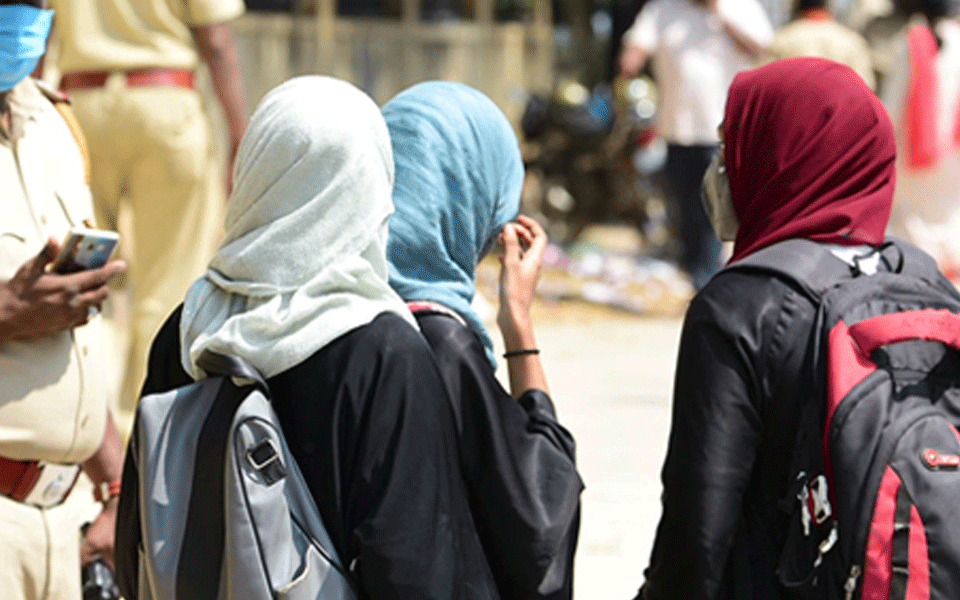
New Delhi (PTI): The Supreme Court is scheduled to pronounce its verdict on Thursday on a batch of petitions challenging the Karnataka High Court judgement refusing to lift the ban on hijab in educational institutions of the state.
According to the apex court's cause list, a bench of Justices Hemant Gupta and Sudhanshu Dhulia will deliver the judgement in the matter on Thursday.
The bench had reserved its verdict on the pleas on September 22 after hearing arguments in the matter for 10 days.
On March 15, the high court had dismissed the petitions filed by a section of Muslim students of the Government Pre-University Girls College in Karnataka's Udupi seeking permission to wear the hijab inside classrooms, ruling it is not a part of the essential religious practice in Islamic faith.
During the arguments in the apex court, a number of counsel appearing for the petitioners had insisted that preventing Muslim girls from wearing the hijab to the classroom will put their education in jeopardy as they might stop attending classes.
Counsel for the petitioners had argued on various aspects, including on the state government's February 5, 2022 order which banned wearing clothes that disturb equality, integrity, and public order in schools and colleges.
Some advocates had also argued that the matter be referred to a five-judge constitution bench.
On the other hand, the counsel appearing for the state had argued that the Karnataka government order that kicked up a row over hijab was "religion-neutral".
Insisting that the agitation in support of wearing hijab in educational institutions was not a "spontaneous act" by a few individuals, the state's counsel had argued in the apex court that the government would have been "guilty of dereliction of constitutional duty" if it had not acted the way it did.
The state government's order of February 5, 2022 was challenged by some Muslim girls in the high court.
Several pleas have been filed in the apex court challenging the high court verdict.
Let the Truth be known. If you read VB and like VB, please be a VB Supporter and Help us deliver the Truth to one and all.
Trump’s fresh threat to bomb Iran amid reports of deal to end war
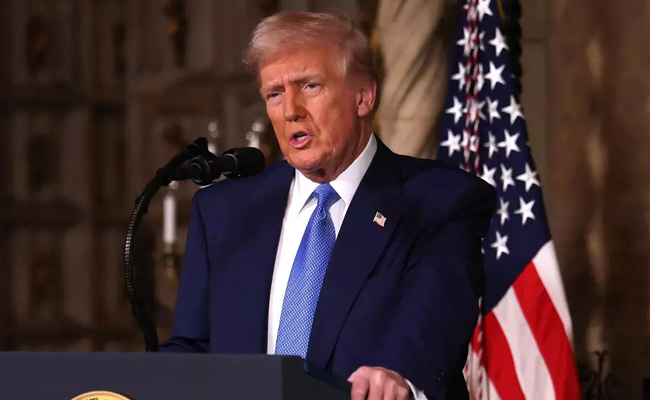
Washington (PTI): US President Donald Trump on Wednesday threatened Iran with more bombing if it doesn't reopen the Strait of Hormuz, amid a report that the warring sides were nearing an agreement to end the war.
US media outlet Axios reported, quoting US officials and two other sources, that the US and Iran were getting close to a one-page memorandum of understanding to end the war and set a framework for more detailed nuclear negotiations.
The US expects Iranian responses on several key points over the next 48 hours, Axios reported, adding that nothing has been agreed yet. This was the closest the parties had been to an agreement since the war began.
"Assuming Iran agrees to give what has been agreed to, which is, perhaps, a big assumption, the already legendary Epic Fury will be at an end, and the highly effective Blockade will allow the Hormuz Strait to be OPEN TO ALL, including Iran," Trump said in a post on Truth Social.
"If they don’t agree, the bombing starts, and it will be, sadly, at a much higher level and intensity than it was before," Trump said.
According to Axios, the deal would involve Iran committing to a moratorium on nuclear enrichment, the US agreeing to lift its sanctions and release billions in frozen Iranian funds, and both sides lifting restrictions around transit through the Strait of Hormuz.
It said many of the terms laid out in the memo would be contingent on a final agreement being reached, leaving the possibility of renewed war or an extended limbo in which the hot war has stopped, but nothing is truly resolved.