SC to hear in July Karnataka's plea for financial assistance for drought management
New Delhi (PTI): The Supreme Court on Monday said it will hear in July a plea filed by the Karnataka government seeking a direction to the Centre to release financial assistance from the National Disaster Response Fund (NDRF) to the state for drought management.
The Centre had on April 29 told the apex court that around Rs 3,400 crore has been released to the Karnataka government for drought management in the state.
The matter came up for hearing on Monday before a bench of justices B R Gavai and Sandeep Mehta.
Senior advocate Kapil Sibal, appearing for the Karnataka government, said the state will file an affidavit in the matter.
The bench posted the matter for hearing in July.
During the hearing last week, Sibal had told the bench that Rs 3,450 crore has been released but the state's request was for assistance of Rs 18,000 crore.
The petition has sought to declare that the Centre's action in not releasing the financial assistance for drought arrangement according to the NDRF is "ex-facie violative" of the fundamental rights of the people of the state guaranteed under articles 14 and 21 of the Constitution.
It said the state is reeling under "severe drought", affecting the lives of its people and for the kharif 2023 season, which starts in June and ends in September, a total of 223 out of 236 taluks are declared as drought-affected.
The plea said 196 taluks are categorised as severely affected and the remaining 27 as moderately affected.
"Cumulatively for kharif 2023 season, the agriculture and horticulture crop loss have been reported in more than 48 lakh hectares with the estimated loss (cost of cultivation) of Rs 35,162 crore," the plea, filed through advocate D L Chidananda, said.
It said the assistance sought from the Centre under the NDRF is Rs 18,171.44 crore.
It said the state is constrained to move the apex court against the "arbitrary actions" of the Centre in denying the financial assistance for drought management to Karnataka under the Disaster Management Act, 2005 and the manual for drought management updated in 2020.
"Further, the impugned action of the Central Government is violative of statutory scheme of the Disaster Management Act, 2005, the manual for drought management and the guidelines on constitution and administration of the State Disaster Response Fund and National Disaster Response Fund," the plea said.
It said under the manual for drought management, the Centre is required to take a final decision on the assistance to the state from the NDRF within a month of the receipt of the inter-ministerial central team (IMCT).
"Despite the IMCT report, which visited various drought affected districts from October 4 to 9, 2023 and made a comprehensive assessment of drought situation in the state and consideration of the said report by the sub-committee of the National Executive Committee constituted under section 9 of the Disaster Management Act, 2005, Centre has not taken a final decision on the assistance to the state from the NDRF even after a lapse of almost six months from the date of the said report," the plea said.
Let the Truth be known. If you read VB and like VB, please be a VB Supporter and Help us deliver the Truth to one and all.
Congress using hijab issue to pacify minority anger, alleges Karnataka LoP R Ashoka
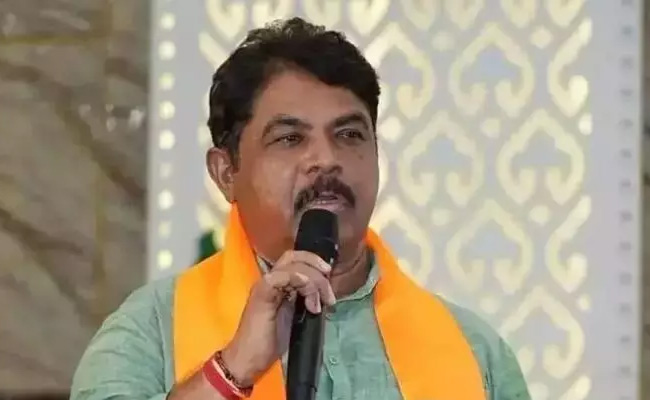
Bengaluru: Leader of Opposition in the Assembly R. Ashoka has accused the Congress government of using the hijab issue to placate what he described as discontent among minority voters after the Davanagere by-election.
In a post on X on Wednesday, Ashoka alleged that the state government, instead of addressing issues such as price rise, corruption, farmers’ distress and law and order, was attempting to retain its minority vote base by reviving the hijab issue.
Referring to the 2022 dress code introduced by the BJP government, which prohibited hijab in schools and colleges, Ashoka said the Karnataka High Court had upheld the policy and emphasised the importance of discipline in educational institutions.
He questioned the Congress government’s move to revisit the issue and asked whether setting aside the court-backed policy to benefit one community could be described as secularism.
Ashoka further alleged that while the government was willing to permit hijab, it continued to prohibit saffron shawls.
He accused the government of dividing students on religious lines rather than treating schools and colleges as spaces of equality.
Drawing a comparison with Mamata Banerjee’s government in West Bengal, Ashoka claimed that excessive appeasement politics had harmed the state and warned that the Congress in Karnataka could face a similar political response.
He said voters in Karnataka would teach the Congress a lesson for what he termed “vote-bank politics” and for compromising constitutional and judicial principles.