Scrap NEET, allow states to conduct entrance tests: Karnataka Deputy CM DK Shivakumar
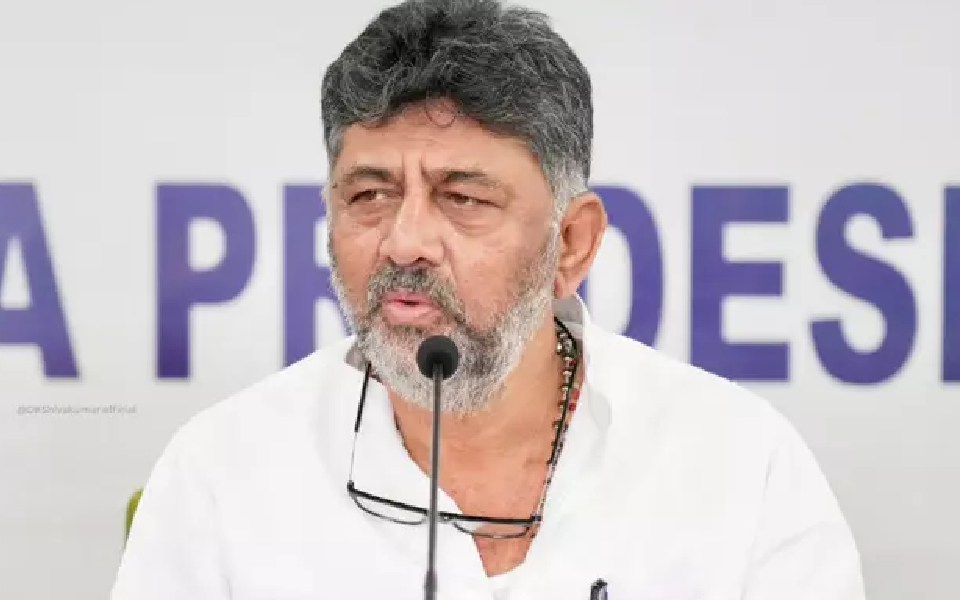
Bengaluru, Jun 15: Karnataka Deputy Chief Minister D K Shivakumar on Saturday urged the Centre to scrap the National Eligibility-cum-Entrance Test (NEET) and allow states to conduct their own entrance tests.
Speaking to reporters here, he said, "The irregularities in the NEET exam are serious. It is a question of the future of lakhs of students. The Centre must scrap NEET and allow states to conduct their own entrance tests. Students from across the country can participate in the tests conducted by states."
"Injustice is being meted out to the students from Karnataka. Karnataka has built colleges, but it is benefitting students from North India and depriving its own students. We have to fight unitedly against this. The Centre must conduct an inquiry into the NEET exam irregularities also," he said.
Earlier in the day, Chief Minister Siddaramaiah, regarding the NEET exam, said there has been injustice to students who have worked hard.
ALSO READ: Forest dept has agreed to hand over 500 acres for Yettinahole project: Deputy CM DK Shivakumar
".....there has to be a probe about it, and a re-exam has to be done. NTA (National Testing Agency) has not conducted the exams properly. Giving grace marks is not a good practice, no one should be passed by giving grace marks," he said.
The NTA has come under criticism amid allegations of irregularities and inflation of marks in the medical entrance exam.
To a question regarding city civic body Bruhat Bengaluru Mahanagara Palike (BBMP) polls, Shivakumar, who is also the state Congress chief said elections will be announced soon and there is a need to prepare the party for that.
"We (Congress) are confident of doing well....We have held discussions with the block level leaders of the party on preparations for the BBMP elections. We have given instructions to replace ineffective office bearers and fill up vacant positions," he said.
Asked about the division of BBMP, Shivakumar said, "We have the committee report on this. Currently, there are 225 wards and the division can be done later as well".
On the Zilla Panchayat elections, he said, "We have to conduct the election in view of the court order. We are committed to conducting elections."
Let the Truth be known. If you read VB and like VB, please be a VB Supporter and Help us deliver the Truth to one and all.
4 held for sexually assaulting woman, girl on moving bus after social media alert in UP's Agra

Agra (UP) (PTI): Four people were arrested, after a prompt response by police following a social media alert, for allegedly sexually assaulting a woman and a girl inside a moving bus here, officials said on Tuesday.
According to an official police statement, at 12:27 am on April 27, information was received on the social media platform X about an incident of sexual assault on a bus travelling from Kanpur to Ahmedabad, which was approaching Namner crossing in Agra.
Acting under the direction of Police Commissioner Deepak Kumar, the Agra Police social media team immediately alerted the Rakabganj police station within minutes and coordinated with the victims to confirm the incident and obtain the exact location, it stated.
Police teams launched intensive checking at Namner crossing and intercepted the bus as it reached the spot. The four accused involved in the incident were apprehended on the spot, and legal action was initiated against them, the statement said.
The police said the swift response and coordination between the social media team and field units ensured timely action, bringing relief to the victims and other passengers, who expressed gratitude towards the police, it added.