Second World Ayurveda Summit begins in Bengaluru

Bengaluru: The second edition of the World Ayurveda Summit began at Palace Grounds on Thursday, bringing together experts, practitioners and students to discuss the future of Ayurveda and its role in modern healthcare.
According to a report published by Deccan Herald on Friday, the four-day event is being organised by the Kaje Ayurvedic Charitable Foundation in association with the Union Ministry of AYUSH and the Karnataka AYUSH Department.
This year’s summit is centred on the theme “Ayurveda for a healthier future”, with a focus on integrating traditional knowledge with contemporary medical practices and nurturing the next generation of Ayurveda professionals.
A unanimous demand was raised at the summit to increase evidence-based scientific research related to the Ayurveda system of medicine and that both union and state governments should take concrete steps in that direction.
Speaking at the inauguration, Dharmasthala Dharmadhikari Veerendra Heggade reportedly said expanding research would help improve medicine formulation and disease treatment within the Ayurveda system. He encouraged students and practitioners not to hesitate in choosing Ayurveda, noting that it is gaining increasing recognition worldwide.
After the inauguration, Health and Family Welfare Minister Dinesh Gundu Rao said Ayurveda plays a significant role in helping people lead a healthy life. “Ayurveda and yoga are preventive lifestyles that help in avoiding diseases. They were developed thousands of years ago on a scientific foundation,” DH quoted him as saying.
The minister also highlighted the need for specialised training in Ayurveda, similar to specialisations in modern medicine. For instance, in modern medicine, people easily trust certified specialists such as nephrologists. Similarly, in Ayurveda too, there should be a proper system of certification with clear standards for specialised practitioners.
Let the Truth be known. If you read VB and like VB, please be a VB Supporter and Help us deliver the Truth to one and all.
EC orders repoll in all 285 polling stations of Falta seat in West Bengal on May 21
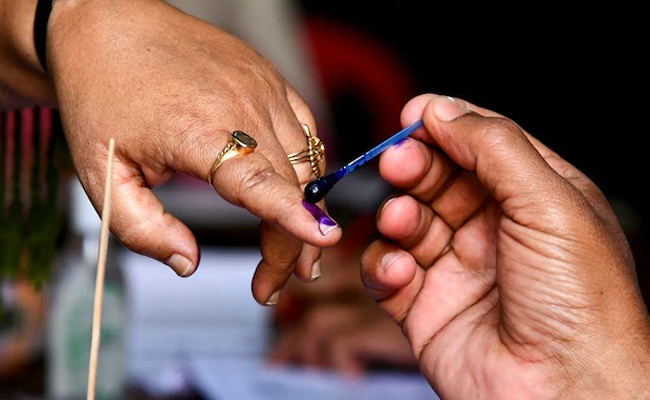
New Delhi (PTI): In a rare move, the Election Commission (EC) on Saturday ordered a "fresh" election or a repoll in all the 285 polling stations of the Falta Assembly seat in West Bengal on May 21 due to "subversion of democratic process".
A spokesperson for the poll panel said the counting of votes for the constituency will take place on May 24.
It is rare for the poll authority to order a re-election in an entire Assembly seat.
A fresh poll is a repoll, an official explained.
"On consideration of severe electoral offences and subversion of democratic process during the polling in a large number of polling stations on April 29 in Falta Assembly Constituency, EC directs that fresh poll shall be conducted in all the 285 polling stations, including auxiliary polling stations," the spokesperson said.
On Friday, the EC ordered a re-election in 15 polling stations of two Assembly seats in West Bengal -- Diamond Harbour and Magrahat Paschim.
The West Bengal Assembly polls were held in two phases on April 23 and April 29. The counting of votes for the remaining seats is scheduled to be taken up on May 4.