Senior IPS officer Ravindranath resigns alleging harassment
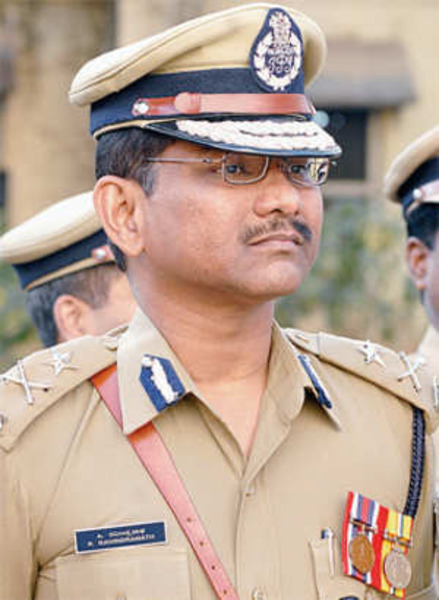
Bengaluru: A senior Indian Police Service officer has resigned from service accusing 'a few individuals' of harassing him indirectly.
Dr. P Ravindranath, who is serving as Additional Director General of Police in the Forest Cell, tendered his resignation to the Chief Secretary T M Vijay Bhaskar through the Director-General of Police Praveen Sood on October 28.
The officer was booked on charges of molestation six years ago, which he said was quashed by the High Court.
Confirming that he had resigned, Ravindranath said: "Yesterday some promotions happened. I should have been promoted as a number-two. Number-one is Amar Kumar Pandey.
I must have been promoted. Instead of me, Suneel Kumar has been promoted," Ravindranath told PTI.
In his resignation letter, Ravindranath stated that he had served the people of Karnataka with utmost devotion but in the last four years he faced "problems created by a few individuals."
"But a few individuals prevented justice for me. Therefore, having undergone the agony of the indirect harassment, I submit my resignation herewith to lead a peaceful life," Ravindranath said.
He asked the Chief Secretary to accept his resignation.
The 1989 batch IPS officer from Andhra Pradesh had landed in a controversy six years ago when he was accused of allegedly clicking pictures of a woman at a cafe in Bengaluru.
The woman in her complaint to the police had stated that when she and her cousin were at the cafe they saw a man staring at them and clicking pictures.
The next day after the incident, a case of molestation was registered against him under section 354 of the IPC, according to Ravindranath.
He added that a charge sheet in that connection was filed in the court, which was quashed by the High Court.
Further, the CAT not only quashed the Departmental Inquiry initiated against him but also recommended that the matter should be probed by the National Commission for Scheduled Caste four years ago.
However, the government obtained a stay against the order, Ravindranath said.
According to him, the Supreme Court in its order on October 15 stated that any stay granted by any court lapses automatically after six months.
"The stay on the CAT order against which the government had gone to high court automatically lapsed," he said.
Attempts to reach the DGP proved futile.
Let the Truth be known. If you read VB and like VB, please be a VB Supporter and Help us deliver the Truth to one and all.
CJI calls for deepening technology and AI-based judicial architecture for faster justice delivery
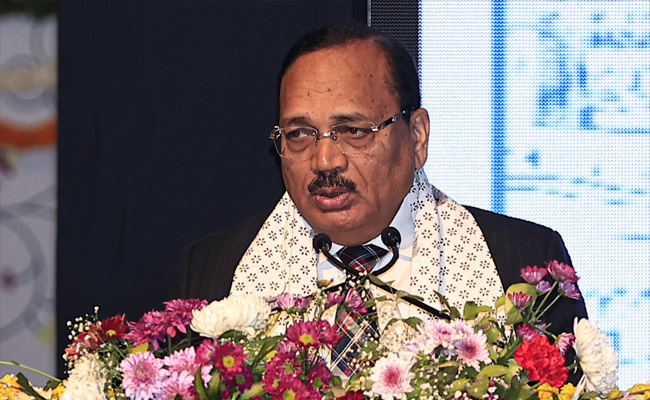
Jabalpur (PTI): Chief Justice of India (CJI) Surya Kant on Saturday called for deepening technology and artificial intelligence (AI)-based judicial architecture, and using technological advancements to expedite justice delivery.
Stating that technology was the only effective answer to wastage of judiciary's time, he said the country's judiciary was committed to ensuring optimum utilisation of technological advancements and AI for the benefit of the common man.
The CJI was speaking at a programme organised by the Madhya Pradesh High Court on the topic of "Fragmentation to fusion, empowering justice via united digital platform integration". He also launched the MP high court's newly-developed digital platforms.
"Indian judiciary is committed to ensuring optimum utilisation of not only technological advancements that have been going on and which are integral part of our system since 1990, but also of latest designs of AI and how we can use them for the benefit of the common man," he said.
"We should think of deepening technology and AI-based judicial architecture. Technology is the only effective answer to wastage of judiciary's time," the CJI added.
He stressed the need to embrace technological advancement in judiciary for expediting the justice delivery system.
Praising Madhya Pradesh HC for developing these platforms, the CJI said that as stated by the Union Minister of State for Law and Justice Arjun Ram Meghwal, there was a need to roll out these technological advancements at the pan-India level.
A committee has been constituted by the Supreme Court on how to use AI for the benefit of the judicial system, especially in speedy disposal of cases, according to him.
Minister Meghwal, Madhya Pradesh Chief Minister Mohan Yadav and MP High Court Chief Justice Sanjeev Sabharwal also spoke on the occasion.
VIDEO | Jabalpur, Madhya Pradesh: CJI Surya Kant says, "... The launch of this software should not be limited to Madhya Pradesh High Court. It should implemented in courts across the country. I will take up this initiative. An all-India digital platform can be created and the law… pic.twitter.com/wHdwrved0f
— Press Trust of India (@PTI_News) May 16, 2026