
Senior IPS Officer Roopa says she is facing threat of acid attack by BJP leader

Bengaluru: Amidst the standoff between Chairman Beloor Raghavendra Shetty and Managing Director and IPS Officer D Roopa Moudgil, of Karnataka State Handicrafts Development Corporation Limited (KSHDCL) the latter has reportedly said she is under threat of an acid attack by Shetty.
The standoff between the Chairman and MD became public when the two were attending the Annual General Body meeting of the board and labeled serious allegations against each other during the meeting on May 27. The video of the incident had gone viral across social media platforms.
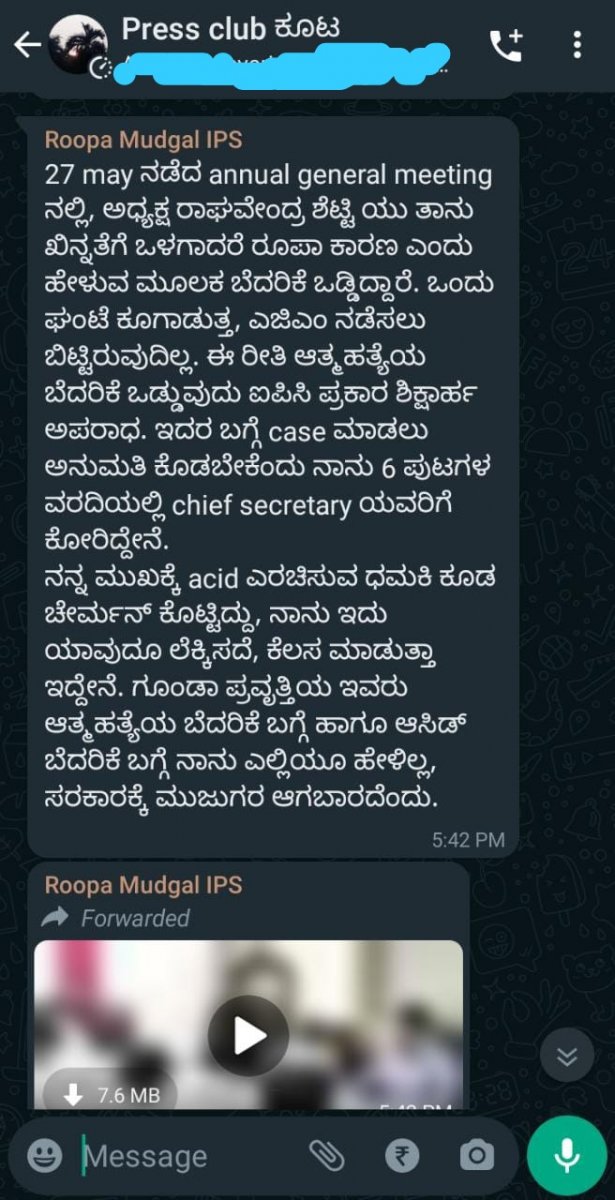
On Thursday, a screenshot of the purported WhatsApp message from Roopa started doing rounds on social media platforms wherein Roopa alleged that Shetty had threatened her with an acid attack while also threatening to commit suicide.
On May 27, Shetty said that Roopa would be responsible for his death if he commits suicide. Following this, Roopa said she had requested the Chief Secretary to file a case against Shetty as threatening to commit suicide was a punishable offence under the Indian Penal Code.
In her complaint to the Chief Secretary Roopa charged Shetty with destroying CCTV footage ill-treating women staff, to trying to bring back a sacked general manager (finance) who had misappropriated Rs 25 crore.
Roopa also alleged that though there is a rule that the chairman should not interfere in the day-to-day work of KSHDCL, Shetty asks the staff to bring files related to projects. She accused him of taking away sandalwood and other products from showrooms without paying money. She alleged that though KSHDCL is paying salaries to four staffers of the chairman, none of them have come to the office.
Later on Thursday evening, Roopa confirmed that the message, of which the screenshot was doing rounds on social media was indeed sent by her. In the message, she had also added that to avoid inconvenience to the government she had not mentioned the acid attack threat by Shetty earlier.
While Chairman Beloor Raghavendra Shetty is a political appointment by the BJP government, MD D Roopa Moudgil is a senior IPS officer of the rank of IGP.
Let the Truth be known. If you read VB and like VB, please be a VB Supporter and Help us deliver the Truth to one and all.
Indore Congress woman councillor refuses to sing Vande Mataram, triggers row
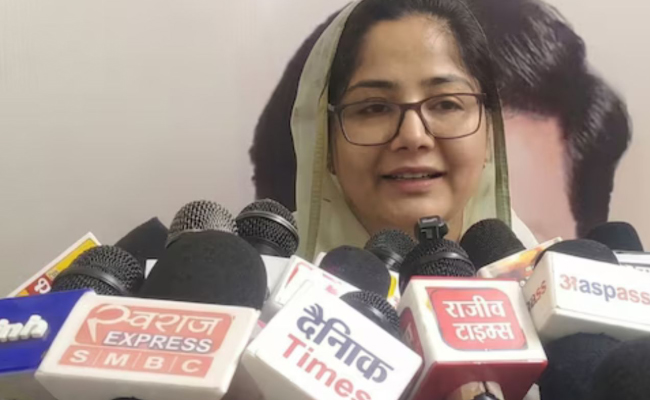
Indore (PTI): A controversy has erupted after a woman councillor of Congress refused to sing Vande Mataram, citing Islamic beliefs, during a discussion on the Indore Municipal Corporation’s budget.
The refusal by Fauzia Sheikh Alim to sing the national song on Wednesday prompted councillors from the ruling BJP to rush to the chairman’s podium and raise slogans.
Amid the uproar, Chairman Munnalal Yadav directed Alim to leave the House.
The Congress councillor later told reporters that her religion does not allow her to sing ‘Vande Mataram' - a Sanskrit phrase meaning “I bow to thee, Mother”.
Alim said she enjoys religious freedom under the Constitution, and no one can force her to sing Vande Mataram.
As the controversy escalated, Alim said she respects the national song and will continue to do so.
She said that she had stood up to speak at the municipal corporation meeting to raise the issue of contaminated drinking water, but in an attempt to distract the House from the more fundamental issues, BJP councillors asked her to sing Vande Mataram first.
Mayor Pushyamitra Bhargava described the Congress councillor’s refusal to sing Vande Mataram as unfortunate and alleged that she deliberately arrives late to the municipal corporation meeting so as not to participate in the mass singing of the national song.
Municipal Corporation Leader of the Opposition and Congress councillor Chintu Chouksey distanced himself from the controversy, stating that the party has no concern with Alim’s “personal opinion” on Vande Mataram.
“Vande Mataram is ingrained in every citizen of India. Singing the national song should be mandatory for every citizen,” he added.
Written in 1875 and later included in Bankim Chandra Chatterjee’s novel "Anandamath" (1882), ‘Vande Mataram’ became a rallying cry during the freedom movement.
Vande Mataram was first published in the literary magazine “Bangadarshan” as part of Chatterjee's Anandamath.
_vb_85.jpeg)
_vb_34.jpeg)
_vb_49.jpeg)