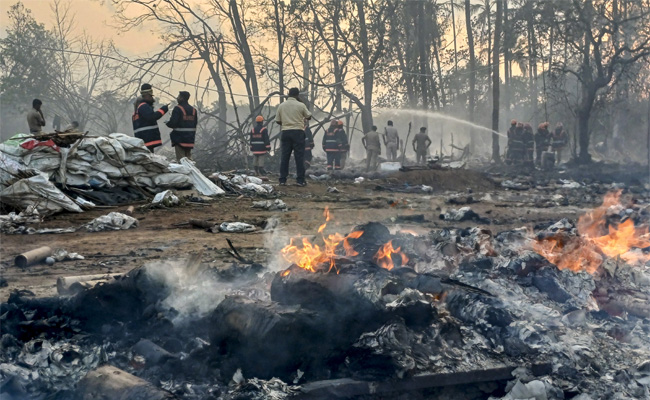
Several hotels, restaurants continue to operate under strain amid commercial LPG supply crisis
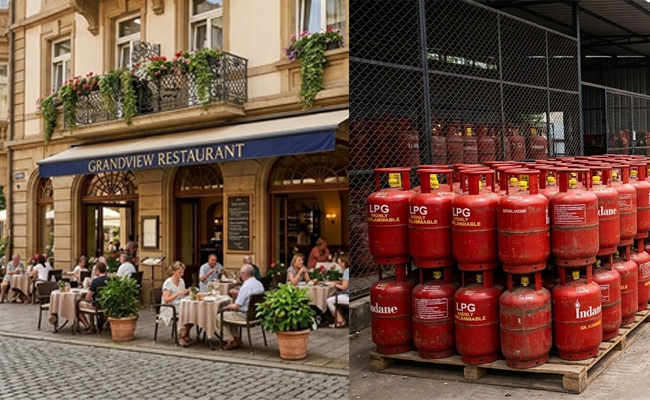
Bengaluru (PTI): Several hotels and restaurants in the city on Tuesday continued to operate under strain with the commercial gas cylinders already they have and said they will be forced to shut down once the stock is exhausted.
They expressed hope that the supply issue will be resolved at the earliest.
The development comes following a sudden and total halt in the supply of commercial gas cylinders, amid the rising energy costs and supply constraints caused by the West Asia conflict, according to the Bangalore Hotels Association.
"Since the gas supply has stopped, the hotels will be closed from March 10," the association had said in a release earlier.
However, some hotel owners said operations are currently continuing with constraints, with some establishments stopping the preparation of certain items that consume more gas to conserve fuel and stretch their existing stock for a longer period.
P C Rao, Honorary President of the Bangalore Hotels Association, told PTI that the decision of closure depends on individual hotels. They will operate as long as they have gas. If there is no gas available, then there is no other option. Then it will automatically close.
"Till the last drop of gas available, we will cook and serve," he said.
When asked if there would be a complete shutdown of hotels and restaurants today, he said, "No, no. Some people (hotels) still have stock. Some others are waiting, hoping there might be some supply. It is not possible to arrange any alternative immediately."
"Let us see. We are hoping for the best, because if we close it will be difficult for us and for customers as well," he said.
Rao said that some hotels have stopped preparing items like poori because they consume a lot of oil and gas.
"We are trying to save gas. For example, if we have five cylinders and normally need three cylinders per day, we try to stretch those five cylinders to last four days. We are making such efforts," he said.
Expressing hope that the issue will be resolved soon, he said, "It has to be resolved, because this is not just a state subject--it concerns the whole country. That is why it must be resolved."
Hotelier Chandrashekhar Hebbar said the situation has become serious due to the shortage of commercial cooking gas, forcing hotels to consider shutting down.
"It has reached that level now -- to the point where closure is being considered. For now, everyone is trying to manage by reducing gas consumption and adjusting things, but that can be done only for a day or two. After that, it will not be possible," Hebbar told PTI.
He said several items were already being curtailed to conserve gas. "We have stopped serving some items. Things like poori have been controlled. The government must take immediate action on this," he added.
Hebbar cautioned that the closure of hotels would affect not only customers but also workers and catering services.
"We have a lot of catering work also, especially with many weddings happening now. All the orders have already been taken, and there is no alternative at present," he said.
He urged the authorities to intervene quickly to resolve the issue and ensure a regular supply of cooking gas to the sector.
Noting that the supply of commercial gas cylinders stopped on March 9, the hotel association said in the release on Monday, since the hotel industry is an essential service, common people, students, and medical professionals, who rely on the hotels for daily meals, will be affected.
"In addition, our hotel industry will also face difficulties until the gas supply returns to normal," it added.
The association said oil companies had guaranteed an uninterrupted gas supply for 70 days, making the sudden stoppage a "big blow" to the hotel industry.
Let the Truth be known. If you read VB and like VB, please be a VB Supporter and Help us deliver the Truth to one and all.
KKR defeat LSG via Super Over
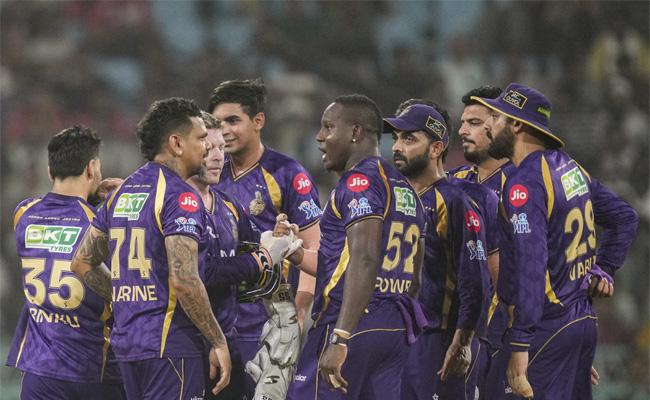
Lucknow (PTI): Kolkata Knight Riders edged Lucknow Super Giants via Super Overs in a battle between two bottom-placed teams in the IPL, here on Sunday.
Chasing a modest 156, LSG suffered a batting collapse and managed to tie the contest and take it to Super Over with No. 9 Mohammed Shami striking a last-ball six against a wayward Kartik Tyagi, who leaked 16 runs in the final over.
But Sunil Narine bowled a stunning Super Over conceding just one run and taking two wickets to give KKR an easy target.
Rinku Singh then finished the chase with a boundary off first ball from Prince Yadav.
Earlier the KKR were in deep trouble with 93/7 in 15 overs but Rinku smashed a sensational 83 not out from 51 balls including four sixes in a row in the final over to lift them to 155/7.
Cameron Green (34) was the only other batter to reach double-digit scores as KKR suffered a familiar batting meltdown with Mohsin taking his maiden fifer.
In reply, LSG continued their dismal show with the bat to succumb to their fifth loss in a row.
Brief Scores:
Kolkata Knight Riders 155/7; 20 overs (Rinku Singh 83 not out, Cameron Green 34; Mohsin Khan 5/23). Lucknow Super Giants 155/8; 20 overs (Rishabh Pant 42). KKR won via Super Over.