Sexual Abuse: No sign of Prajwal’s return as deadline set by him ended on Tuesday
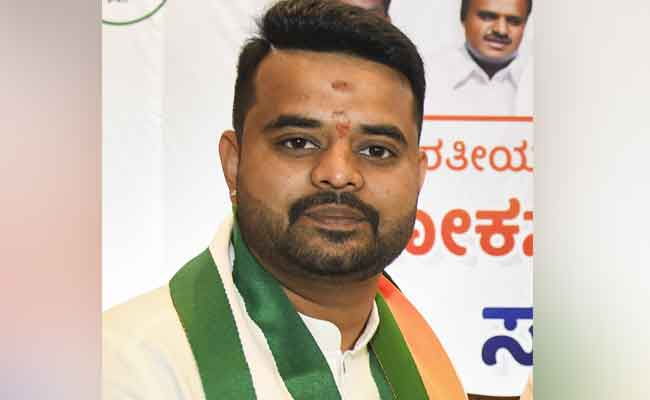
Bengaluru (PTI): The seven days’ time sought by Hassan’s NDA Lok Sabha candidate Prajwal Revanna to appear before the Special Investigation Team probing sexual abuse allegations against him ended on Tuesday but there was no sign of his return from abroad.
The 33-year-old JD(S) MP and grandson of former prime minister H D Deve Gowda flew to Germany as soon as news spread that the Karnataka State Commission for Women Nagalakshmi Chowdhary had written to Chief Minister Siddaramaiah seeking a probe into the explicit videos of Prajwal allegedly sexually abusing several women.
A lookout notice for Prajwal has been issued at all airports in India, along with a Blue Corner notice.
A Blue Corner notice issued by Interpol helps countries collect and share information regarding a person's location and their activities as part of a criminal investigation.
Former chief minister H D Kumaraswamy claimed on Tuesday that he was not in touch with his nephew Prajwal.
Addressing a press conference, the JD(S) second-in-command said action against those who commit offences should be taken as per law.
Sources in the Special Investigation Team said they received calls on a helpline number on Monday as well as on Tuesday but they declined to share details.
However, Kumaraswamy claimed that no one had called the helpline number till now.
Meanwhile, JD(S) MLA H D Revanna and Prajwal’s father, who is in the custody of the Special Investigation Team (SIT) on charges of kidnapping a woman who was allegedly sexually abused by Prajwal, failed to get relief on Tuesday from the Special Court for Elected Representatives here.
The court adjourned the hearing on his bail plea to Wednesday.
The SIT took him to Bowring and Lady Curzon Hospital and Victoria Hospital for a medical check-up on Tuesday evening.
Revanna, son of JD(S) patriarch and former prime minister H D Deve Gowda, and his confidant Sathish Babanna were booked on Thursday night for allegedly abducting a woman on April 29.
The case was registered on a complaint filed by the woman's son. In his complaint, he accused Revanna's son and JD(S) MP Prajwal Revanna of having sexually abused his mother.
The SIT has also secured the custody of Babanna.
The woman was allegedly abducted to prevent her from testifying against Prajwal, police sources said.
Let the Truth be known. If you read VB and like VB, please be a VB Supporter and Help us deliver the Truth to one and all.
Congress using hijab issue to pacify minority anger, alleges Karnataka LoP R Ashoka
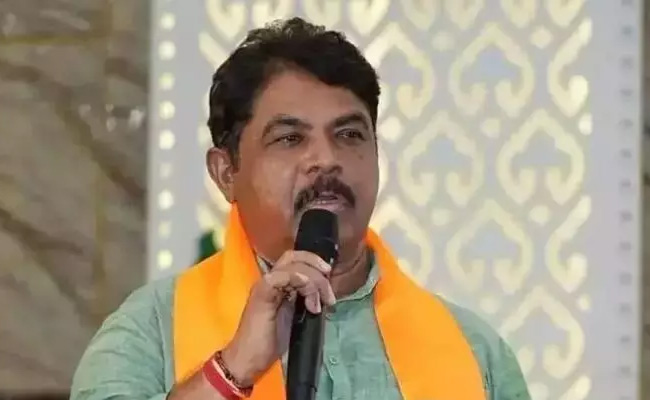
Bengaluru: Leader of Opposition in the Assembly R. Ashoka has accused the Congress government of using the hijab issue to placate what he described as discontent among minority voters after the Davanagere by-election.
In a post on X on Wednesday, Ashoka alleged that the state government, instead of addressing issues such as price rise, corruption, farmers’ distress and law and order, was attempting to retain its minority vote base by reviving the hijab issue.
Referring to the 2022 dress code introduced by the BJP government, which prohibited hijab in schools and colleges, Ashoka said the Karnataka High Court had upheld the policy and emphasised the importance of discipline in educational institutions.
He questioned the Congress government’s move to revisit the issue and asked whether setting aside the court-backed policy to benefit one community could be described as secularism.
Ashoka further alleged that while the government was willing to permit hijab, it continued to prohibit saffron shawls.
He accused the government of dividing students on religious lines rather than treating schools and colleges as spaces of equality.
Drawing a comparison with Mamata Banerjee’s government in West Bengal, Ashoka claimed that excessive appeasement politics had harmed the state and warned that the Congress in Karnataka could face a similar political response.
He said voters in Karnataka would teach the Congress a lesson for what he termed “vote-bank politics” and for compromising constitutional and judicial principles.