Shivakumar urges centre to intervene on Alamatti dam height issue
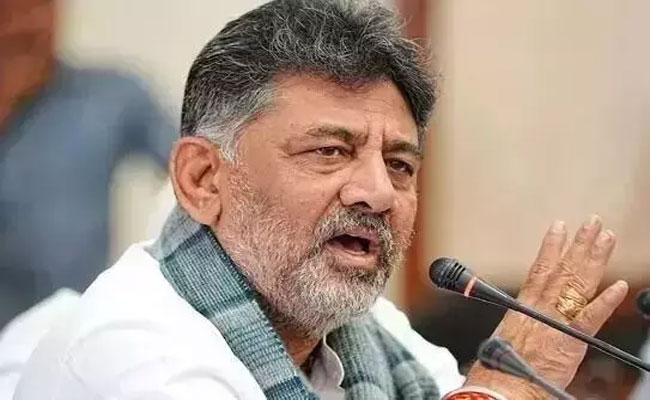
Bengaluru (PTI): Karnataka Deputy Chief Minister D K Shivakumar on Tuesday urged the Centre to intervene and allow Karnataka to raise the height of the Almatti dam across the Krishna river.
He also said that he will lead an all-party delegation to Delhi in this regard.
Noting that all three states -- Andhra Pradesh, Telangana and Maharashtra -- have opposed the project, he said the Andhra Pradesh government has asked the Centre not to allow Karnataka acquire land for the proposed project to increase the dam's height from 519 meters to 524 meters.
"Andhra Pradesh government has written to the Centre asking it to refrain from giving any approval or gazette notification that allows Karnataka to carry out land acquisition for the proposed project stating the matter is pending before the Supreme Court," Shivakumar, who is also the state's water resources minister said.
Speaking to reporters here, he said, the Union Water Resources Secretary has sought Karnataka's response. "We will reply to it after consulting legal experts."
"I did not expect Andhra Pradesh to react this way. (Andhra Pradesh CM) Chandrababu Naidu is an experienced politician; he is aware of everything, but they are now putting such pressure on the centre. I'm unable to understand this," he said.
Noting that the Krishna Water Disputes Tribunal-II (KWDT-II) award permitted Karnataka to raise the dam to 524 metres and that there was no stay from the Supreme Court, the Deputy CM said and appealed to the Centre to act in accordance with earlier orders.
He also appealed to all the parliament members of Karnataka to put pressure on the central government in this regard, in the interest of the state.
"I will be sending all the details and records to our MPs; we need to build pressure on the centre, Prime Minister and the Union Jal Shakti minister on the issue when the Parliament session begins on March 10," he said, adding that he also plans to lead an all-party delegation to Delhi in this regard.
Pointing out that the Karnataka cabinet, on September 16, 2025, decided to acquire 1.33 lakh acres of land for this project in one go, through consent acquisition, and planned to allocate Rs 70,000 crore for land acquisition in three phases, Shivakumar said, adding, "Now obstacles are being caused to it."
Further delays would escalate costs, he said, as land compensation has become a major burden, with courts awarding higher payouts after farmers rejected earlier offers of Rs 8-9 lakh per acre during the previous BJP government.
"After deliberations, compensation is fixed in the range of Rs 35-40 lakh per acre, with some awards reaching Rs 10 crore because of litigations," he said, adding that around Rs 20,000 crore has already been spent on the project.
Asserting that it is "our water, our land", Shivakumar said, "I appeal to Andhra Pradesh and Maharashtra not to interfere in this project; it is not good for you."
Let the Truth be known. If you read VB and like VB, please be a VB Supporter and Help us deliver the Truth to one and all.
2019 mud attack on engineer: Maharashtra court sentences BJP minister Nitesh Rane to one-month jail
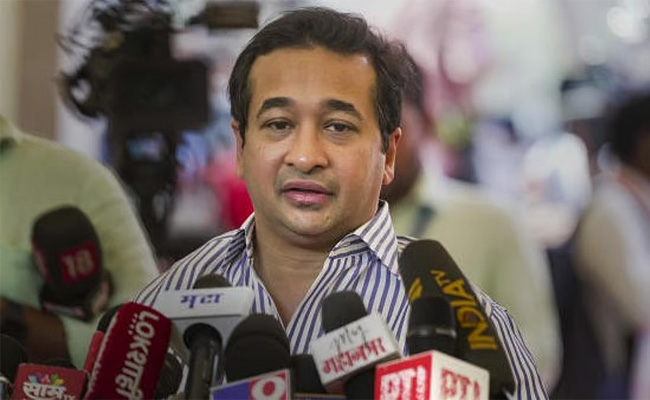
Mumbai (PTI): A court in Sindhudurg on Monday convicted Maharashtra minister Nitesh Rane in a 2019 case of pouring mud on an NHAI engineer when he was in opposition, and sentenced him to one-month imprisonment, noting that lawmakers are not supposed to take the law into their hands.
Later, the court suspended Rane's sentence, allowing him time to appeal before a higher court, while acquitting 29 other accused in the case.
"Even though Rane's intention was to raise a voice against the poor quality of work and inconvenience faced by the people, he was not supposed to humiliate or insult a public servant in public," additional sessions court judge V S Deshmukh stated.
"If such incidents continue to occur, public servants would not be able to discharge their duties with dignity," the judge noted.
ALSO READ: 19-yr-old woman found hanging from tree in UP village; juvenile held
Calling the act "abuse of power", the court held that "it is the demand of time to curb such tendency".
Rane, a son of former Union minister Narayan Rane, was among 30 people charged under various offences, including rioting, assault to deter a public servant, and criminal conspiracy. He was in Congress when the incident occurred.
All the accused, including Nitesh Rane, were acquitted of these offences, as the court found insufficient evidence to support most of these claims.
However, the court found Nitesh Rane guilty of an offence under section 504 (intentional insult meant to provoke a breach of public peace) and sentenced him to one month's jail.
Rane, then a Congress MLA, had called the Sub-Divisional Engineer of the National Highway Authority, Prakash Shedekar, to a bridge over the Gad river in Kankavli on July 4, 2019, for inspecting the work to widen the Mumbai-Goa Highway.
According to the prosecution, Nitesh Rane and his followers, frustrated by the poor quality of the roadwork and waterlogging, confronted the engineer. They poured muddy water on Shedekar and forced him to walk through slush in public.
The court, after perusing the evidence on record, noted that the informant (victim) was holding a high post in the National Highway Authority.
"Despite that, he was made to walk through the muddy water in public. It would have certainly humiliated and insulted him," the court remarked.
The judge held that Rane compelling Shedekar to walk through the muddy water "was nothing but an intentional insult to the informant," and provocation which will cause him to break the public peace.