Shivamogga Traffic head constable allegedly commits suicide; blames colleague of harassment in death

Shivamogga: The head constable of Shivamogga Traffic Police Station (West), Muhammad Zakaria, allegedly committed suicide by hanging himself in the police station on Wednesday night.
The 55-year-old head constable has left behind a death note, accusing a colleague of harassing him, adding that he had developed health problems due to this.
Zakaria had returned to work three days ago after taking leave for a few days.
ALSO READ: Ballari Police get new IGP, SP after New Year’s clash that killed Congress worker
On Wednesday night, he reportedly returned to the police station after duty near the Shivamogga Bus Stand. He went to the cells situated behind the stations, where he allegedly hanged himself.
Superintendent of Police Nikhil B and other senior officers, who were informed of the matter, rushed to cells for an inspection.
Zakaria, in his death note, has stated that he worked diligently as a policeman for 26 years but the Head Constable 131 Nasir Ahmad in their police station was harassing him and fighting with him for a year now. He also accused Ahmad of tarnishing his image even when he was on duty for the Prime Minister’s visit to Udupi. Such harassment had pained him greatly and also led to health problems,” the constable added.
Clarifying that he would not share matters related to work with his family members, Zakaria added that he had informed his younger brother Adil about the fights with Ahmad. “Ahmad also spoke in a derogatory manner with Radha Madam and Kavitha Madam, questioning my diligence and asking them why I had been posted in this police station. I am severely upset by this and have decided to commit suicide. Nasir Ahmad (HC 131) alone is responsible for my death,” he has specified.
When asked about the matter, SP Nikhil B admitted that Zakaria was battling health issues. The constable had forwarded the death note in the WhatsApp group, where it is stated that the police station staff used to harass him. Zakaria’s family members have been informed of the matter. Investigation will be carried out after they file a complaint, he added.
(Assistance for overcoming suicidal thoughts is available on the state’s health helpline 104, Tele-MANAS 14416.)
Let the Truth be known. If you read VB and like VB, please be a VB Supporter and Help us deliver the Truth to one and all.
4 workers die after being buried under coal slurry in Jharkhand's Dhanbad
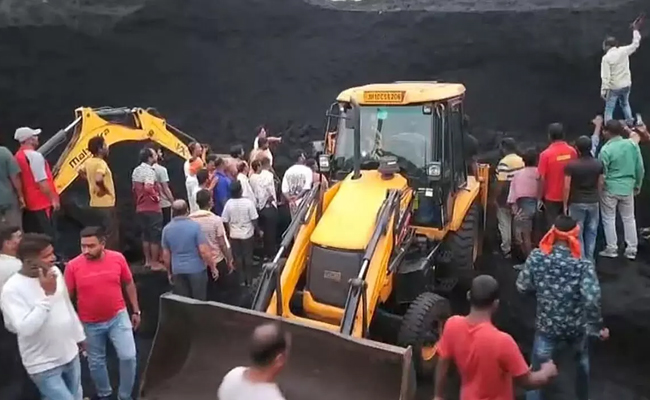
Dhanbad (Jharkhand) (PTI): At least four workers died after being buried under coal slurry in Jharkhand's Dhanbad district on Saturday, a police official said.
The incident took place at Moonidih coal washery in the command area of Bharat Coking Coal Limited (BCCL).
"Bodies of all four workers were dug out of debris during a rescue operation," Putki police station in-charge Waqar Hussain told PTI.
The incident took place when coal slurry was being loaded into trucks by workers, during which a large chunk of slurry fell and trapped several workers underneath, officials said.
The deceased have been identified as Manik Bauri, Dinesh Bauri, Deepak Bauri, and Hemlal Gope.
Meanwhile, the family members of the deceased and local villagers placed the bodies in front of the washery gate and began a protest.
They demanded compensation, jobs for dependents and action against those responsible for the incident.
Police and administration officials are trying to pacify the protesters, an official said.