SIT files preliminary charge sheet in Karnataka Valmiki Corporation scam

Bengaluru, Aug 5: The Special Investigation Team (SIT) probing the misappropriation of funds from the state-run Karnataka Maharshi Valmiki Scheduled Tribe Development Corporation has filed a preliminary charge sheet mentioning the arrest of 12 people and the seizure of Rs 49.96 crore in the case, police said on Monday.
The opposition BJP and JD(S) have been demanding the resignation of Chief Minister Siddaramaiah over the scam that has already led to the resignation of Minister B Nagendra, who is currently under ED scanner.
The Valmiki Corporation's former officials including ex-Managing Director J G Padmanabha and Ex-Accounts Officer Parashuram Durgannanavar; First Finance Credit Co-operative Society Limited Chairman Sathyanarayana Etakari; acquaintance of Former Minister Nagendra Nekkunte Nagaraj; and Brother-in-law of Nekkunte Nagaraj Nageshwar Rao are among the 12 arrested, police said.
According to a police statement regarding the charge sheet, the SIT is conducting the investigation under the guidance and supervision of the Director General of Police, CID, Bengaluru. So far, totally eight cases have been registered in connection with the scam and have been investigated by the SIT.
The SIT has seized cash, gold and other materials from the accused persons.
The total seizure made during the course of investigation is of Rs 49.96 crore, which includes Rs 16.83 crore cash and 16.25 kg gold worth Rs 11.7 crore.
The total value of the luxury cars Lamborghini Urus and Mercedes Benz seized is Rs 4.51 crore, and the investigating officer’s bank account with Rs 3.19 crore seized and amount in frozen accounts add up to Rs 13.72 crore.
"The Investigating Officer of SIT has filed a preliminary charge sheet containing seven volumes and 3,072 pages at High Grounds Police Station in Case No. 118/2024 against the above accused persons under various sections of the IPC, including 120(B) (criminal conspiracy), 406 (criminal breach of trust), 420 (cheating and thereby dishonestly inducing delivery of property) in the 3rd ACMM (Additional Chief Metropolitan Magistrate Court), Bengaluru and further investigation is continued," the police said in a statement.
"All out efforts are being made by SIT to investigate the above case and seven other related cases in professional and transparent manner. The investigation continues," they added.
The Valmiki Corporation scam is said to involve about Rs 187.33 crore where the money kept in various accounts, including Rs 40 crore in the government treasury, was diverted towards the Union Bank of India’s MG Road branch.
Of the Rs 187.33 crore, Rs 88.63 crore was illegally transferred to at least 217 different bank accounts in Telangana including 18 firms.
Former minister Nagendra, who was arrested by the Enforcement Directorate, is in judicial custody in connection with the case.
The scam came to light after the Accounts Superintendent of the Corporation Chandrasekharan P died by suicide.
In his suicide note, he had explained in detail how the money was transferred and the role of the Corporation and the bank officials in the scam.
Let the Truth be known. If you read VB and like VB, please be a VB Supporter and Help us deliver the Truth to one and all.
Ordinance issued to increase number of Supreme Court judges from 34 to 38
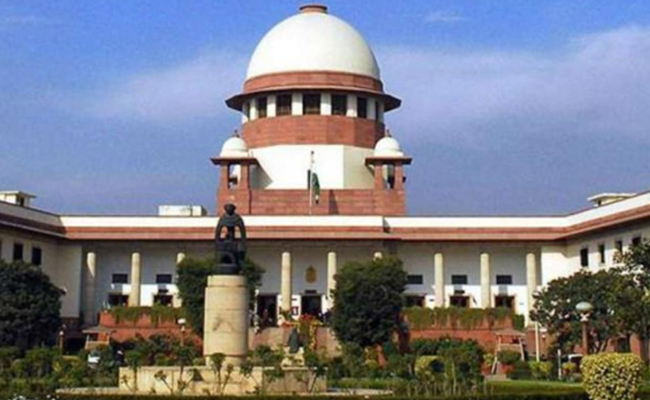
New Delhi (PTI): The government has promulgated an ordinance to increase the strength of the Supreme Court from the present 34 judges to 38, including the Chief Justice of India.
The law ministry notified the ordinance on Saturday, which amended the Supreme Court (Number of Judges) Act, 1956, to increase the sanctioned strength of the top court.
So far, the sanctioned strength of the top court was 34, including the Chief Justice of India (CJI). Now, the number of judges has been increased by four, taking the sanctioned strength to 38.
The top court will now have 37 judges, other than the CJI.
With the apex court having two vacancies at present, and the ordinance coming into force immediately, the Supreme Court Collegium will now have to recommend six names for appointment as judges in the top court.
A bill will be brought in the Monsoon Session of Parliament to convert the ordinance – an executive order – into a law passed by Parliament.
The Union Cabinet had cleared a draft bill on May 5 to increase the number of apex court judges.
The strength of the Supreme Court was last increased from 30 to 33 (excluding the CJI) in 2019.
The Supreme Court (Number of Judges) Act, as originally enacted in 1956, put the maximum number of judges (excluding the CJI) at 10.
This number was increased to 13 by the Supreme Court (Number of Judges), Amendment Act, 1960, and to 17 by another amendment to the law.
The Supreme Court (Number of Judges) Amendment Act, 1986, augmented the strength of judges from 17 to 25, excluding the CJI.
A fresh amendment in 2009 further increased the strength from 25 to 30.
Article 124(3) of the Constitution lists the qualifications required to become a Supreme Court judge.
An Indian citizen who has either served as a high court judge for at least five years, or as an advocate for 10 years, or is a distinguished jurist, can be appointed to the top court.
The strength of the Supreme Court is increased based on the recommendations of the CJI, who writes to the Union law minister. After consulting the finance ministry, the Department of Justice under the law ministry moves the Cabinet with a draft bill.