SIT suspects role of retired Colonel in journalist Gauri Lankesh murder case
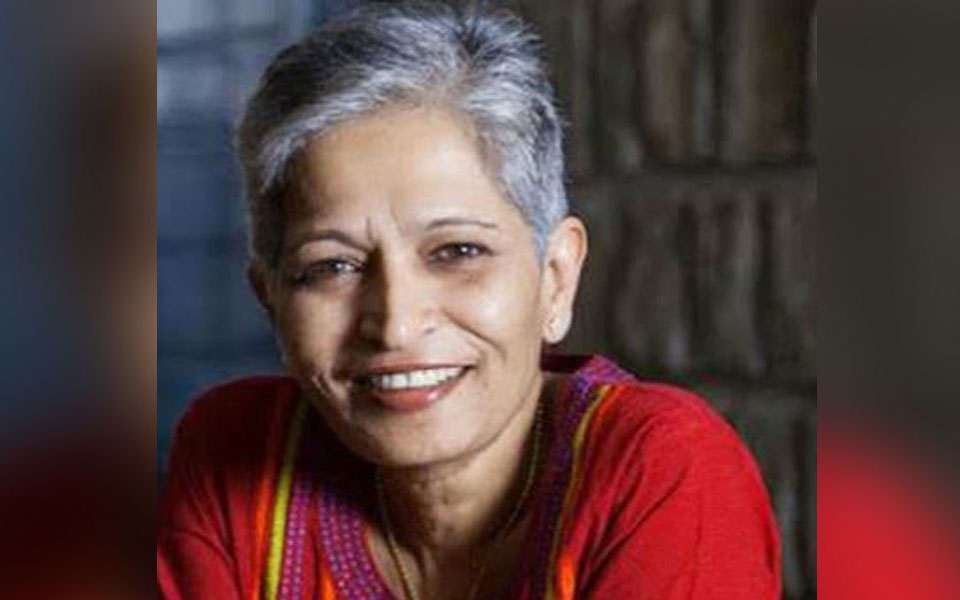
BENGALURU: The Special Investigation Team (SIT) probing the murder of journalist-activist Gauri Lankesh strongly suspects the role of four top rung leaders, including a retired Indian Army Colonel, of a right-wing organisation, to be behind the murder.
With investigations pointing towards their possible involvement, the SIT is trying to gather clinching evidence against them, sources in the SIT told TNIE.
The four persons are suspected to have given the ‘order’ to Amol Kale to eliminate Gauri, who reportedly invited their wrath by making derogatory speeches against Hindu religion.
A senior SIT official, on condition of anonymity, admitted that the role of the four men was strongly suspected in the murder.
“The four hold key positions in a right-wing organisation and one among them is a retired Colonel. Though we believe that the call for the murder was given by them, there is no substantial evidence against them. We are working on gathering evidence against them,” the official said.
Meanwhile, it is learnt that the organisation is trying hard to shield the absconding accused persons in the case.
“There are at least three accused persons involved in the case, who are still at large, and we have information that the organisation is helping and funding them to evade arrest,” the official added.
The probe earlier had established that Amol planned and executed Gauri’s murder. Though he had masterminded the killing, SIT suspected he had carried out the murder at the behest of other conspirators. Right wing outfit funded murder
It is learnt that the right wing outfit had funded the entire operation.
“Amol Kale was being paid at least B1.25 lakh every month since planning the operation to kill Gauri began in January 2017. The money was pumped by the outfit to arrange manpower and logistics as part of the mission,” the official said.
courtesy : newindianexpress.com
Let the Truth be known. If you read VB and like VB, please be a VB Supporter and Help us deliver the Truth to one and all.
Three company directors held in Rs 100-crore investment fraud in Kochi

Kochi (Kerala) (PTI): Police on Sunday arrested three directors of a firm accused of cheating hundreds of investors of over Rs 100 crore through a fake investment scheme linked to agricultural tourism here, officials said.
The accused were identified as Muraleedharan, Ashik Murali and Akhil Murali, all natives of Thrissur.
The arrests were made by the Kalamassery police in connection with a fraud involving ATCOS (Agri Tourism Cooperative Society), a firm headquartered at Pathadipalam here.
Police said the company had promised high returns by collecting investments from the public in the agricultural tourism sector, but allegedly cheated hundreds of people and fled with the money.
ATCOS was registered under the Multi-State Cooperative Societies Act and operated 13 branches across various districts in Kerala, besides a branch in Coimbatore in Tamil Nadu, officials said.
When investors failed to receive their promised returns or the invested amount, complaints were filed with the police.
Officials said around 54 cases have been registered against the firm in 32 police stations across the state, including 29 cases at the Kalamassery police station alone.
Following instructions from Kochi City Police Commissioner K S Mahesh Kumar, a special investigation team was formed under the supervision of Deputy Commissioner of Police (Law and Order) Shehensha and Thrikkakara ACP Manoj Kumar.
The team traced the accused to an apartment in Amala Nagar in Thrissur, where they had been hiding after secretly renting the flat, officials said.
The bank accounts of the accused have been frozen, and steps have been initiated to trace their assets, officials said.
Police also conducted a raid at the company’s office at Pathadipalam and seized several documents related to the case.
The accused were produced before the Judicial First Class Magistrate Court in Kalamassery, which remanded them to judicial custody and sent them to Kakkanad jail.
Police said they would seek the custody of the accused for further interrogation as the investigation continues.