Six more combinations get nod for addition to ITI courses in Karnataka
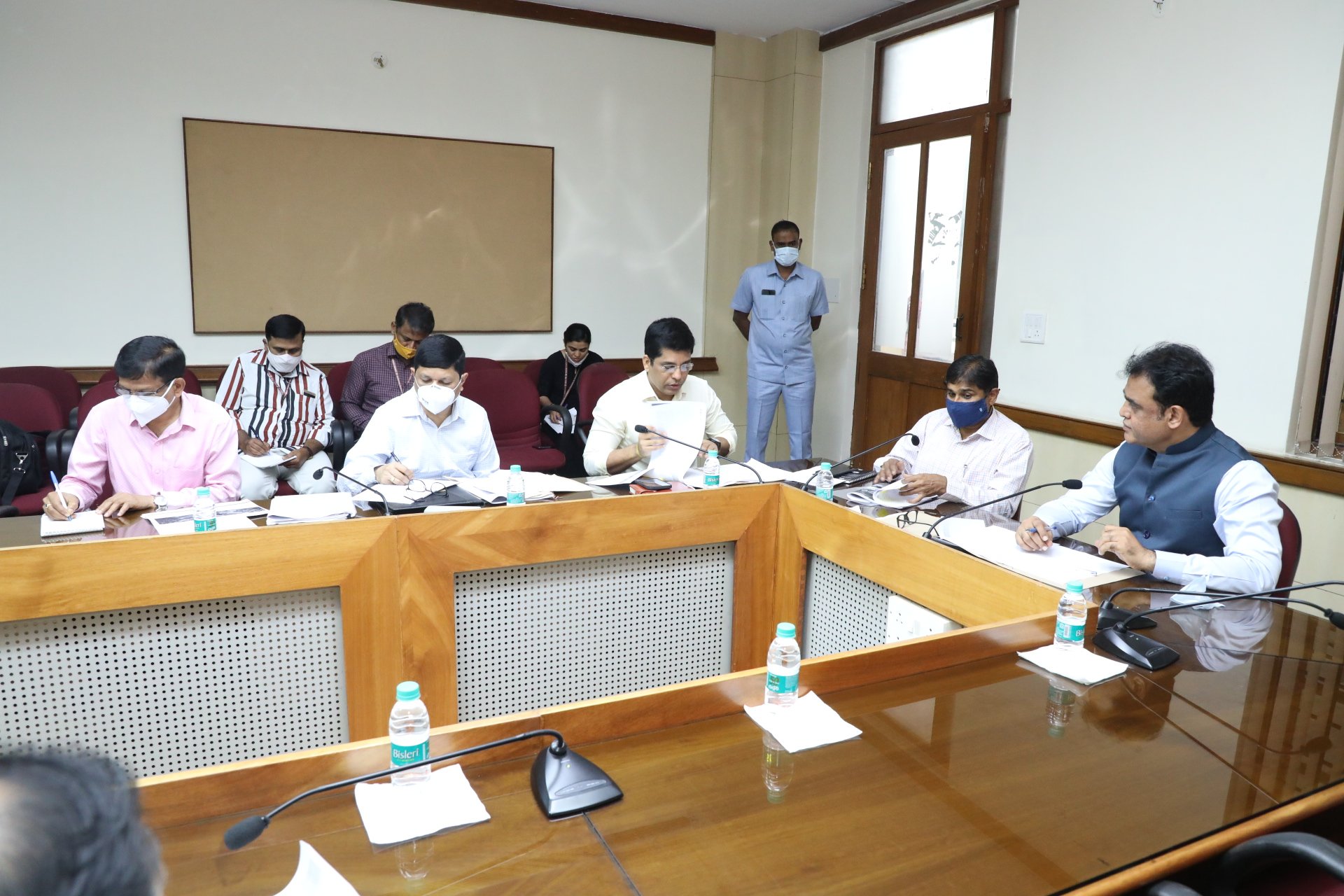
Bengaluru, Sep 14: The State Council for Vocational Training (SCVT) in Karnataka on Tuesday approved adding six more combinations in Industrial Training Institutes (ITIs) under the upgradation programme of 150 ITIs of the state, which is being done in collaboration with the Tatas.
A decision to this effect was taken in a meeting chaired by the Minister for Higher Education and Skill Development and Entrepreneurship Dr C N Ashwath Narayan.
The decision, which has been taken in view of the emerging trends in the global scenario, will apply to all the 150 ITIs and the approval will facilitate admission to the new combinations from the current year itself, Narayan's office said in a statement.
It also said that these new combinations include Battery Electric Vehicle, Basics of Design and Virtual Verification, Advance Manufacturing, Artisan Using Advanced Tools, Industrial Robotics and Digital Manufacture, Manufacturing Process Control Automation.
The final approval for the new combinations needs to be given by National Council for Vocational Education Training (NCVET) and to facilitate this, the curriculum has been submitted for Director-General of Training (DGT), New Delhi. Now, SCVT has granted approval subject to the condition of getting NCVET approval, the statement read.
The committee meeting also approved 23 short time certified courses of three months, Narayan said in the statement.
These are designed by the industry and are highly relevant. Chaired the meeting to finalise the courses.
— Dr. Ashwathnarayan C. N. (@drashwathcn) September 14, 2021
Employment and Training Secretary Selvakumar IAS, and Harish Kumar IAS - commissioner were present.
2/2
Let the Truth be known. If you read VB and like VB, please be a VB Supporter and Help us deliver the Truth to one and all.
Delhi: Father, son held for killing 19-year-old woman in suspected honour killing

New Delhi (PTI): The Delhi Police has arrested a man and his son for allegedly murdering his 19-year-old daughter in west Delhi's Hari Nagar area, an official said on Friday.
The case first came to light on April 1 after a PCR call was received around 2 pm, alleging that a woman had been killed by her family members and her body was being taken for last rites, he said.
The accused, identified as Mohammad Maneer (55), a vegetable vendor, and his son Meraj Ali (19), were arrested in connection with the case, the officer said.
The victim had been in a relationship with a man from her native place for the past two years, which was opposed by her father, Maneer and brother Meraj, he said.
"When the girl did not end the relationship despite objections, the family killed her," the officer said.
On April 1, the police said that when their team reached the spot, they found that the woman's body was being taken for burial.
Acting on the input, the burial process was stopped over suspicion of honour killing.
"Police intercepted the family members and took possession of the body," he said.
Police said that the man who had made the PCR told them that the woman was in love with his cousin.
During the inquiry, police also interacted with the PCR caller, who said his cousin, a friend of the deceased, had informed him about the situation and suspected foul play, prompting him to alert the police control room.
The body of the woman was subsequently shifted to the mortuary of Deen Dayal Upadhyay Hospital for preservation and postmortem.
Police said that both the crime team and the forensic science laboratory (FSL) team were called to inspect the scene and collect evidence.
Police said that, as per the postmortem report, the cause of death was identified as smothering, indicating that the woman was suffocated.
A preliminary inquiry also revealed that the family had initiated preparations for the last rites soon after the woman's death, raising suspicion about the circumstances.
Initial investigation pointed to the family's opposition to the woman's relationship.
"The family members of the woman saw her with the man, and she was taken back home. We got to know that she was beaten up and even locked inside the house for some days," a source said.
Further investigation into the matter is underway, police added.