SSLC results announced: Dakshina Kannada ranks first, Udupi second
Overall pass percentage stands at 66.14%
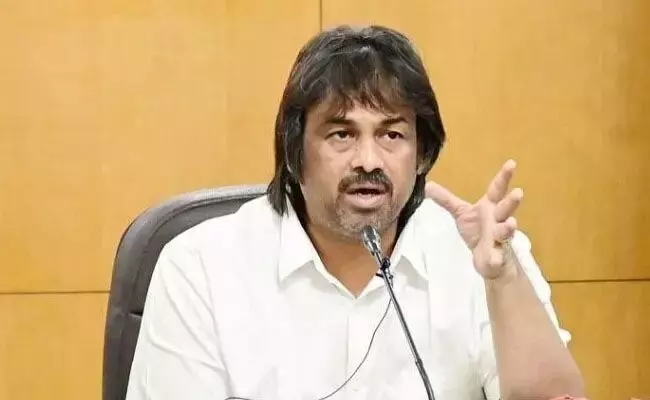
Bengaluru: The Karnataka School Examination and Assessment Board (KSEAB) has officially announced the results of the SSLC (Class 10) annual examination for the academic year 2024–25. In a press conference held at the Board’s office in Malleswaram, Bengaluru, Primary and Secondary Education Minister Madhu Bangarappa declared the results in the presence of senior education department officials.
Dakshina Kannada district has secured the top position in the state with an impressive pass percentage of 91.12%, followed closely by Udupi district at 89.96%. Uttara Kannada secured the third position, while Kalaburagi district ranked last with a pass percentage of 42.43%.
This year, the overall pass percentage across the state is 66.14%. A total of 22 students have scored a perfect 625 out of 625 marks, earning them the top ranks in the state.
Students can check their results online from 12:30 PM today on the official websites: kseab.karnataka.gov.in and karresults.nic.in.
The SSLC exams were conducted between March 21 and April 4 across 2,818 examination centres in Karnataka. A total of 8.96 lakh students appeared for the exams, including 4,61,563 boys and 4,34,884 girls.
Let the Truth be known. If you read VB and like VB, please be a VB Supporter and Help us deliver the Truth to one and all.
Centre spent Rs 76.13 lakh on print media ads for RSS centenary, reveals RTI
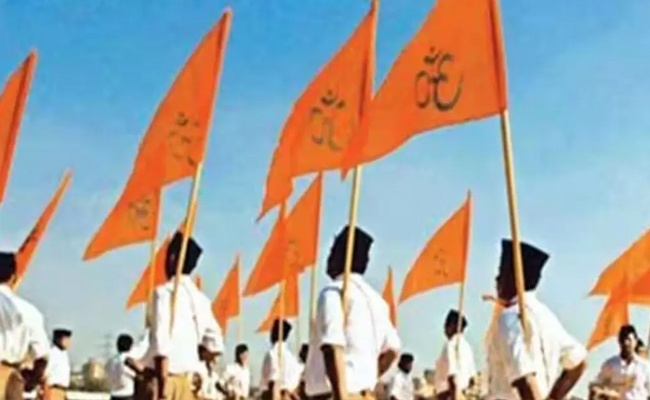
New Delhi: The Union Ministry of Culture allegedly spent Rs 76.13 lakh on print advertisements marking the 100-year celebrations of the Rashtriya Swayamsevak Sangh (RSS), according to a Right to Information (RTI) reply.
The information was sought by RTI activist Ajay Basudev Bose, who filed an application seeking details on expenditure incurred by the ministry for advertisements commemorating the RSS centenary.
Bose shared a picture of the reply from the ministry on his official ‘X’ handle.
“It is informed that an amount of Rs 76,13,129 has been spent on advertisement given in various print media by the Ministry of Culture on the occasion of the completion of 100 years of RSS,” the government’s reply stated.
RTI reply shows Min of Culture Govt of India spent a Whopping Rs 76L,13K,129 on Advertisement in Print Media on occasion of 100 yrs of #RSS
— AJAY Basudev Bose (@AjayBos93388306) April 16, 2026
When Everyone knows RSS is Not Registered & Does not Pay any Tax is it justified to spend Tax Payers Money on such Private event??@RSSorg… pic.twitter.com/dW4IUtdNCg
Bose questioned the expenditure in the post X, “when Everyone knows RSS is Not Registered & Does not Pay any Tax is it justified to spend Tax Payers Money on such Private event??”
Reacting to the development, Karnataka’s IT-BT and Panchayat Raj Minister Priyank Kharge also criticised the spending.
In a post on X, he asked why public money was being used for what he described as a “private ideological project.”
"Modi Sarkar spent Rs 76,13,129 of public money on newspaper advertisements to celebrate 100 years of the RSS. Why is Government spending taxpayers money on an unregistered, non-tax-paying organisation to celebrate their centenary?," he added.
Why is public money being used to serve a private ideological project?
— Priyank Kharge / ಪ್ರಿಯಾಂಕ್ ಖರ್ಗೆ (@PriyankKharge) April 16, 2026
Modi Sarkar spent ₹76,13,129 of public money on newspaper advertisements to celebrate 100 years of the RSS.
Why is Government spending taxpayers money on an unregistered, non-tax-paying organisation to… pic.twitter.com/EoZ6Pim3IM
According to reports, the RSS describes itself as a volunteer-based organisation and has stated that it functions as a body of individuals rather than a registered entity.
Founded by Keshav Baliram Hedgewar in 1925, the organisation is marking its centenary year beginning from Vijaydashami in 2025, with the milestone observed on October 2.