Supplying drinking water to rapidly growing Bengaluru a 'big problem', says Dy CM DK Shivakumar
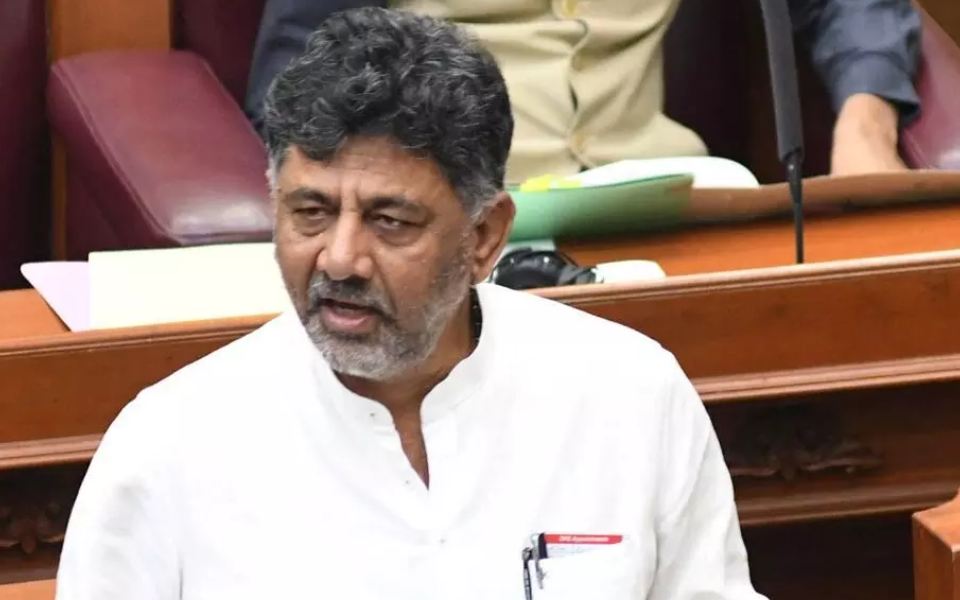
Bengaluru, Feb 13: Supplying drinking water to a rapidly growing city like Bengaluru is a "big problem" and a "major solution" is needed to address it, Karnataka Deputy Chief Minister D K Shivakumar told the Legislative Assembly on Tuesday.
He said almost 20 percent of Bengaluru's water needs are met through tankersThe Deputy Chief Minister, who is also in-charge for Bengaluru City Development, was responding to Jayanagar BJP MLA C K Ramamurthy's question about Cauvery water not being supplied to slum dwellers in his constituency, during the Question Hour.
"Bengaluru is growing rapidly. Every year, the city's population is rising by 10 lakh. Water is a big problem, but for the sake of Bengaluru's respect and pride, we want to prioritise drinking water. We will set it right," Shivakumar said.
Noting that the government has not raised water tariffs in the city since 2013, he said, "While all other rates like power tariff have been raised and expenditure has gone up, the water tariff hasn't gone up, it has been eleven years, due to politics and various other reasons. There is a big problem."
ALSO READ: K'taka Contractors' association welcomes clearing of Rs 600 cr worth pending bills
Shivakumar, also the Water Resources Minister, said he has issued an order allocating an additional six tmc ft of Cauvery water to Bengaluru for drinking purposes.
Bangalore Water Supply and Sewerage Board (BWSSB) is providing 10,000 litres of Cauvery water to slums free of cost every month from 2017, he added. "There are 32,510 families in SC/ST colonies. In the Jayanagar constituency, 5,515 houses are getting free Cauvery water every month."
Water connection will be provided after the Karnataka Slum Development Board pays pro rata and other charges to the BWSSB, the Minister said.
Responding to a question by Deputy Leader of the Opposition Arvind Bellad on "tanker lobby" in Bengaluru, he said, "Tankers don't get Cauvery water, it's bore well water they sell... almost 20 per cent of Bengaluru's water needs are met through tankers, whether it is for factory or other things. We need a major solution. That's the reason we are fighting for the Mekedatu project. I need your support."
Let the Truth be known. If you read VB and like VB, please be a VB Supporter and Help us deliver the Truth to one and all.
Thunderstorm hits Lucknow, IMD issues red alert across multiple UP districts
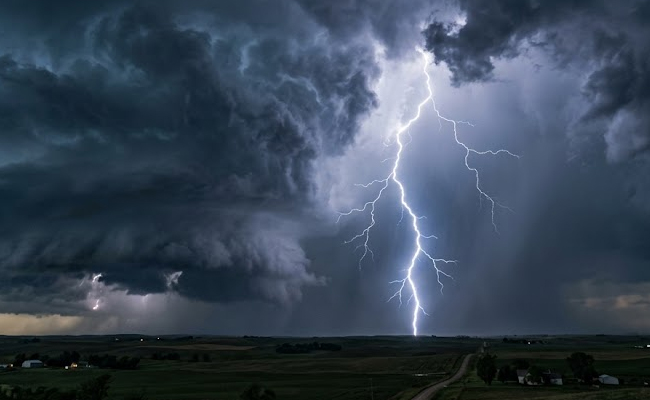
Lucknow: Shortly after the India Meteorological Department issued a red alert warning of severe weather conditions in the region, a sudden thunderstorm hit Lucknow and adjoining districts on Monday morning.
The Indian Express reported that the skies turned dark around 8:45 am as strong winds lashed parts of the city. Incidents of tree falls were reported from several locations, disrupting traffic and normal movement.
The weather department said thunderstorms accompanied by lightning, hail and gusty winds of 40 to 60 kmph are likely to continue over the next three hours across several districts.
A red alert has been issued for districts including Unnao, Barabanki, Hardoi, Sitapur, Bahraich, Gonda, Shravasti and Lakhimpur Kheri, where moderate thunderstorms with hail and strong winds may damage trees, power lines and temporary structures.
An orange alert is in place for Rae Bareli, Amethi, Kanpur Nagar, Ayodhya, Kanpur Dehat, Auraiya, Kannauj, Farrukhabad, Shahjahanpur and Balrampur, where thunderstorms with lightning and winds up to 60 kmph could lead to localised disruptions.
Major parts of the state remains under yellow alert, including districts such as Prayagraj, Agra, Bareilly, Aligarh and Moradabad, where light rain, lightning and winds of 30 to 40 kmph are expected.
Authorities have advised residents to remain indoors, avoid open areas and trees during lightning, and secure loose objects.