Tension in Koppal village over Ambedkar flag during fair; five arrested

Koppal: Tension prevailed in Halwarti village of Koppal taluk after a clash reportedly broke out between members of Dalit and upper-caste communities over the hoisting of an Ambedkar flag during the Beeralingeshwara fair.
According to police, a verbal argument between youths from the two communities escalated into a physical confrontation, leading to unrest in the village.
In a related development, it has been alleged that members of the upper-caste community entered the house of a Dalit youth, identified as Gavisiddappa Hosamani, damaged the door and vandalised the front portion of the house.
As a precautionary measure, additional police personnel have been deployed in the village to maintain law and order.
Police said a complaint has been registered at the Koppal Rural Police Station and five persons have been arrested in connection with the incident. Further investigation is under way.
Let the Truth be known. If you read VB and like VB, please be a VB Supporter and Help us deliver the Truth to one and all.
KKR defeat LSG via Super Over
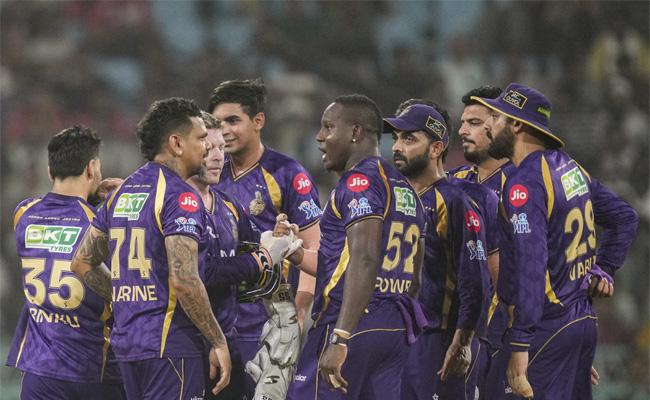
Lucknow (PTI): Kolkata Knight Riders edged Lucknow Super Giants via Super Overs in a battle between two bottom-placed teams in the IPL, here on Sunday.
Chasing a modest 156, LSG suffered a batting collapse and managed to tie the contest and take it to Super Over with No. 9 Mohammed Shami striking a last-ball six against a wayward Kartik Tyagi, who leaked 16 runs in the final over.
But Sunil Narine bowled a stunning Super Over conceding just one run and taking two wickets to give KKR an easy target.
Rinku Singh then finished the chase with a boundary off first ball from Prince Yadav.
Earlier the KKR were in deep trouble with 93/7 in 15 overs but Rinku smashed a sensational 83 not out from 51 balls including four sixes in a row in the final over to lift them to 155/7.
Cameron Green (34) was the only other batter to reach double-digit scores as KKR suffered a familiar batting meltdown with Mohsin taking his maiden fifer.
In reply, LSG continued their dismal show with the bat to succumb to their fifth loss in a row.
Brief Scores:
Kolkata Knight Riders 155/7; 20 overs (Rinku Singh 83 not out, Cameron Green 34; Mohsin Khan 5/23). Lucknow Super Giants 155/8; 20 overs (Rishabh Pant 42). KKR won via Super Over.