There’s no quick fix to water security, everyone must do their part: BWSSB
Bengaluru (PTI): Fifteen years ago, a 72-year-old retired Reserve Bank of India employee, and a resident of Koramangala’s National Games Village complex, bought a plot of land in Bengaluru rural.
Jannet Hilda said she fenced the land and is waiting for ‘development’ to catch up. Until a year ago, she wanted to resell it when the time was right. But when the water crisis hit Bengaluru this summer, she was glad she had access to “land”. She decided to explore digging a borewell in the empty plot, just to make sure she had access to water as well.
“A friend told me to visit M Visvesvaraya RWH theme park in Jayanagar, where she said they guide people about rainwater harvesting (RWH) and digging wells,” said Hilda.
It is while visiting the park that Hilda decided on an open well for the plot, with a recharge or seepage pit to collect rainwater.
The park, built by Bangalore Water Supply and Sewerage Board (BWSSB) promotes water conservation by putting up 26 models of RWH system. It also has five recharge wells to show the people how it was done in Bengaluru before the widespread digging of borewells.
Historically, it is said Bengaluru has been dependent on open wells for domestic use, which in turn were fed by shallow aquifers.
Realising that the need of the hour is to revive this practice, BWSSB has been pushing rainwater harvesting and the traditional recharge wells to increase groundwater levels.
“Perhaps, the biggest reason for the water shortage crisis this summer was the drying up of borewells. More borewells is not the solution to the problem. Instead, we must look for ways to recharge the groundwater,” said V Ram Prasath Manohar, chairman of BWSSB.
Walking the talk, BWSSB has dug 986 seepage wells in April alone, ahead of the monsoons.
“We will not be making any revenue out of this, but this is a needed measure if we want to tackle the root cause of water scarcity. I had given a target of 250 recharge pits to each zone and I must say we have almost achieved our target,” Manohar told PTI.
The project is being monitored at zonal level, said the BWSSB chairman.
“We are also diverting the rainwater that is collected on roads towards the seepage wells, thus preventing it from draining away,” added Manohar.
Recharge pits have been bandied about as a solution for depleting groundwater for some time now. Back in 2022, a webinar jointly organised by Biome Environmental Trust, BWSSB (Bangalore Water Supply and Sewerage Board) and Citizen Matters, had highlighted the advantage of recharge wells, a relatively simple solution to recharge groundwater.
“Rainwater falling on rooftops and other open surfaces can be channelled into recharge wells, which can be as small as three feet in diameter and 15-20 feet deep. This water can recharge groundwater and tomorrow it can become an open well from which we can withdraw water,” stated a Biome Environmental Trust representative at the webinar.
Despite a good chunk of Bengalureans subscribing to it, the movement did not pick up pace to bring about a big change.
However, summer of 2024 did give a jolt to people, who finally realised how precarious the water situation can get.
“We all realised that there is no quick-fix solution,” said Manohar.
Manohar said more people are convinced now. For instance, the board had proposed community rain harvesting, to ensure that the lakes and tanks are filled up.
“We got good response for that and we are implementing 74 proposals in phases. In the initial phase, we will focus on the vicinity of Varthur and Bellandur lakes,” said Manohar. Under this proposal, Manohar explained, pipes will be installed from buildings directly to nearby lakes.
“We will be targeting excess rain water from apartment complexes and commercial buildings that are let off into drains,” said Manohar.
The key to success is awareness, said Manohar, adding that people need to be nudged if needed.
“We have to practice what we preach. Before asking people to include recharge percolation compulsorily, we have to show them what such a
system would achieve. So, we dug 986 pits ourselves next to existing dried up borewells. I am confident we’ll see a big difference in water levels and even more people will be convinced about them,” said Manohar.
Let the Truth be known. If you read VB and like VB, please be a VB Supporter and Help us deliver the Truth to one and all.
Congress using hijab issue to pacify minority anger, alleges Karnataka LoP R Ashoka
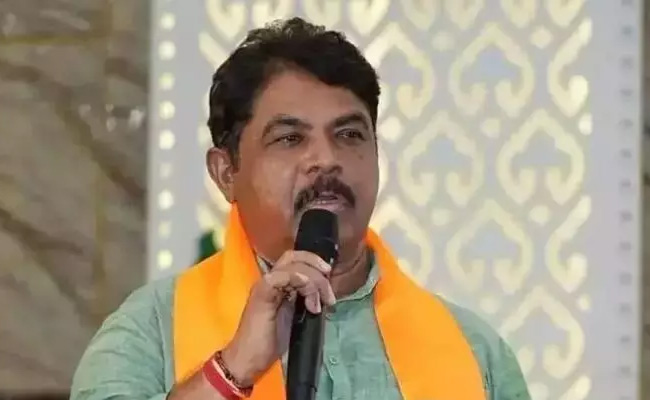
Bengaluru: Leader of Opposition in the Assembly R. Ashoka has accused the Congress government of using the hijab issue to placate what he described as discontent among minority voters after the Davanagere by-election.
In a post on X on Wednesday, Ashoka alleged that the state government, instead of addressing issues such as price rise, corruption, farmers’ distress and law and order, was attempting to retain its minority vote base by reviving the hijab issue.
Referring to the 2022 dress code introduced by the BJP government, which prohibited hijab in schools and colleges, Ashoka said the Karnataka High Court had upheld the policy and emphasised the importance of discipline in educational institutions.
He questioned the Congress government’s move to revisit the issue and asked whether setting aside the court-backed policy to benefit one community could be described as secularism.
Ashoka further alleged that while the government was willing to permit hijab, it continued to prohibit saffron shawls.
He accused the government of dividing students on religious lines rather than treating schools and colleges as spaces of equality.
Drawing a comparison with Mamata Banerjee’s government in West Bengal, Ashoka claimed that excessive appeasement politics had harmed the state and warned that the Congress in Karnataka could face a similar political response.
He said voters in Karnataka would teach the Congress a lesson for what he termed “vote-bank politics” and for compromising constitutional and judicial principles.