There’s no relationship between Gauri Lankesh murder and EVMs tampering: Kavitha Lankesh
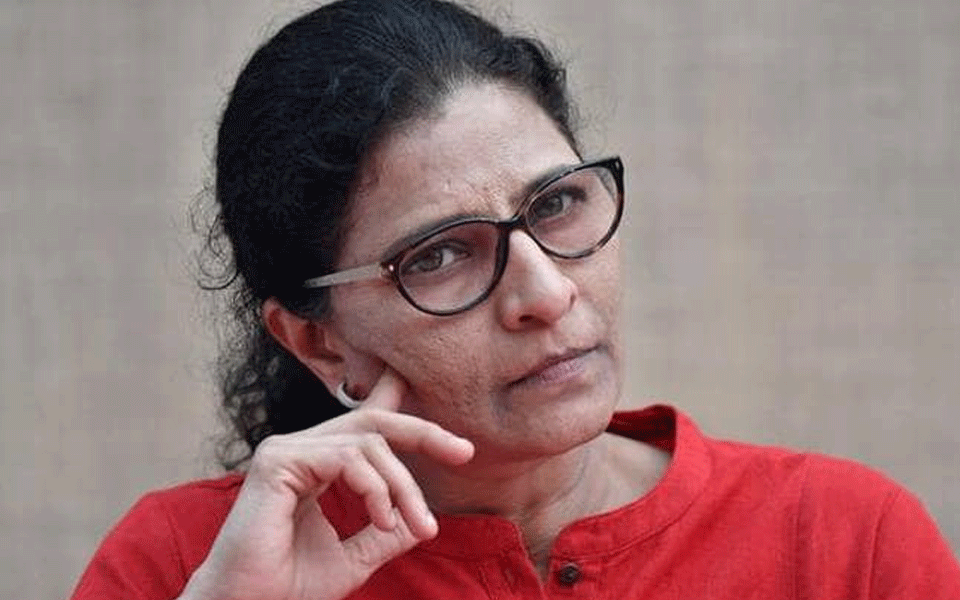
Bengaluru, Jan 24: Strongly brushing aside the statement of a self declared cyber expert that slain journalist Gauri Lankesh, who knew about tampering of Electronic Voting Machines before 2014 Lok Sabha elections, was agreed to write about it in her magazine due to which she was killed, Kavitha Lankesh, sister of Gauri Lankesh, said that “as per the information I knew, it was completely false. I don’t know as to why he has given such statement? I would not believe that my sister was targeted in EVMs tampering issue”.
Gauri Lankesh was shot dead in front of her house in Bengaluru on September 5, 2017. So far, 16 accused were arrested related to the case and Special Investigation Team has filed 9235-page charge sheet against 18 accused. Cyber expert Syed Shuja, hailed from the USA, alleged that the BJP had tampered EVMs during 2014 Lok Sabha elections.
“The cyber expert had said that he had appealed Gauri Lankesh to report about EVM tampering and she had agreed to do it. It was true that my sister’s murder was a part of political conspiracy. But I would not believe such twists. Currently, the investigation is going on in a right direction”, Kavitha said smelling rat in the statement of Shuja.
Let the Truth be known. If you read VB and like VB, please be a VB Supporter and Help us deliver the Truth to one and all.
'Godman' Kharat held in 8th sexual exploitation case; court denies police remand, sends him to jail
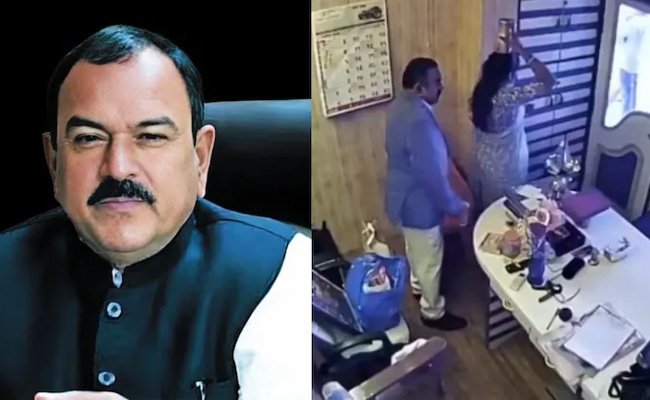
Nashik (PTI): Police took custody of self-proclaimed godman-cum-astrologer Ashok Kharat in an eighth case related to sexual exploitation of women and produced him before a Nashik district court which sent him to jail till May 12 after rejecting the plea for his police remand on Thursday.
On April 29, the Special Investigation Team (SIT) of the Nashik police in north Maharashtra filed a request application in the court demanding Kharat's custody in the eighth case.
After the court granted them the necessary permission, the SIT took custody of Kharat, who was in jail in connection with the seventh case of sexual exploitation registered against him.
The 'godman', named in a dozen FIRs related to rape and financial fraud, was produced before Chief Judicial Magistrate B N Ichpurani in the eighth case through video conferencing due to security reasons.
The eighth case related to Kharat allegedly sexually exploiting a woman who had approached him in search of solutions to her family problems, according to police.
During the hearing, the prosecution demanded police custody of the accused in the latest case.
However, the defence strongly opposed the demand and argued that the SIT was giving same reasons for police custody every time and there was no strong reason for accepting their plea.
The court accepted the argument put forth by the defence and remanded Kharat to judicial custody till May 12 in the eighth case.
The SIT will produce Kharat in the court on Friday again and seek his police custody in the ninth case. As the self-styled godman has been granted judicial custody in the eighth case, he will be sent to Nashik Road Central Jail and the SIT will take his custody from there.
Meanwhile, Kharat's judicial custody in the fourth case ended on Thursday. On April 18, the accused was remanded to judicial custody till April 30 in the fourth case of sexual exploitation of women.
In a related development, the SIT conducted a search at Kharat's office in the 'Canada Corner' area of Nashik city on Wednesday. A 'panchnama' (record of search and seizure proceedings) was conducted and the office was locked and sealed again.
Kharat, a well-heeled man with political connections, was arrested for the first time on March 18 after a woman alleged he had repeatedly raped her for three years.
He is accused of sexually exploiting several women by claiming to have divine powers and knowledge of black magic, and also committing large-scale financial fraud.
The SIT is conducting a probe into 12 cases of sexual exploitation and financial fraud registered against the astrologer in Nashik and Ahilyanagar districts.