Think about your parents before wheeling and drag racing: DCP Abdul Ahad's advice to youngsters
AWARENESS WORKSHOP ABOUT WHEELING
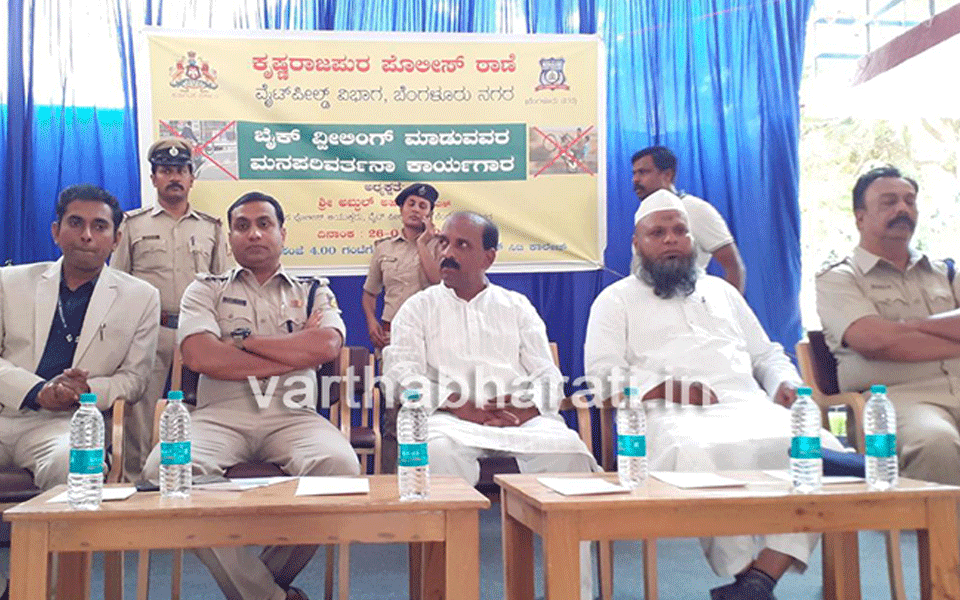
Bengaluru: Whitefield Deputy Commissioner of Police (DCP) Abdul Ahad on Friday advised bikers to think about their parents before doing wheeling and drag racing on roads with their vehicles. “Think of the mother who has held you in her womb for 9 months without causing any harm to you. If she see you doing wheeling and drag racing on road, her heart will wrench” he said while questioning “Is it right to make your parents lose their son just for your show offs?”.
He was speaking at an Awareness Workshop event against wheeling and drag racing organised by K R Pura Police Station at the Silicon City College. He further added that last year 685 people lost their lives in two-wheeler’s road accidents of which 150 people died during attempting wheeling.
“Youngsters try to pose as heroes by doing wheeling these days. Become a real life hero by joining police, army, NCC and other forces. Yet, if you are interested in becoming a racer, you can join the professional training institutes where they will have proper safety measures” he added.
“Whenever we organise awareness drives against wheeling, we find a majority of such bikers to be Muslims. There is a need to create awareness against this in the society. Members of Masjid committees and other volunteers should come together to create awareness. Earlier, we did a similar drive against drugs which turned out to be successful. We need come up with similar drive once again against wheeling” Abdul Ahad told during his address.
Speaking further Abdul Ahad added ‘We arrest the violators, penalize them and in some cases also send them to jails. But now there is no place in jails. Our jails can accommodate 3000 people but we have 5000 people there already. We need to give counselling to our youngsters, we should convince them to live a respectable life in the society and that is why we are organising these awareness drives”.
Jamiat Ulema Bengaluru City President, Moulana Mufti Muhammad Hussain also addressed the event and stated that Wheeling, drag racing and tobacco are destroying the lives of youngsters. “Youngsters are losing their lives due to these activities. We all should appreciate and support this initiative of creating awareness against wheeling and drag racing led by Whitefield DCP Abdul Ahad” he added.
“Youngsters force their parents to get them bikes worth 2-3 lakh rupees. They start acts like wheeling and drag racing with these vehicles. Islamic teachings tells us that nobody can know when the death angel will come and take us away from this world. It also teaches us to follow law and regulations of land, but Muslim youngsters these days are not bothered about laws, it is the result of our disconnection from the Islamic teachings” Moulana said.
“What we have to understand is such actions of us are also causing inconvenience and problems to the other commuters on the road” he stressed.
Yogaratna awardee Gangadarappa in his address spoke about an incident that took place with the son of one of his friend who injured himself while trying wheeling and is in coma for last one year. “He is still in coma after sustaining serious injuries while trying wheeling. My friend and his family have so far spent 45 lakh rupees but is still struggling to save his son” he said.
“Is it fine to put your life under risk just for a thrill of few seconds? Parents, while fulfilling all their demands of their kids, should also keep a check on their social life and activities” he added.
Child Helpline’s senior counsellor Preeti Baliga also conducted counselling for the youngsters during the event. K R Pura Police Inspector Jayaraj H, welcomed the event. Whitefield Sub-Division ACP, Ravishankar, Silicon City College Principal Jnanesh were also present during the event.
Let the Truth be known. If you read VB and like VB, please be a VB Supporter and Help us deliver the Truth to one and all.
KSCA expresses disappointment over missing IPL playoffs, says it was ready to host matches in B’luru
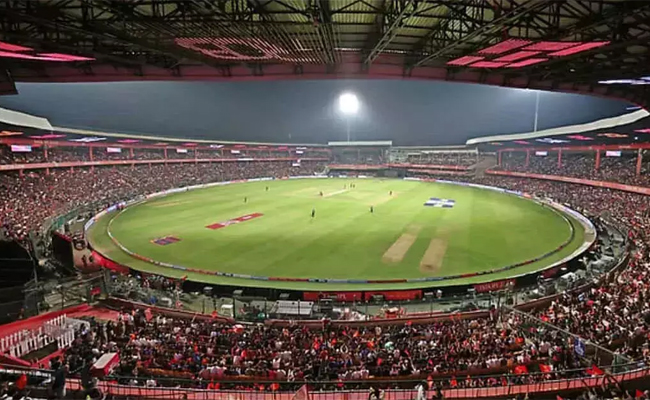
Bengaluru: The Karnataka State Cricket Association (KSCA) has issued a clarification stating that it was fully prepared to host the IPL playoffs and final matches in Bengaluru but the fixtures were allotted to other venues.
In a media note, KSCA said it was disappointed with the decision. The association stated that its president, former India cricketer Venkatesh Prasad, had been in touch with the Board of Control for Cricket in India (BCCI) and had formally conveyed the association’s readiness and interest in hosting the matches at the M. Chinnaswamy Stadium.
KSCA said the IPL matches held in Bengaluru this season were appreciated for smooth conduct, crowd management and overall experience for spectators. It said this reflected its ability to handle high-profile matches.
The association also stated that it had sent a detailed communication to the BCCI explaining its preparedness and the operational arrangements followed during the current IPL season. According to KSCA, these systems have been in place since the start of the Indian Premier League in 2008 and were followed consistently, including during previous playoff matches hosted in Bengaluru.
The clarification added that the communication sent to the BCCI was only meant to provide factual and operational details and to bring clarity on logistical and stakeholder-related requirements involved in hosting such matches.
KSCA said that although it had shown willingness and preparedness, the BCCI has decided to allocate the playoff matches to other venues. It added that the reasons for this decision have not been formally shared with the association, but it respects the authority of the board in taking such decisions.
The association further said it remains ready to host matches of national and international importance and will continue to cooperate with the BCCI, franchises, government authorities and other stakeholders for conducting cricket events.
The statement was issued by KSCA official spokesperson Vinay Mruthyunjaya, who also thanked the media and cricket fans for their continued support.