Karnataka Health minister asks people to be on guard, cautions about possible second COVID wave

Bengaluru, Feb 20: Urging people to take necessary precautions, while cautioning about the possible second wave of COVID-19, Karnataka Health Minister K Sudhakar on Saturday said according to experts till March end it is crucial.
Also ruling out any COVID curbs like lockdown or curfew measures in Karnataka for now, he said the state has not come to that situation and all necessary precautions were being taken so that the state does not reach such a stage.
The Minister also said the health departmentis seeking cooperation from Home and Revenue departments besides district administrations to control COVID spread in districts bordering Kerala and Maharashtra, states that have seen a spike in cases in recent days.
Karnataka has issued new guidelines mandating all those coming from Kerala and Maharashtra to the state to carry a negative RT-PCR test report not older than 72 hours.
"There are laws on one side, but civic senseis also required in protecting our own health, so people of the state have to understand and make necessary changes in their conduct by following necessary precautions... till March end is an important stage according to the technical advisory committee report," Sudhakar said.
Speaking to reporters here, he said necessary precautions have to be taken at least till March end by compulsorily following things like wearing masks, maintaining distance, and all those who have the opportunity should get vaccinated.
"The Union Health Ministry has said vaccinations are likely to be given to common citizens from March....now frontline warriors and health workers should take vaccines," he said.
Further stating that there is no spike in the number of cases in Karnataka and the mortality rate is 1.3 per cent, the Minister said, "we will have to stop the possible second wave in the same way."
"There is a sense about the second wave coming in Maharashtra and Kerala. It should not come in our state, we have to control it," he said.
Noting that three kinds of strains from South Africa, UK and Brazil have been identified, Sudhakar said "we have been able to control the spread of UK variant in the state through returnees from there, by taking adequate precautions including genomic study."
"With Brazilian and South African strain also around, we have to take adequate caution.They are already present in parts of the country," he said.
Stating that Maharashtra and Kerala for the last few weeks have seen a spike in cases, Sudhakar said about ten districts share borders with these two states and it is time for Karnataka be cautious.
"We are also thinking about what is to be done for those coming by air from the two states."
As per the guidelines by the state COVID Technical Advisory Committee, it mandates all those coming from Kerala and Maharashtra to the state to carry a negative RT-PCR test report.
"To implement the guidelines fully we will soon, by today or tomorrow, be holding meetings with district administrations, Home and Revenue Ministers and senior officials, and seek their cooperation," he added.
Terming it as "unfortunate" that many working in the health sector have still not taken the vaccination yet, Sudhakar said till now only 51 per cent have taken the vaccine, and called on Doctors, Nurses, Paramedics, Medical students and other health care workers, also frontline workers to take the vaccine.
"District administrations should also take it seriously. As per research even if those who have taken the vaccine are infected by the virus, death is very unlikely....despite vaccines being administered freely by the government the act of irresponsibility or laziness by not taking the vaccine was not right," he added.
Let the Truth be known. If you read VB and like VB, please be a VB Supporter and Help us deliver the Truth to one and all.
Rape-accused 'godman' Kharat sent to judicial custody till April 14
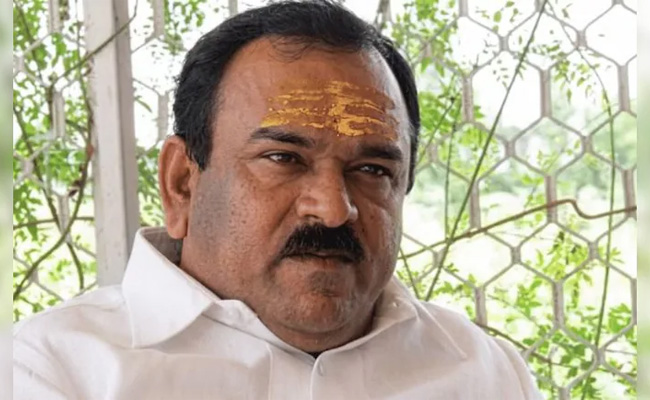
Nashik (PTI): A court in Maharashtra's Nashik on Wednesday remanded rape-accused self-styled godman Ashok Kharat in a 14-day judicial custody.
Kharat was arrested on March 18 after a 35-year-old woman accused him of repeated rape over a period of three years. Following his arrest, multiple rape complaints were filed against him.
The Special Investigation Team (SIT) is conducting a probe against Kharat.
As his police custody ended on Wednesday, he was produced before the court. During the hearing, the SIT sought his judicial custody.
Accordingly, sessions judge B N Ichpurani remanded Kharat in judicial custody till April 14. He will be sent to Nashik Road Central Jail.
Kharat is scheduled to be produced in a court in another case on Thursday.
At least 10 FIRs, eight for alleged sexual assault or exploitation and two for cheating, have been registered against Kharat at Sarkarwada police station in Nashik, while the SIT has received more than 100 complaints over the phone against him.
On Wednesday, an SIT team detained Kharat's son Harshvardhan for questioning from their residence in Karmayogi Nagar here. He was let off at night.
The investigators are also trying to trace Kharat's wife Kalpana in connection with the probe against her husband. She is also named in a cheating case in Ahilyanagar district.
'Godman' Kharat heads a temple trust at Sinnar in Nashik and had several political leaders visit him over the years.
Last week, the SIT visited Kharat's office in Nashik along with a forensic science team, from where they recovered several documents, files and other evidence.
Notably, a 20-feet remote-controlled mechanised snake was also seized from his office. Kharat allegedly used the snake to make his visitors believe that he could control a live snake and thus possessed supernatural powers.