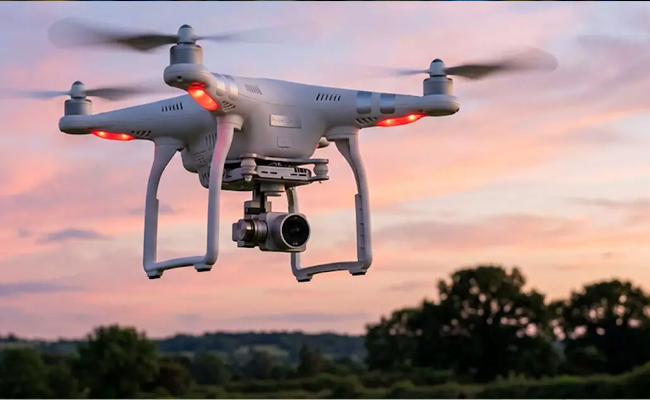
Tiger census to start in January amid growing man-animal conflict

Bengaluru: In response to increasing incidents of man-animal conflict, particularly tiger capture and relocation operations in key tiger reserves, the Karnataka Forest Department is reportedly preparing for the upcoming all-India tiger census. The exercise is set to begin in January 2026, with staffers already undergoing training.
“The tiger estimation exercise will be done in the first week of January. The dates are yet to be finalised. The exercise will first be done in Project Tiger areas and then in other forest patches. Training for Bengaluru Circle has been completed,” The New Indian Express quoted PC Rai, Principal Chief Conservator of Forests (Wildlife), as saying.
The census will unfold in three phases: Phase-1 will gather data on carnivore and prey base density, Phase-2 will involve field reports, and Phase-3 will focus on camera trap data. The final all-India tiger estimation report is expected to be released in April 2026.
Initially, Karnataka was set to begin its annual tiger estimation exercise by the end of November and complete it by mid-December. However, due to delays in staff training, the exercise was postponed. “All tiger states have been directed to follow one calendar for the estimation, to avoid confusion and duplication in the Monitoring Systems for Tigers -- Intensive Protection and Ecological Status (M-Str-IPES) portal and mobile app,” TNIE quoted an official from the Ministry of Environment, Forests and Climate Change as saying.
The all-India tiger estimation report, prepared by the National Tiger Conservation Authority (NTCA) and the Wildlife Institute of India, indicated an overall increase in tiger numbers in Karnataka. From 300 tigers in 2010, the state’s population grew to 406 in 2014, 524 in 2018, and 563 in 2022. With 785 tigers, Karnataka ranks second in the country, following Madhya Pradesh, in terms of tiger population.
The all-India estimation, cited by the newspaper, further showed that the Central and Eastern Ghats landscape housed 1,439 tigers, while the Western Ghats landscape housed 1,087 big cats.
Despite the rise in tiger numbers, officials have raised concerns about the increasing man-animal conflicts, particularly in areas with high tiger densities.
A senior official, quoted by TNIE, highlighted that forest cover in the state is shrinking, putting additional pressure on the land and wildlife. “Bandipur and Nagarahole tiger reserves house tigers beyond their carrying capacity, thus conflict is increasing. We have now adopted relocation to newer, safer habitats policy,” the official added.
Let the Truth be known. If you read VB and like VB, please be a VB Supporter and Help us deliver the Truth to one and all.
CM Siddaramaiah alleges ‘criminal conspiracy’ in Sringeri recount, vows legal action
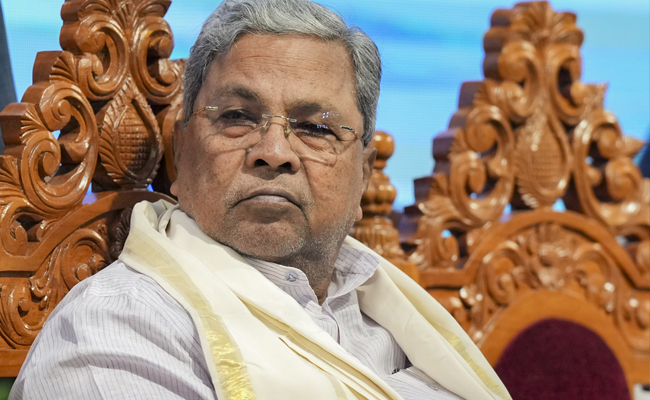
Bengaluru (PTI): Alleging a “criminal conspiracy” by BJP candidate D N Jeevaraj in the Sringeri Assembly poll recounting, Karnataka CM Siddaramaiah on Tuesday said the outcome was manipulated after valid postal ballot votes in favour of Congress leader T D Raje Gowda were tampered with during the recounting process.
Following a Karnataka High Court order on an election petition filed by Jeevaraj, challenging Raje Gowda’s election, the reverification and recounting were conducted on Saturday.
After the reverification and recount of postal ballots for the Sringeri Assembly constituency, votes polled in favour of Raje Gowda were reduced by 255, the returning officer said.
A report on the matter has been submitted to the Election Commission of India for further action, the officer added.
Congress leader Raje Gowda had won the 2023 Assembly polls from Sringeri by 201 votes, defeating his nearest rival Jeevaraj.
Addressing a press conference in Bengaluru, Siddaramaiah said the High Court had directed the recounting of postal ballots and that irregularities were noticed during the exercise conducted on May 2.
“This is a clear case of criminal conspiracy,” Siddaramaiah said, alleging that valid votes cast in favour of Raje Gowda were altered after being accepted by counting agents of all parties, including Congress, BJP, and JD(S).
He claimed that during the recounting of postal ballots, 255 votes were initially accepted as valid by all agents but were later tampered with by subordinate officials.
“There is a second mark on the votes polled in favour of Raje Gowda. They had accepted these as valid votes. Subsequently, another mark was made by officials. This is a clear case of criminal conspiracy,” he said.
When asked who was behind the alleged conspiracy, the CM replied, “It was hatched by Jeevaraj and others. It is planned.”
Siddaramaiah further alleged that the returning officer acted improperly by declaring the result despite the presence of an Election Commission observer during the recounting.
“Immediately after the counting, the returning officer announced the result. He should not have done so; this is against the law,” he said.
He pointed out that Raje Gowda had originally won by 201 votes, but after the recounting, the BJP candidate was declared the winner by 52 votes.
“The BJP has committed a criminal act of conspiracy. This is not vote chori but vote dacoity,” he alleged.
The CM said a police complaint had already been filed by Raje Gowda’s election agent, Sudhir Kumar, and emphasised the need for electoral integrity.
“We want transparency and free and fair elections. That is what our Constitution mandates,” he added.
Stating that the government would pursue legal remedies, Siddaramaiah said, “We are preparing an appeal challenging the returning officer’s announcement in a court of law.”
Responding to a separate query on elections in other states, the CM said there appeared to be an anti-incumbency factor in West Bengal, while results in Tamil Nadu were “surprising,” adding that Vijay’s party was emerging as the largest there.
Following the victory of party candidates in Bagalkote and Davanagere South, Siddaramaiah expressed confidence about future electoral prospects in Karnataka.
“Even in 2028, we will win the Assembly elections. We will come back,” the CM said.
Siddaramaiah added that he would order a forensic examination into the alleged tampering of postal ballots.