Trade unions' strike is opposing Modi govt's 'anti-worker, anti-farmer' policies: Surjewala
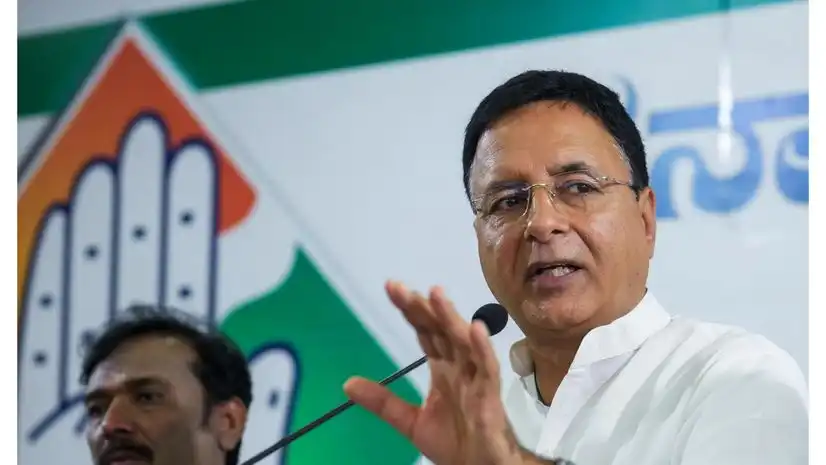
Bengaluru (PTI): AICC General Secretary Randeep Singh Surjewala on Wednesday said that the nationwide strike called by 10 central trade unions, with the backing of over 25 crore workers and farmers, is aimed at opposing the Modi government's alleged anti-worker and anti-farmer policies.
Urging the BJP-led government at the centre to open their eyes and see the problems faced by the people, he accused it of shutting down development, taking away jobs, and creating economic unrest in the country.
"The BJP government has failed to provide adequate employment, with over 30 lakh vacancies lying unfilled across various departments of the Government of India and Public Sector Undertakings (PSUs). For instance, the armed forces have around 1.55 lakh vacancies. The Railway has more than 2.5 lakh vacant positions. The Central Armed Police Forces (CAPF), including CRPF, BSF, and ITBP, have over 85,000 vacancies," Surjewala said.
"Why is the Government of India refusing to fill these 30 lakh vacancies, despite the rising unemployment and the urgent need for public service personnel?" he asked, speaking to reporters here.
Noting that unemployment in India has reached alarming levels, with the current rate at 7.5 percent, according to the Centre for Monitoring Indian Economy (CMIE), the Congress leader said, this marks the highest unemployment rate in 45 years.
"Despite this crisis, the government has failed to take effective action. Trade unions are staging protests in a desperate attempt to draw Prime Minister Modi's attention to the growing joblessness and the government's inaction," he added.
Surjewala pointed out that wealth inequality in India is worsening as the rich are getting richer while the poor continue to suffer.
"India now ranks as the 50th poorest country in the world by per capita GDP, with an average of just USD 2,900 (approx. Rs 2.42 lakh) lower than countries like Bangladesh, Cambodia, Kenya, and even Haiti. In comparison, the global average per capita income is around USD 13,000 (approx. Rs 0.85 lakh), clearly showing how far India has fallen behind under the current government," he said.
Highlighting that 7 crore people have lost their right to work under the BJP's mismanagement of the MGNREGA scheme, Surjewala alleged that even though the scheme is meant to provide a safety net for the poorest, it is being used as a tool of exclusion.
"Aadhaar-MGNREGA Card linking denied 7 crore registered workers their rightful wages and employment. The average workdays per household dropped from 52.08 to just 44.62," he said.
The MGNREGA budget for the year stagnated at Rs 86,000 crore, even with a Rs 9,754 crore deficit carried from the previous fiscal. While Congress guaranteed and had implemented 100 days of work, the BJP has slashed it to just 45, a move trade unions are fiercely opposing," he said.
Surjewala listed out that India today ranks 111th out of 125 countries in the 2023 Global Hunger Index, 134th out of 193 on the UNDP's Human Development Index (2022), 127th out of 146 in the Global Gender Gap Index 2023 by the World Economic Forum, 121st out of 173 in the global Quality of Life Index, 159th out of 180 in the 2024 World Press Freedom Index by Reporters Without Borders
"That's why trade unions are on strike," he said.
Claiming that the economy is in huge distress today, the Congress General Secretary said, there is a huge drop in sales of motorcycles and scooters, drop in the sale of fast moving consumer goods, textile Sector has witnessed an unprecedented crisis as the textile industry reported production drop of over 30 percent, also there is a crisis in the real estate sector.
The FICCI and Quess Corp wage survey reveals a severe wage squeeze with nominal wage increases ranging from just 0.8 to 5 percent, while the inflation rate is 5.7 percent, he said, "In such a scenario, where are the middle and poor classes supposed to go, when their incomes can't even keep up with the rising cost of living?"
India's workforce is in a precarious state, with 80 percent employed in the unorganised sector, 60 percent working without a written contract, and 53 percent lacking any form of social security, he further said, adding that "This reflects a deepening structural crisis a ticking time bomb that threatens the livelihoods and dignity of millions across the country."
Let the Truth be known. If you read VB and like VB, please be a VB Supporter and Help us deliver the Truth to one and all.
HC says Bhojshala complex is Goddess Saraswati temple, scraps ASI order on namaz on premises
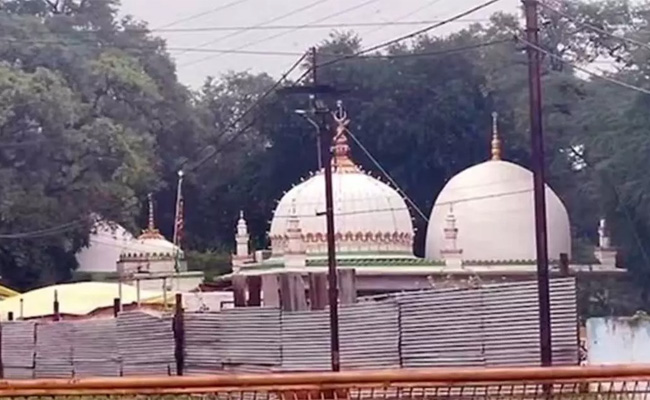
Indore (PTI): In a big win for the Hindu side, the Madhya Pradesh High Court on Friday declared that the disputed Bhojshala complex in Dhar district is a temple dedicated to Goddess Saraswati, and the Centre and ASI can decide on its administration and management.
The HC's Indore bench, which was hearing the case, also said the Muslim community, which called the 11th century monument Kamal Maula Mosque, may approach the state government for allotment of separate land in the district for construction of a mosque.
In its much-awaited verdict in the Bhojshala Temple-Kamal Maula Mosque complex dispute, the court observed that there were indications of a Sanskrit teaching centre and a temple of Goddess Saraswati existing in Bhojshala.
The religious character of the disputed complex of Bhojshala-Kamal Maula Mosque indicates it is a temple of Goddess Saraswati, noted the HC.
ALSO READ: Bihar CM walks to secretariat from official residence after PM's appeal to spend wisely
"If the Maulana Kamaluddin Welfare Society applies for land allotment for building a mosque in Dhar district, the state government can consider it," maintained the division bench.
The HC scrapped the 2003 Archaeological Survey of India (ASI) order which allowed Muslims to offer Friday prayers on Bhojshala premises.
Nearly 1,200 police personnel were deployed in and around the complex ahead of the HC ruling.
Dhar Collector Rajeev Ranjan Meena warned of strict action against anyone spreading objectionable content on social media, as the administration erected barricades at the site where Friday prayers coincided with the court verdict.
The long-running dispute pertains to the religious nature of the ASI-protected monument in Dhar district.
The Hindu community considers Bhojshala to be a temple dedicated to Vagdevi (Goddess Saraswati), while the Muslim side calls the monument Kamal Maula Mosque. A petitioner from the Jain community claims the disputed complex is a medieval Jain temple and gurukul.
After the controversy over the Bhojshala complex erupted, the ASI issued an order on April 7, 2003, permitting Hindus to worship at the complex every Tuesday and Muslims to offer namaz there every Friday. The Hindu side challenged the order in the HC, seeking exclusive rights to worship at the complex.
A division bench of Justices Vijay Kumar Shukla and Alok Awasthi of the HC's Indore bench began regular hearings on five petitions and one writ appeal related to the case on April 6 this year.
After hearing all the parties against the backdrop of differing religious beliefs, historical claims, complex legal provisions, and thousands of documents related to the disputed monument, the bench had reserved its decision on May 12.
During the hearing, petitioners from the Hindu, Muslim, and Jain communities presented detailed arguments and sought exclusive worship rights for their communities at the monument.
The ASI, after conducting a scientific survey of the monument, indicated in its over 2,000-page report that a massive structure dating back to the reign of the Parmar kings of Dhar predated the mosque, and that the current disputed structure was built using repurposed temple components.
The Hindu side claimed that coins, sculptures, and inscriptions found by the ASI during its scientific survey prove the complex was originally a temple.
However, the Muslim side argued in court that the ASI's survey report was "biased" and prepared to support the claims of the Hindu petitioners.
Refuting this, the ASI told the court the scientific survey process was carried out with the help of experts, including three from the Muslim community.
The HC had ordered the ASI to conduct a scientific survey of the Bhojshala Temple-Kamal Maula Mosque complex on March 11, 2024. The ASI began the survey on March 22 that year and, after a detailed 98-day survey, submitted its report to the High Court on July 15.