Treat accident victims immediately, no advance payment required: Karnataka govt to hospitals

Bengaluru (PTI): The Karnataka government has reaffirmed the legal obligation of all medical establishments and practitioners to provide emergency treatment to accident victims without any delay or demand for advance payment.
A circular issued on Wednesday stated, “It is considered necessary to reiterate and direct the enforcing agencies and accident victims regarding the provisions of law and schemes prevailing in Karnataka regarding the treatment of accident victims in the state.”
Under the Karnataka Private Medical Establishments Act, 2007, the circular clarified that the term 'accident victim' includes not just road mishaps but also “accidental or induced burns or poisoning or criminal assaults and the like which are medico legal or potential medico legal cases."
It further said, “Whenever such an accident victim comes to a medical establishment or is brought before a medical establishment, he should be treated in such emergencies without insisting on advance payment.”
Any violation will invite penalties up to Rs one lakh under Section 19(5), the circular said.
Citing the Karnataka Good Samaritan and Medical Professional Act, 2016, the government reminded that every hospital shall be required to provide immediate medical screening services and first-aid at free of cost and the appropriate treatment as it considers necessary, in order to improve the health conditions and recovery of any such injured person.
Hospitals lacking facilities must stabilise the patient before transfer, along with complete medical records, it said.
The circular also invoked Section 187 of the Motor Vehicles Act, 1988, cautioning that failure to comply could lead to imprisonment up to three months or fines up to Rs 500, and for repeat offences, imprisonment up to six months or fines up to Rs 1,000.
Referring to the Cashless Treatment of Road Accident Victims Scheme, 2025, it noted, “A road accident victim shall be eligible for cashless treatment in any designated hospital for an amount up to rupees one lakh fifty thousand per victim for period of seven days from the date of accident.”
The state road safety council will serve as the nodal agency, with reimbursement routed from the Motor Vehicles Accident Fund.
The circular reminded that Karnataka already has a state-level scheme for cashless treatment for accident victims up to 48 hours, covering 76 lifesaving services in government hospitals, medical colleges, and SAST-empanelled hospitals.
“Every registered medical practitioner and every medical establishment shall provide first aid and stabilize the accident victim without any delay or deny, failing which he shall be liable for punishment as specified above. Every authority responsible for implementing the above provisions shall take immediate steps to facilitate the accident victim to procure these healthcare facilities,” the circular said.
Let the Truth be known. If you read VB and like VB, please be a VB Supporter and Help us deliver the Truth to one and all.
Real Madrid fines Valverde and Tchouaméni half a million euros each for altercation
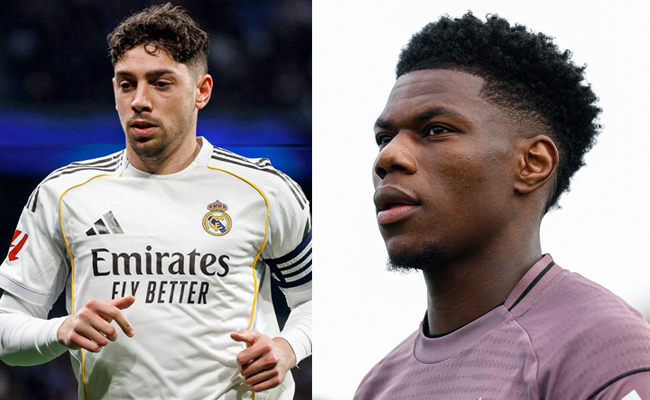
Barcelona (AP): Real Madrid slapped players Federico Valverde and Aurélien Tchouaméni with half-a-million-euro ($588,000) fines on Friday for their altercation during practice.
The massive fines came a day after the midfielders tussled when the team trained. Valverde said in a post on social media on Thursday that no punches were thrown. But Valverde knocked his head on a table and he suffered a small cut that required a brief hospital visit.
On social media, Valverde initially called it a “meaningless fight” with a teammate and said “everything has been blown out of proportion."
His employers, however, considered it a significant enough breach of team discipline to nail both Valverde and Tchouaméni with fines that bite even the bank account of a top soccer player. The half-a-million euro penalties reflect the reputational damage the club was enduring in a chaotic end to a disappointing season.
In a statement, the 15-time European champion said its disciplinary action was concluded after both players expressed to the club “their complete remorse for what happened and apologized to one another.”
Madrid added they also apologized to their teammates, the coaching staff and club supporters, as well as showing their willingness to accept whatever disciplinary action the club deemed “opportune.”
Tchouaméni was back training with Madrid on Friday, two days before they play at Barcelona in a clasico. Madrid has to win otherwise Barcelona will be crowned La Liga champion.
After being notified of the fine, he posted a public apology to the club and its fans on social media.
“What happened this week in training is unacceptable,” Tchouaméni wrote. "I say this while thinking about the example we are expected to set for young people, whether in football or at school.
“Above all, I am sorry for the image we projected of the club.”
Valverde was not at practice due to the head knock.
Both players are set to play in the World Cup next month, with Tchouaméni playing for France and Valverde for Uruguay.
Chaotic end to a poor season
===================
The run-in between the players, who for seasons have played side by side in Madrid's midfield, came after they argued this week in previous training sessions. But tempers boiled over on Thursday. Spanish media was rife with reports that the players previously disagreed over the club's decision to let coach Xabi Alonso go after just months on the job.
It was not the only altercation involving Madrid players during training this week. Álvaro Carreras confirmed he was in a “minor” incident with a teammate. Spanish media said he and fellow defender Antonio Rüdiger got into a scuffle.
Álvaro Arbeloa, the coach who was promoted from Madrid's reserve team when Alonso was fired in January, will face tough questions on what went wrong inside the changing room when he gives a press conference on Saturday ahead of the clasico at Camp Nou.
Madrid is facing a second consecutive campaign without a major trophy amid rumors in the Spanish media that club president Florentino Pérez is considering bringing back Jose Mourinho to straighten out his underperforming team.