Two arrested for asking candidate to remove sacred thread at NEET exam centre in Karnataka

Kalaburagi (Karnataka), May 5 (PTI): Two people were arrested in connection with an incident where a candidate was allegedly asked to remove "janivara" (sacred thread worn by Brahmins) before entering the exam hall to appear for the National Eligibility cum Entrance Test (NEET) on May 4, police said on Monday.
Based on the complaint of the candidate, an FIR was registered against the two staff deployed at the centre who allegedly asked him to remove the scared thread, they said.
"In connection with the Janivara incident at a private examination centre during yesterday's NEET exam, the candidate has lodged a complaint against two people. We have taken the case. The staff were questioned and legal action has been taken against them. Arrest format is also done," Sharanappa S D, Kalaburagi City Police Commissioner said.
The two men mentioned in the FIR are staff who work for an agency and were deputed by National Testing Agency (NTA) for frisking duty, he said.
"Both were arrested on Sunday evening and later released on station bail since it was a bailable offence," he added.
"Further investigation is going on to find out any role of others and also the staff were properly briefed regarding their duties," he added.
On Sunday, members of the Brahmin community staged a protest outside the NEET exam centre here, demanding accountability after some students of the community were asked to remove their "sacred thread" before entering the exam hall.
The candidates were either asked to remove the sacred thread or had it cut before entering the exam hall.
This incident comes close on the heels of a similar one during the Common Entrance Test held for engineering and other vocational courses on April 16, where the sacred threads of Brahmin boys were also removed.
Let the Truth be known. If you read VB and like VB, please be a VB Supporter and Help us deliver the Truth to one and all.
Centre spent Rs 76.13 lakh on print media ads for RSS centenary, reveals RTI
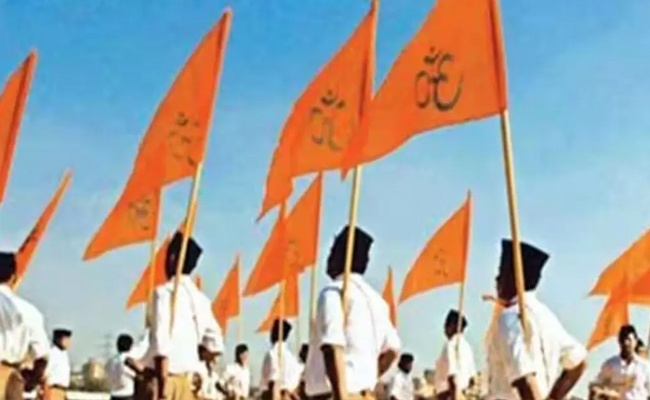
New Delhi: The Union Ministry of Culture allegedly spent Rs 76.13 lakh on print advertisements marking the 100-year celebrations of the Rashtriya Swayamsevak Sangh (RSS), according to a Right to Information (RTI) reply.
The information was sought by RTI activist Ajay Basudev Bose, who filed an application seeking details on expenditure incurred by the ministry for advertisements commemorating the RSS centenary.
Bose shared a picture of the reply from the ministry on his official ‘X’ handle.
“It is informed that an amount of Rs 76,13,129 has been spent on advertisement given in various print media by the Ministry of Culture on the occasion of the completion of 100 years of RSS,” the government’s reply stated.
RTI reply shows Min of Culture Govt of India spent a Whopping Rs 76L,13K,129 on Advertisement in Print Media on occasion of 100 yrs of #RSS
— AJAY Basudev Bose (@AjayBos93388306) April 16, 2026
When Everyone knows RSS is Not Registered & Does not Pay any Tax is it justified to spend Tax Payers Money on such Private event??@RSSorg… pic.twitter.com/dW4IUtdNCg
Bose questioned the expenditure in the post X, “when Everyone knows RSS is Not Registered & Does not Pay any Tax is it justified to spend Tax Payers Money on such Private event??”
Reacting to the development, Karnataka’s IT-BT and Panchayat Raj Minister Priyank Kharge also criticised the spending.
In a post on X, he asked why public money was being used for what he described as a “private ideological project.”
"Modi Sarkar spent Rs 76,13,129 of public money on newspaper advertisements to celebrate 100 years of the RSS. Why is Government spending taxpayers money on an unregistered, non-tax-paying organisation to celebrate their centenary?," he added.
Why is public money being used to serve a private ideological project?
— Priyank Kharge / ಪ್ರಿಯಾಂಕ್ ಖರ್ಗೆ (@PriyankKharge) April 16, 2026
Modi Sarkar spent ₹76,13,129 of public money on newspaper advertisements to celebrate 100 years of the RSS.
Why is Government spending taxpayers money on an unregistered, non-tax-paying organisation to… pic.twitter.com/EoZ6Pim3IM
According to reports, the RSS describes itself as a volunteer-based organisation and has stated that it functions as a body of individuals rather than a registered entity.
Founded by Keshav Baliram Hedgewar in 1925, the organisation is marking its centenary year beginning from Vijaydashami in 2025, with the milestone observed on October 2.