Two persons die in Karnataka after drinking contaminated water
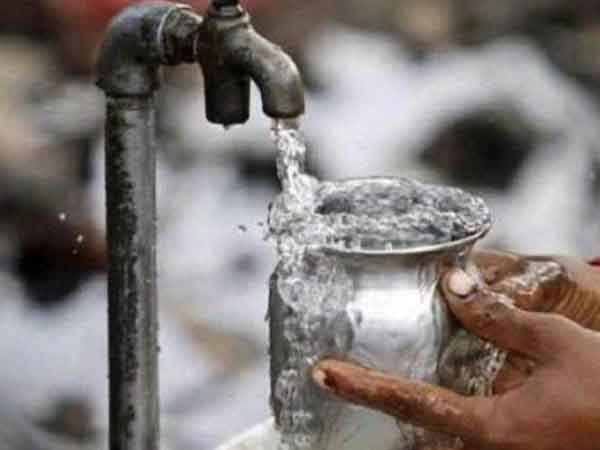
Tumakuru (Karnataka) (PTI): At least two people have died after drinking contaminated water at Chinnenahalli village in Madhugiri taluk of the district, Home Minister G Parameshwara said on Thursday.
According to officials, the deceased - Chikkadasappa (76) and Peddanna (72) - who died at a hospital here on Wednesday, were among the nearly hundred people, who fell ill on June 10, after drinking water supplied from an overhead tank and a drinking water unit during the village fair.
Parameshwara, who is also the district in-charge Minister, today visited the hospital and enquired about the health condition of those undergoing treatment.
ALSO READ: Police arrest two more Darshan aides in Renukaswamy murder case
"A temple fair was organised at Chinnenahalli, and there are reports that due to consumption of contaminated water, over hundred people suffered from vomiting and loose motion. Some of them admitted themselves to private hospitals in Madhugiri, Koratagere and Tumakuru, and the district administration also shifted those affected to Tumakuru hospital," he told reporters.
He said two people have died at the hospital here.
On reports that more people, including a three-year-old girl, have died at a private hospital, he sought to know the details from officials and said: "we will gather information about deaths in the private hospital and try to find out about overall deaths due to this incident."
The Minister said the village PDO (Panchayat Development Officer) and waterman have been suspended, as they did not take the precautionary measures.
"As per the inquiry done, water connection work was on, and due to damages in the water pipes caused by a JCB (construction equipment), contaminated water got mixed. Some test reports have come, a few more are awaited, from which we will get more information," he said.
More people are still undergoing treatment at the hospital, including children, Parameshwara said.
Taking this as a "lesson", he said he has called a meeting of senior officers and will review the water supply system in the district.
Let the Truth be known. If you read VB and like VB, please be a VB Supporter and Help us deliver the Truth to one and all.
Karnataka power tussle: BJP leader calls Siddaramaiah 'Sultan for 15 days'
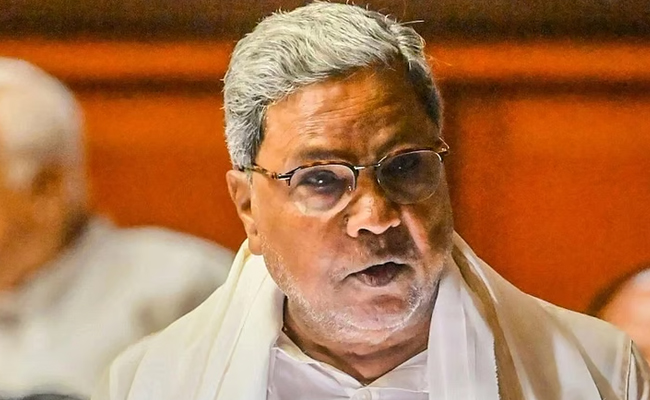
Bengaluru/Bagalkot (PTI): In the midst of the ongoing power tussle within the ruling Congress in Karnataka, senior BJP leader and MP Govind Karjol called CM Siddaramaiah "Pandrah din-ka-Sultan" (Sultan for 15 days), and said after that, he will not be the chief minister of the state.
Speculation has once again surfaced within the Congress party and political circles about a possible decision on leadership change and cabinet reshuffle after May 4, once the results for Assembly elections in four states and one union territory, along with bypolls to two Assembly constituencies in Karnataka, are announced.
"With the fight for the CM chair in the Congress, there seems to be no administration at Vidhana Soudha. The result for Siddaramaiah's CM chair fight will also be declared, along with election results for five states (four states and one union territory) and bypoll results for Bagalkot and Davanagere South Assembly seats in Karnataka," Karjol, a former Deputy CM, said.
Speaking to reporters here, he said, "As per today's information, Siddaramaiah is a Sardar for fifteen days, he is Pandrah din-ka-Sultan, after that Siddaramaiah will not be the chief minister of the state."
Stating that Shivakumar is ready to take up the top job, the MP said that this is the reason Siddaramaiah's supporters have gone to New Delhi to meet the Congress President.
"Already 40-odd legislators have lobbied in support of Siddaramaiah; about 50 are lobbying in support of Shivakumar. Amid this fight for the CM chair, the administration has completely collapsed," he said, urging the government to focus on addressing drinking water issues in various parts of the state amid summer by releasing at least Rs 50 crore per district.
PWD Minister Satish Jarkiholi on Monday met Congress President Mallikarjun Kharge and General Secretary (in charge of Karnataka) Randeep Surjewala in New Delhi and requested them to address the speculation regarding the change of leadership in Karnataka.
Subsequently, Social Welfare Minister H C Mahadevappa too met the party leadership in Delhi.
Both Jarkiholi and Mahadevappa are considered close to Siddaramaiah.
While MLAs and leaders who want Shivakumar to be elevated as CM have recently claimed they expect some "sweet news" by May 15, which is their leader's birthday.
Meanwhile, a team of 40 MLAs is preparing to visit New Delhi to press the Congress high command for a Cabinet reshuffle.
Speaking to reporters in Bengaluru, Leader of the Opposition in the Assembly R Ashoka hit out at the Congress leadership for indulging in "power tussle" instead of addressing the people's concerns. He called the government "anti-people" and "dead" to the people of the state.
With the fight for the CM chair, the ruling Congress in Karnataka seems to be shifting to Delhi. Congress MLAs are repeatedly touring Delhi, upset over the state leadership amid a power struggle between the CM and Deputy CM. This proves that there is no value for the state leadership," he said.
Pointing out that the Deputy CM Shivakumar was not present at the recent special cabinet meeting, which decided on internal reservation among SCs, the opposition leader said, "If the cabinet meeting was held purposely, despite knowing that Shivakumar was in Delhi, it proves that there are factions within the party"
"This government is dead in a way," he said, as he hit out at the Congress MLAs and Ministers, including Shivakumar, for doing "Delhi Yatras" instead of addressing drinking water issues in various parts of the state amid summer, picking up in the state.