Ukraine crisis: All efforts on to evacuate people stranded in Kharkiv and Kyiv, says Bommai
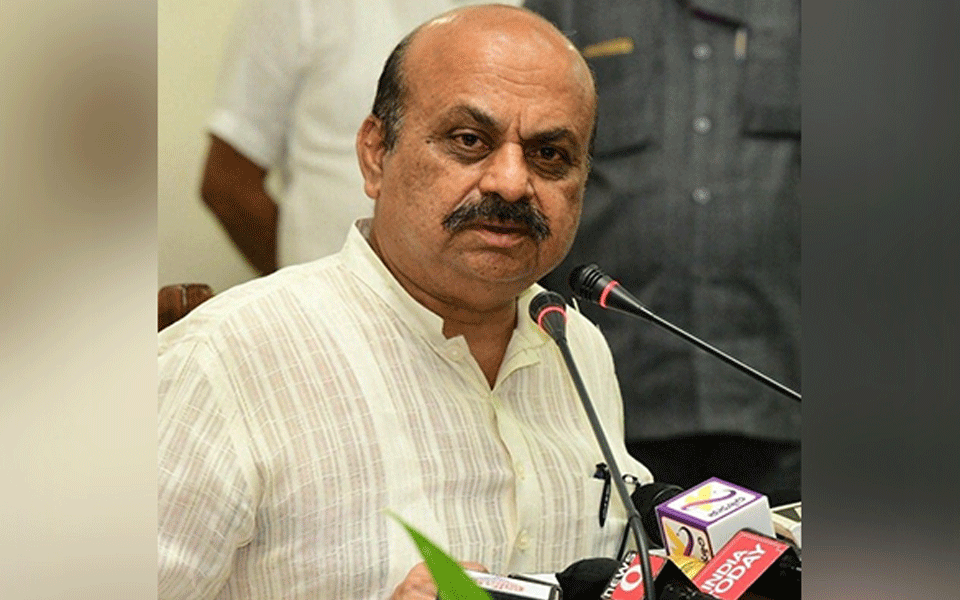
Bengaluru(PTI): Karnataka Chief Minister Basavaraj Bommai on Saturday said all efforts are on to evacuate people from the state, who are stranded in besieged cities like Kharkiv and Kyiv in Ukraine, and that his administration is in constant touch with Ministry of External Affairs and Indian Embassy there.
The CM said he is trying to gather information regarding bringing back the remains of Naveen Shekharappa Gyanagoudar, a 21-year-old medical student from Haveri district in the state, who was killed in a Russian shelling in Kharkiv city last week.
"Many people have been evacuated (from Ukraine), some are unable to move and are stranded at places like Kharkiv and Kyiv. Embassy officials are tracking and tracing them and are coordinating, according to officials they will evacuate people from such places as soon as bombings reduce," Bommai said.
He said he was in contact with the Ministry of External Affairs and the Indian Embassy in Ukraine.
"We are in touch and coordinating with central Ministers who have been deputed to countries bordering Ukraine, to oversee the evacuation," he added.
Bommai said he will visit Naveen's residence at Ranebennur today to console the family members. The government has decided to give a solatium for the family
Responding to a question on bringing back Naveen's body, he said, "I'm gathering information, shelling is still on there, so I'm trying to gather the right information."
Meanwhile, Nodal Officer and Commissioner Karnataka State Disaster Management Authority (KSDMA) Manoj Rajan said, a total of 366 people from the state have returned so far from the war-torn Ukraine, under "Operation Ganga".
Let the Truth be known. If you read VB and like VB, please be a VB Supporter and Help us deliver the Truth to one and all.
NEET student hangs self in Rajasthan's Sikar

Jaipur (PTI): A student preparing for the NEET examination allegedly committed suicide by hanging himself in a rented room in Rajasthan's Sikar on Friday, police said.
According to the police, the student allegedly hanged himself from a ceiling fan using his sister's scarf while one sister was attending coaching classes and the other was in the bathroom.
He had appeared in the NEET UG exam 2026, which was cancelled due to paper leak, they said.
Udyog Nagar SHO Rajesh Kumar said that the deceased, identified as Pradeep Meghwal, was a resident of Kanika ki Dhani village in Jhunjhunu's Gudha Gaudji area.
He had been living in a rented room in Sikar's Jaldhari Nagar area with his two sisters while preparing for NEET over the last three years.
His elder sister later found him hanging and informed the landlord and police after bringing him down, officials said.
The SHO said the body was kept at SK Hospital mortuary, and a postmortem had not been conducted.
The student's father, Rajesh Kumar Meghwal, told police that Pradeep's NEET examination had gone well and the family was expecting him to score around 650 marks.
Former Rajasthan deputy chief minister Sachin Pilot expressed grief over the incident and linked it to anxiety among students after reports of irregularities and paper leaks in NEET 2026.
Pilot said repeated paper leak incidents and cancellation of examinations were affecting students' mental health and demanded a time-bound investigation and strict action against those responsible.