University of Mysore faces staff shortage, resource crunch as NIRF ranking slides
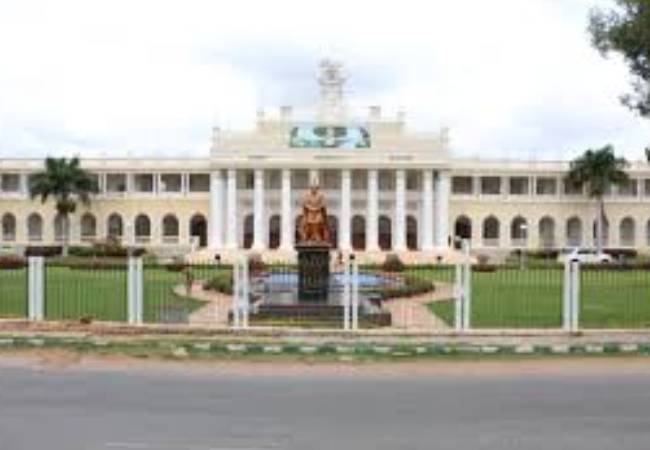
Mysuru: The University of Mysore (UoM) which is one of India's oldest higher education institutions, has suffered a significant decline in the National Institutional Ranking Framework (NIRF 2025).
According to a report published by The Hindu, the university is facing the challenges of faculty shortage, decreased revenues and dropping student enrollment.
The university was ranked 71st in the country this year, slipping 20 places from its 2024 position of 51. Vice-Chancellor N K Lokanath attributed the decline primarily to a severe lack of permanent faculty. Of the nearly 400 sanctioned teaching posts, only 23 per cent are filled by full-time staff, while almost three-fourths remain vacant. “There have been no recruitments in nearly two decades,” he said, warning that the strength of permanent faculty may reduce further to 15 per cent in the next four years due to retirements.
Officials pointed out that staffing levels directly influence NIRF scores, as faculty numbers, research, and publications carry significant weightage. “Temporary teachers are unable to lead research teams or contribute extensively to academic publications, which impacts rankings,” Lokanath said.
The university’s financial position has also weakened. Once responsible for colleges across Mysuru, Mandya, Chamarajanagar, and Hassan districts, UoM now oversees only Mysuru, as the State government’s policy of creating universities in every district has reduced both its student base and affiliation fee revenues. Enrolment in traditional arts and humanities courses has also fallen, with students shifting to skill-oriented and applied science programmes.
Despite the setback, UoM retained the 20th position among State-run public universities nationwide. However, officials and academics stressed that urgent intervention by the Karnataka government is needed to restore its standing. “Recruitment of permanent staff must be prioritized to strengthen research, improve quality of education and arrest further decline,” the Vice-Chancellor said.
Let the Truth be known. If you read VB and like VB, please be a VB Supporter and Help us deliver the Truth to one and all.
Real Madrid fines Valverde and Tchouaméni half a million euros each for altercation
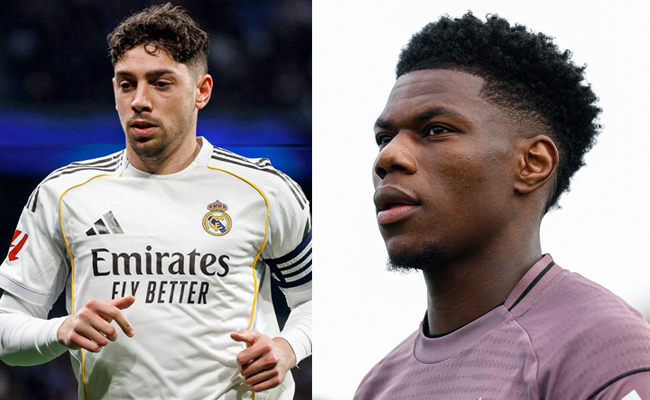
Barcelona (AP): Real Madrid slapped players Federico Valverde and Aurélien Tchouaméni with half-a-million-euro ($588,000) fines on Friday for their altercation during practice.
The massive fines came a day after the midfielders tussled when the team trained. Valverde said in a post on social media on Thursday that no punches were thrown. But Valverde knocked his head on a table and he suffered a small cut that required a brief hospital visit.
On social media, Valverde initially called it a “meaningless fight” with a teammate and said “everything has been blown out of proportion."
His employers, however, considered it a significant enough breach of team discipline to nail both Valverde and Tchouaméni with fines that bite even the bank account of a top soccer player. The half-a-million euro penalties reflect the reputational damage the club was enduring in a chaotic end to a disappointing season.
In a statement, the 15-time European champion said its disciplinary action was concluded after both players expressed to the club “their complete remorse for what happened and apologized to one another.”
Madrid added they also apologized to their teammates, the coaching staff and club supporters, as well as showing their willingness to accept whatever disciplinary action the club deemed “opportune.”
Tchouaméni was back training with Madrid on Friday, two days before they play at Barcelona in a clasico. Madrid has to win otherwise Barcelona will be crowned La Liga champion.
After being notified of the fine, he posted a public apology to the club and its fans on social media.
“What happened this week in training is unacceptable,” Tchouaméni wrote. "I say this while thinking about the example we are expected to set for young people, whether in football or at school.
“Above all, I am sorry for the image we projected of the club.”
Valverde was not at practice due to the head knock.
Both players are set to play in the World Cup next month, with Tchouaméni playing for France and Valverde for Uruguay.
Chaotic end to a poor season
===================
The run-in between the players, who for seasons have played side by side in Madrid's midfield, came after they argued this week in previous training sessions. But tempers boiled over on Thursday. Spanish media was rife with reports that the players previously disagreed over the club's decision to let coach Xabi Alonso go after just months on the job.
It was not the only altercation involving Madrid players during training this week. Álvaro Carreras confirmed he was in a “minor” incident with a teammate. Spanish media said he and fellow defender Antonio Rüdiger got into a scuffle.
Álvaro Arbeloa, the coach who was promoted from Madrid's reserve team when Alonso was fired in January, will face tough questions on what went wrong inside the changing room when he gives a press conference on Saturday ahead of the clasico at Camp Nou.
Madrid is facing a second consecutive campaign without a major trophy amid rumors in the Spanish media that club president Florentino Pérez is considering bringing back Jose Mourinho to straighten out his underperforming team.