Vaccine shortage in Karnataka to be sorted out in 2 to 3 days: CM Yediyurappa
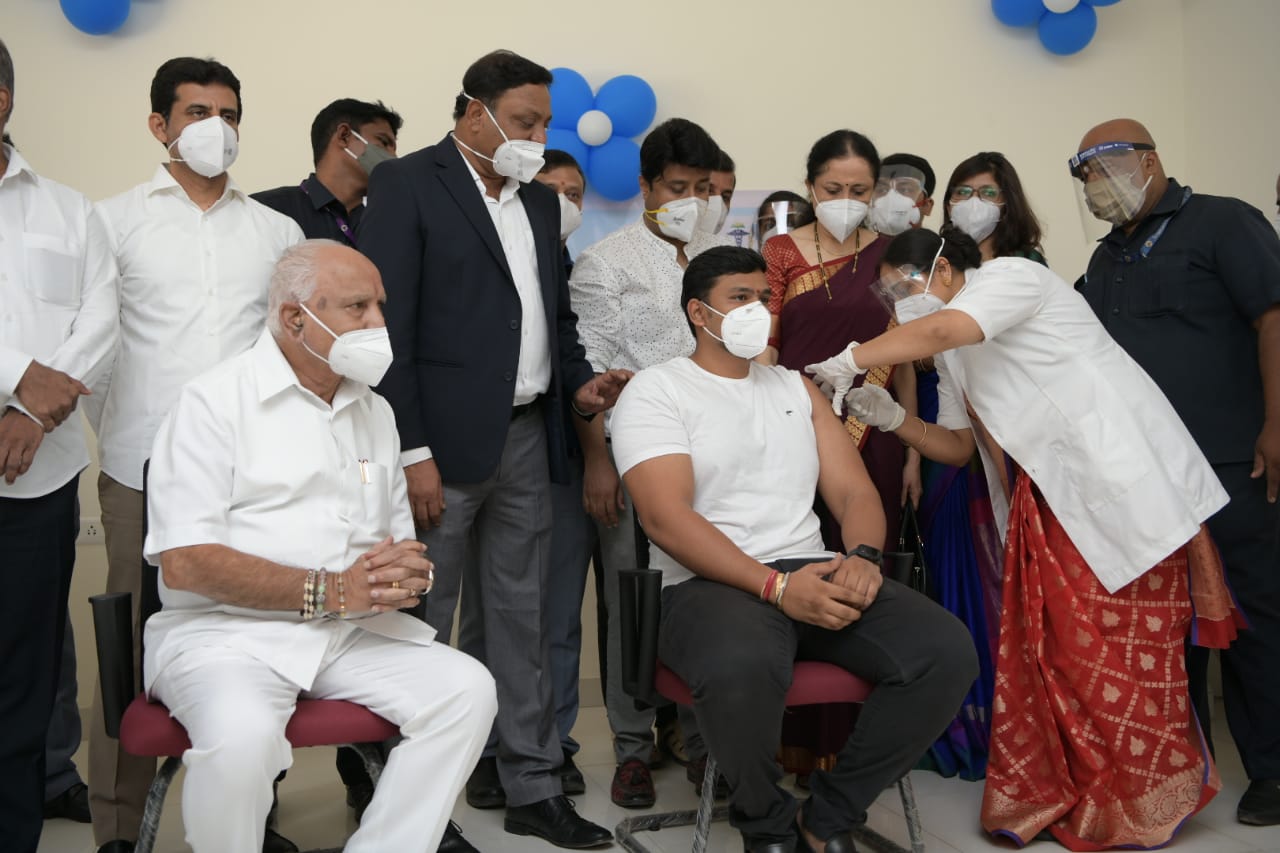
Bengaluru, May 1: Karnataka Chief Minister B S Yediyurappa on Saturday said the shortage of vaccine in the state will be sorted out in the next three days, as he made a symbolic start of the inoculation drive for people above 18 years.
Yediyurappa's statement comes a day after he said vaccination for people above 18 years of age will be delayed as the vaccine has not been supplied yet to the state.
"I have come here to make a symbolic start of the vaccination drive for people above 18 years of age.
As per the directions of Government of India, the drive to vaccinate people about 18 years of age is starting from today," Yediyurappa told reporters.
He said his government has decided to give vaccines free of cost to people about 18 years of age.
The state has received three lakh vaccines from the Centre while there was a stock of one lakh vaccines in Karnataka.
On the full fledged vaccination drive for people above 18 years, the Chief Minister said the state government has paid money to purchase two crore vaccines.
"I am 100 per cent confident that things will improve in the next two to three days.. I have set a target to vaccinate 3.26 crore people of the state," the Chief Minister said.
Regarding the black marketing of Remdesivir injection, which is crucial for the COVID-19 treatment, Yediyurappa warned of stringent action against those involved in the crime.
To a question on the shortage of beds, the CM said, "I am going to discuss with Dr Devi Shetty and the head of 8 to 10 big hospitals at 4 pm today, the shortage of bed and oxygen to find a solution."
The vaccination drive for people above 18 years could not take off fully as vaccines did not arrive from the Serum Institute of India and Bharat Biotech.
Karnataka is also banking on Dr Reddy Laboratory, which according to state Health Minister K Sudhakar, has got the contract to produce Russia's Sputnik vaccine.
Karnataka is rushing to get the people of the state vaccinated as the state reported over 48,000 cases on Friday while 217 people died.
The active cases have reached close to four lakh in the state.
Half of Karnataka's COVID tally, fatalities and active cases are in Bengaluru alone.


Let the Truth be known. If you read VB and like VB, please be a VB Supporter and Help us deliver the Truth to one and all.
AI-based monitoring strengthens PPP dialysis programme in Karnataka: Health Minister
Bengaluru (PTI): The introduction of an AI-enabled monitoring system will significantly enhance patient safety and treatment quality under Karnataka's public-private partnership dialysis programme, Health Minister Dinesh Gundu Rao said on Thursday.
Launching the AI-based smart monitoring system at KC General Hospital in Bengaluru, the minister said such technological innovations bring dialysis services delivered under the PPP model on par with private healthcare standards.
"The introduction of an AI-enabled monitoring system will significantly strengthen patient safety and treatment quality under Karnataka's PPP dialysis programme," he said.
The system, introduced by dialysis care provider NephroPlus, enables real-time monitoring of critical treatment parameters such as blood pressure, fluid removal and electrolyte balance during dialysis, aiming to improve patient outcomes through continuous oversight, a statement said.
Currently deployed across seven dialysis centres, the platform tracks 28 key parameters, including patient care, safety, bed availability, staff alertness, emergency preparedness, infection control, hygiene and operational efficiency, NephroPlus said in a statement.
It allows administrators and clinical teams to take data-driven decisions through continuous performance monitoring, it added.
Officials said the technology replaces periodic audits with always-on monitoring, offering a more transparent and robust governance framework.
NephroPlus CEO Rohit Singh said continuous monitoring is critical in dialysis care and the AI-based system ensures consistent quality standards across centres while enabling safer and more reliable treatment for patients.
The launch event also featured a live demonstration of AI-powered dashboards, showcasing real-time tracking of dialysis procedures.