Vani Vilas Sagar dam nears full capacity, raises hopes for farmers after heavy rain
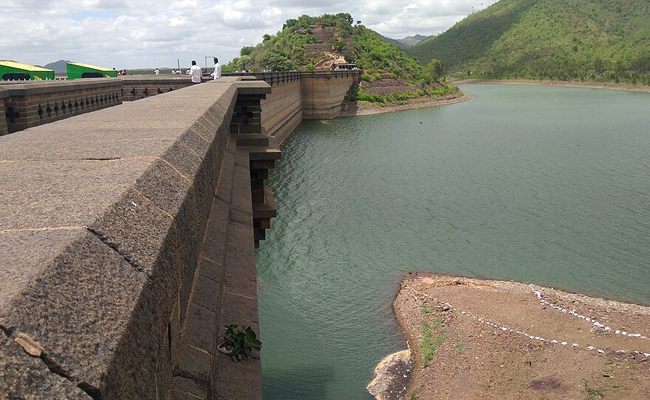
Chitradurga: Vani Vilas Sagar, the oldest dam in the state, is nearing its full capacity of 130 feet following continuous heavy rainfall and water inflow from the Upper Bhadra Project. As of Saturday, the water level stood at 129.4 feet, raising hopes among farmers and locals after the previous year’s water shortage.
This marks only the sixth time since its construction in 1907 that the dam has reached such levels, as reported by The New Indian Express on Sunday. The last time the dam overflowed was in 1933, largely due to heavy inflow. This time, the rising water level is the result of both heavy rainfall in Chitradurga and a steady 700 cusecs of water being pumped from the Bhadra reservoir.
The dam supports irrigation in over one lakh hectares in Hiriyur taluk through its canals and provides drinking water to Hiriyur, Hosadurga, Chitradurga, and Challakere taluks.
Historically, the dam has crossed 120 feet multiple times — in 1932, 1933, 1934, 1956, 1957, 1958, 2000, 2021, 2022, and 2024 — but it has rarely come so close to full capacity. While the Full Reservoir Level (FRL) is officially 130 feet, authorities say it can hold water up to 135 feet.
The recent surge in water levels is a significant boost for the region, especially considering the dam had hit dead storage levels during the severe drought in 2017.
“The people of Chitradurga depend on VV Sagar because there are no other water sources in our district. Abundant water in the dam will help agriculture as well as domestic use. Farmers who depend on VV Sagar reservoir should utilise the water properly,” TNIE quoted Echaghatta Siddaveerappa, a farmer leader, as saying.
Let the Truth be known. If you read VB and like VB, please be a VB Supporter and Help us deliver the Truth to one and all.
Vijay secures majority support, set to stake claim to form Tamil Nadu govt
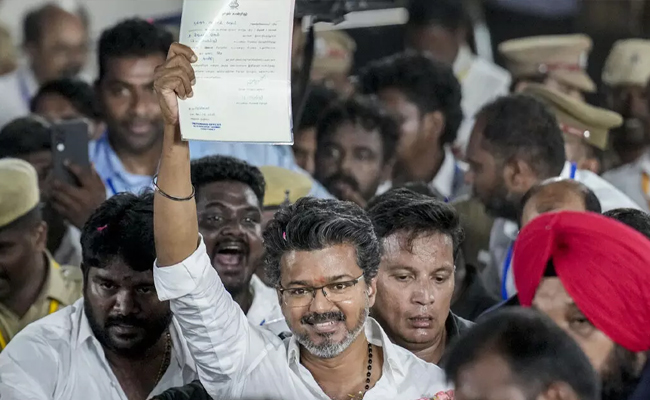
Chennai: After four days of political uncertainty and intense negotiations in Tamil Nadu, actor-politician Vijay is learnt to have secured the numbers required to form the government, sources said.
Supporters gathered outside Vijay’s residence in Chennai on Friday evening, raising slogans in support of Tamilaga Vettri Kazhagam soon after reports emerged that the party had managed to secure majority support.
Sources said Vijay is expected to meet Tamil Nadu Governor R. V. Arlekar on Friday evening to stake claim to form the government. The meeting is likely to take place around 6 pm.
In its electoral debut in the Tamil Nadu Assembly elections, TVK won 108 out of the 234 seats, dealing a major blow to the 62-year political dominance of Dravida Munnetra Kazhagam and All India Anna Dravida Munnetra Kazhagam.
However, Governor Arlekar had reportedly made it clear that the party would not be invited to form the government without proving a clear majority. Even after two rounds of discussions on Wednesday and Thursday, the Governor is learnt to have maintained his stand that letters of support from at least 118 MLAs must be submitted in the 234-member Assembly.
Apart from Vijay, TVK had the backing of 107 MLAs. Vijay had contested from Tiruchy (East) and Perambur constituencies and won both seats, meaning he would have to resign from one seat before taking oath. This increased the need for additional support.
Amid the political developments, five MLAs from the Congress party, which reportedly moved away from the DMK-led alliance, extended support to Vijay. Vijay also held discussions with leaders of Viduthalai Chiruthaigal Katchi, Communist Party of India (Marxist) and Communist Party of India.
The VCK, CPI(M) and CPI had so far been allies of the DMK. At the same time, political discussions intensified in the state over speculation that the DMK could even explore a post-poll understanding with its long-time rival AIADMK to prevent an alternative government from taking shape.
Reports had been circulating since Friday afternoon that the VCK and Left parties were likely to support Vijay. Sources later said that the VCK, CPI(M) and CPI agreed to extend the support of two MLAs each, helping TVK cross the required majority mark.
All eyes are now on the Governor’s next move and the official announcement regarding the formation of the new government in Tamil Nadu.