VB Fact-Check: Viral tweet showing hike in KSRTC ticket prices false, confirms KSRTC
Bengaluru: A viral tweet is doing rounds on social media, asking whether there has been a significant increase in ticket fares by the state operator KSRTC following the introduction of the free travel scheme. The tweet, posted by user @sAnand1405, questions the extent of the price rise, which appears to contradict the Congress government's decision to implement the "Shakthi" Yojana, offering free travel for women on KSRTC and BMTC buses.
The Viral Tweet!
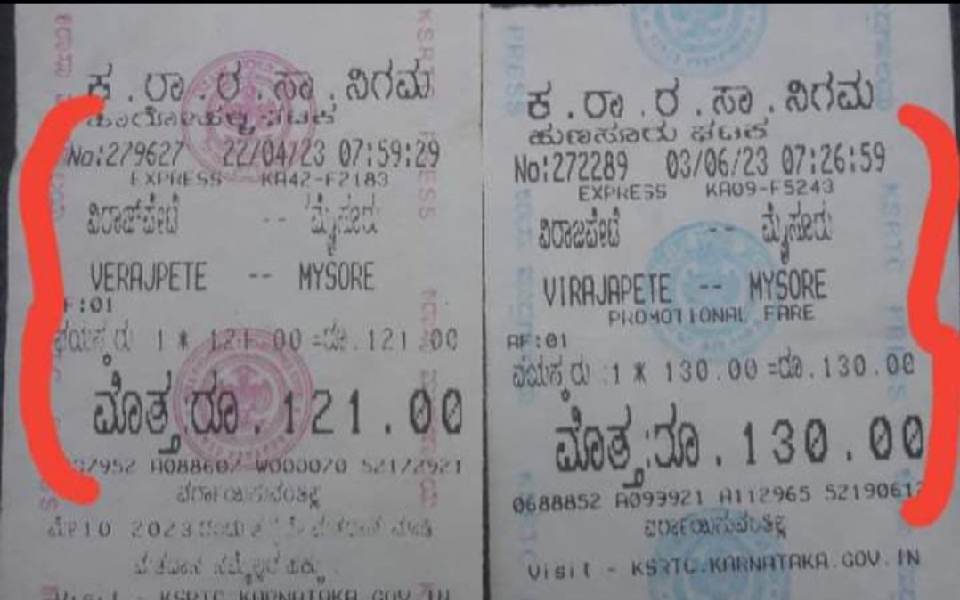
The user @sAnand1405 shared a tweet featuring a photograph of two different tickets issued on the Virajpete-Mysuru route. The tickets displayed varying fares, with one ticket indicating a price of Rs 121 distributed on 22nd April, and the other ticket showing a fare of Rs 130 distributed on 3rd June.
The user further questioned whether this was an increase done by the Congress Govt in conjunction with the newly formed government’s decision to implement 5 guarantees including the free travel for women.
The user wrote in the tweet, “Is this true? Can anyone confirm? Bus fares gone up since the bitti govt took office?”
Is this true?
— Sanjeev (@SAnand1405) June 4, 2023
Can anyone confirm?
Bus fares gone up since the bitti govt took office? pic.twitter.com/vT36fzcc9z
Fact-Check: KSRTC fares have not gone up, fares mistakenly set in electronic ticketing machines
Speaking to the Vartha Bharathi a KSRTC official confirmed that there were no rise in fares operated by the state owned KSRTC. Both the buses were operated by two different divisions and were traveling to Napoklu in Madikeri.
As seen in the photo of the tickets, the first ticket shows Harohalli depot in Ramanagara division and the second shows Hunsur division.
Meanwhile, the actual fare for the ticket from Virajpete to Mysuru, as well as in the opposite direction, is Rs 130, said the official. “The bus from Ramanagara division and another from Harohalli depot operate two buses on the same route, which is bound to Napoklu in Madikeri, the fare for this particular journey from Virajpete to Mysuru was intended to be Rs 130. However, due to an error while entering the fares into the Electronic Ticketing Machine (ETM), it was mistakenly set as Rs 121. Altough, instead of collecting Rs 130 that is the actual fare we have collected less on that particular trip operated on 22 April, which was unintentional and was a mistake,” confirmed the official.
Let the Truth be known. If you read VB and like VB, please be a VB Supporter and Help us deliver the Truth to one and all.
The Latest: Kuwait blames Iran for drone strikes as Trump casts doubt on ceasefire
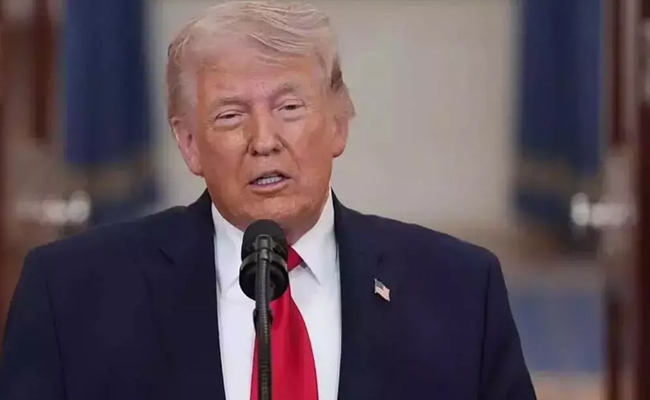
Dubai (AP): US President Donald Trump appeared to cast doubt on the effectiveness of the two-week ceasefire over Iran's continued chokehold over the Strait of Hormuz, while Kuwait accused Iran and its proxies of launching drone attacks targeting it on Thursday despite the ceasefire.
Iran's paramilitary Revolutionary Guard denied launching attacks on Persian Gulf states after Kuwait's announcement.
Israeli Prime Minister Benjamin Netanyahu offered a potential boost to ceasefire efforts in the region when he said he had approved direct talks with Lebanon. The Lebanese government has not responded as of Friday morning.
The announcement came after Israel's pounding of Beirut Wednesday killed more than 300 people. The negotiations are expected next week in Washington, according to a person familiar with the matter.
Questions remained over what will happen to Iran's stockpile of enriched uranium at the heart of tensions, how and when normal traffic will resume through the Strait of Hormuz, and what happens to Iran's ability to launch future missile attacks and support armed proxies in the region.
Talks between the United States and Iran on a resolution to the conflict are expected to start Saturday in Islamabad, with the White House saying Vice President JD Vance would lead the US delegation.
Here is the latest:
Air defence fire and explosions heard in Iran
=============================
Multiple times overnight into Friday morning, people around Iran's capital, Tehran, and other parts of the country said they heard what sounded like air defence fire and explosions.
However, Iran's government did not acknowledge any attack during that period.
After past exchanges of fire with Israel, similar incidents happened as troops remained on edge.
Japan releases more oil reserves
======================
Japan said it will release an additional 20 days' worth of oil reserves in May, in a second round to address supply uncertainty over the war in the Middle East.
Japanese Prime Minister Sanae Takaichi said the planned release of the government reserves will start in early May, after an earlier release last month.
Japan started releasing about 50 days' worth of oil reserves in March, including from those held by the state, the private sector and oil-producing Gulf nations.
As of April 6, Japan had 230 days' worth oil reserves, including 143 days' worth in government stockpiles, according to the Natural Resources and Energy Agency.
Takaichi said her government is working to secure oil imports via routes that do not include the Strait of Hormuz, while Japan seeks to diversify suppliers.
Pakistan to issue visas on arrival ahead of talks
===============================
Pakistan said Friday it would issue visas on arrival for those travelling to Islamabad for the Iran-US talks, signalling the interest in the world's media in the event.