Video of Rajyotsava awardee Mohandas Shenoy's comments on Muslims sparks outrage on social media
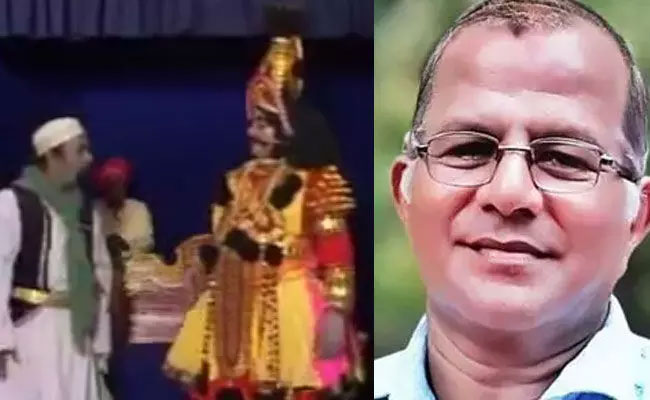
Mangaluru: A viral video of this year's Kannada Rajyotsava awardee Argodu Mohandas Shenoy making derogatory remarks about the Muslim community has sparked debate on social media.
The video clip from a Yakshagana presentation shows the artiste in the lead role of the episode, Vikramaditya, played by Argodu Mohandas Shenoy, belittling the community while speaking to a character resembling a Muslim.
Argodu is heard in the clip telling the Muslim, "This is the way your religion functions, changing everything… We write from left to right, you write from right to left… While we read the scriptures, you shout the name of Allah… What would we understand this to mean? That you aim to change everything, claiming that we did not say anything… But then, why have you not changed the place of eating?"
The artiste making the comments was confirmed to be 72-year-old Shenoy by four senior Yakshagana artistes, who wished to remain anonymous, when contacted by Vartha Bharati. Shenoy allegedly has been repeating such statements whenever he presents the character on stage. A fifth individual, who claimed to be associated with the art form for atleast two decades, also told Vartha Bharati has also confirmed the artiste making defamatory remarks in indeed Argodu Mohandas Shenoy and that the person presenting the character of the Muslim man in the episode was Ramesh Bhandary, a senior artiste from Badagutittu, the northern school Yakshagana.
The video clip has sparked widespread outrage on social media, with netizens expressing their anger regarding the statements made by the Yakshagana artiste in the role of Vikramaditya.
When contacted for comments, however, Shenoy said that he had not seen the video clip. Shenoy reportedly retired as a Yakshagana artiste two years ago.
Let the Truth be known. If you read VB and like VB, please be a VB Supporter and Help us deliver the Truth to one and all.
BJP's win in WB not through right means, communalism and SIR defeated Mamata: Raut
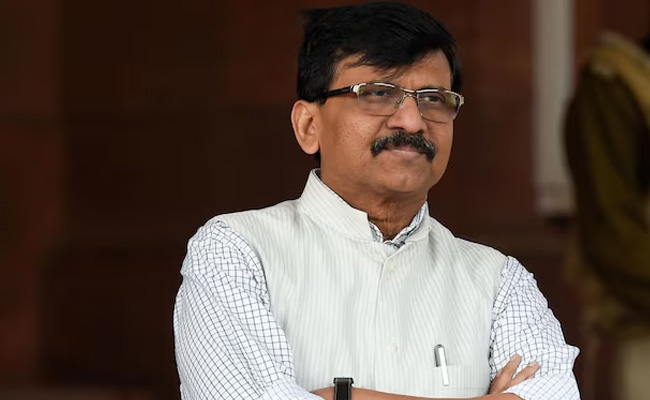
Mumbai (PTI): Shiv Sena (UBT) leader Sanjay Raut on Monday said hatred, communalism and SIR (Special Intensive Revision of electoral rolls) defeated Mamata Banerjee in West Bengal, adding that the BJP achieved victory in the eastern state "not through the right means".
Talking to reporters, Raut said the candle burns brightest right before it burns out. This is the beginning of the end of the NDA, the Rajya Sabha MP claimed.
He also said it is time for the Opposition to unite as major parties like the DMK in Tamil Nadu and TMC in West Bengal are headed for defeat.
"Hatred, communalism, SIR stopped Mamata Banerjee's victory. Her defeat was impossible. Today's BJP victory was achieved not through right means," Raut said while pointing out that 92 lakh names were deleted from the voters list in the SIR carried out by the Election Commission.
He further alleged that central para-military forces also helped BJP workers.
The BJP allied with the Election Commission, which led to TMC's defeat, Raut said.
"Even if the BJP wins in West Bengal or Assam, it is not easy for them to govern the country. What great work has the NDA done in the last one year. There is unemployment, there is inflation, people are not getting gas cylinders. India's image is being defamed," Raut said.
Reacting to the assembly poll results, NCP (SP) leader Rohit Pawar said anti-incumbency appeared to have affected the INDI bloc parties in Tamil Nadu and West Bengal.
If elections were held now, similar public sentiment could unseat those in power at the Centre and in Maharashtra, he said in a swipe at the BJP.
"It was expected that DMK in Tamil Nadu and Trinamool Congress in West Bengal would return to power, but both seem to have faced anti-incumbency. Those celebrating these results should remember that the same sentiment exists against them as well," Pawar claimed.
He alleged that Union Home Minister Amit Shah campaigned in West Bengal for 15 days, while 90 lakh names were removed through the SIR process, which helped clear the path for BJP's victory.
Pawar further criticised the BJP, alleging that its workers vandalised an office of the Trinamool Congress in West Bengal amid declaration of results.
"Even before the final results were declared, such incidents show how governance may unfold in the future," he said while condemning the act.