Vijayapura emerges as investment magnet with ₹17,000 crore proposals across sectors

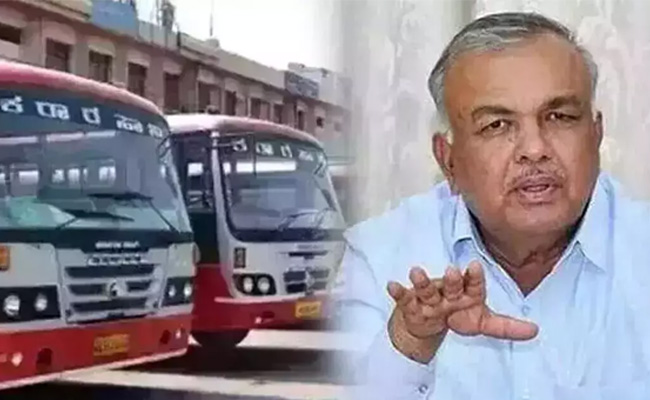
Bengaluru: The district of Vijayapura in Karnataka is poised to witness an infusion of industrial activity with investment proposals worth nearly ₹17,000 crore. The state’s Minister for Large and Medium Industries, MB Patil, who also oversees the district as its in-charge minister, shared on his 'X' account, that a number of companies have shown concrete interest in setting up projects across diverse sectors including renewable energy, food processing, beverage production and component manufacturing.
Among the major developments, the Reliance Group’s Campa Cola brand has received formal approval to establish a cold beverages and bottling facility in the Mulawada Industrial Area Phase 2. Spread across 100 acres, the project involves an estimated investment of ₹1,622 crore and is expected to generate around 1,200 direct employment opportunities.
According to a report published by The Hindu, other proposals include a ₹350 crore food grain processing unit by Wings Vitera and a ₹360 crore investment by wind turbine blade manufacturer Suzlon. In addition, plans are underway to set up aviation training institutes in view of the upcoming airport in Vijayapura, with companies such as Melstar expressing interest in the initiative.
Patil indicated that these developments follow a series of investment commitments secured during the recent 'Invest Karnataka-25' Global Investors Meet.
In the renewable energy space, significant proposals have been submitted by ReNew Power, Rsolec and Hexa Climate, collectively amounting to approximately ₹16,700 crore. Alongside, there is notable interest from firms engaged in solar energy, food and beverage production, textiles and sugarcane-based ethanol manufacturing, with other proposals currently under discussion.
Beyond Vijayapura, the Karnataka government has also approved a set of industrial projects in other districts. Zenfold Biosciences has proposed an enzyme production unit in Chamarajanagar with an investment of ₹490 crore, while Astral Coatings will set up a paints and adhesives facility in Vemagal, Kolar, with a proposed outlay of ₹174.99 crore. Wipro Hydraulics is investing ₹499 crore in a copper lamination unit near Devanahalli, Bengaluru Rural.
Vijayapura Set for an Industrial Leap!
— M B Patil (@MBPatil) August 4, 2025
Vijayapura is stepping into a new era of industrial growth with investment proposals worth over ₹17,000 crore across diverse sectors. I'm glad to share that Reliance’s #CampaCola unit at Mulawad has received approval for ₹1,622 crore,… pic.twitter.com/OVu9WnzlLS
Let the Truth be known. If you read VB and like VB, please be a VB Supporter and Help us deliver the Truth to one and all.
Congress using hijab issue to pacify minority anger, alleges Karnataka LoP R Ashoka
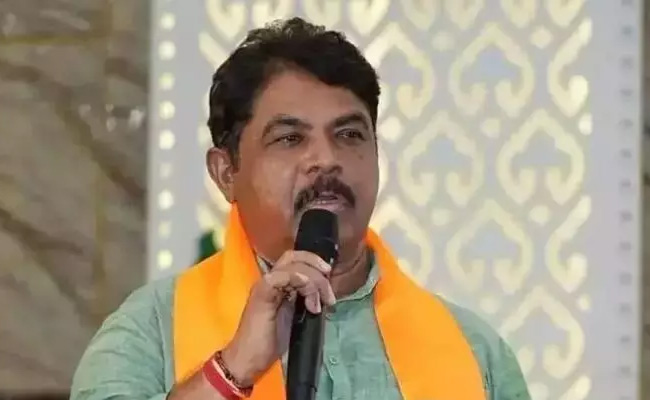
Bengaluru: Leader of Opposition in the Assembly R. Ashoka has accused the Congress government of using the hijab issue to placate what he described as discontent among minority voters after the Davanagere by-election.
In a post on X on Wednesday, Ashoka alleged that the state government, instead of addressing issues such as price rise, corruption, farmers’ distress and law and order, was attempting to retain its minority vote base by reviving the hijab issue.
Referring to the 2022 dress code introduced by the BJP government, which prohibited hijab in schools and colleges, Ashoka said the Karnataka High Court had upheld the policy and emphasised the importance of discipline in educational institutions.
He questioned the Congress government’s move to revisit the issue and asked whether setting aside the court-backed policy to benefit one community could be described as secularism.
Ashoka further alleged that while the government was willing to permit hijab, it continued to prohibit saffron shawls.
He accused the government of dividing students on religious lines rather than treating schools and colleges as spaces of equality.
Drawing a comparison with Mamata Banerjee’s government in West Bengal, Ashoka claimed that excessive appeasement politics had harmed the state and warned that the Congress in Karnataka could face a similar political response.
He said voters in Karnataka would teach the Congress a lesson for what he termed “vote-bank politics” and for compromising constitutional and judicial principles.