Vijayendra slams Cong govt over alleged medicine shortage, irregularities in health dept
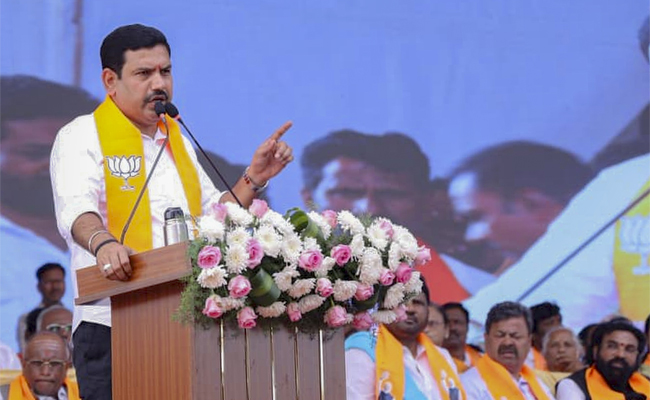
Bengaluru (PTI): Karnataka BJP president B Y Vijayendra on Wednesday hit out at the Congress government over alleged medicine shortages, large-scale irregularities and disruption of services in the health department.
The situation had deteriorated to such an extent that doctors were forced to protest on the streets, he claimed.
Addressing a press conference here, he said the Siddaramaiah-led government lacked the will to resolve pressing public issues and accused it of indulging in "blame politics" instead of governance.
"Due to the irresponsibility of this Congress government, the health department itself is in the ICU. There is a severe shortage of medicines in government hospitals. The 108 ambulance services are facing severe problems. Doctors have been pushed to the streets to protest. The Congress government celebrates 1,000 days in power with achievement conventions, but it has failed to solve real problems," he said.
He criticised the state government for allegedly shutting down Jan Aushadhi centres located on government hospital premises, claiming that needy patients are suffering as they are not getting medicines.
"For the past two months, government doctors themselves have been advising poor patients to buy medicines from private pharmacies because medicines are unavailable in hospitals," he alleged.
Vijayendra further alleged that the state government has reportedly not cleared Rs 143 crore in dues to institutions providing CT scan and MRI services.
"As a result, needy patients in rural and urban areas are unable to access these services. Pregnant women are facing hardships. Doctors are forced to protest on the streets...This government claims to be one that delivers on its promises. But does it have even the slightest concern for how poor people are struggling in the healthcare sector," he alleged.
The BJP state president claimed that the Congress government under Chief Minister Siddaramaiah and its deputy D K Shivakumar is not pro-poor; instead, it is a government that supports middlemen.
"Who is responsible for the medicine shortage in government hospitals and medical colleges? The state government and the concerned ministers are responsible. According to information available to me, under pressure from influential individuals, irregularities are taking place in medicine procurement. Instead of purchasing medicines through authorised central and state agencies, the government has moved to fragmented district- and taluk-level tenders," he claimed.
He further alleged that due to commission demands of 15-20 per cent, many companies and public enterprises are not participating in tenders, worsening the system.
Vijayendra claimed that the Karnataka State Medical Supplies Corporation's procurement system has been sidelined, leading to an artificial shortage of medicines.
He also alleged that a private individual from Mangaluru is controlling the state's medicine procurement system, supplying medicines to most government hospitals.
"This has led to market prices being inflated. Medicines costing Rs 100 are reportedly being purchased for Rs 300. I will provide more documents and evidence in the coming days," he claimed.
He also alleged that staff associated with the 108 ambulance services have not been paid salaries for the past eight to nine months.
"The government must take responsibility and reform the system instead of protecting middlemen," he added.
Let the Truth be known. If you read VB and like VB, please be a VB Supporter and Help us deliver the Truth to one and all.
KKR defeat LSG via Super Over
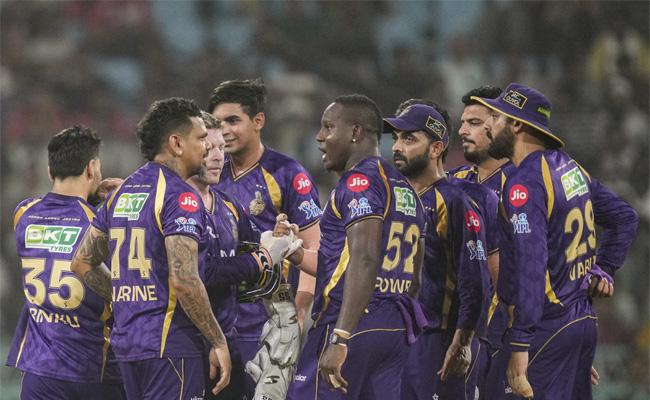
Lucknow (PTI): Kolkata Knight Riders edged Lucknow Super Giants via Super Overs in a battle between two bottom-placed teams in the IPL, here on Sunday.
Chasing a modest 156, LSG suffered a batting collapse and managed to tie the contest and take it to Super Over with No. 9 Mohammed Shami striking a last-ball six against a wayward Kartik Tyagi, who leaked 16 runs in the final over.
But Sunil Narine bowled a stunning Super Over conceding just one run and taking two wickets to give KKR an easy target.
Rinku Singh then finished the chase with a boundary off first ball from Prince Yadav.
Earlier the KKR were in deep trouble with 93/7 in 15 overs but Rinku smashed a sensational 83 not out from 51 balls including four sixes in a row in the final over to lift them to 155/7.
Cameron Green (34) was the only other batter to reach double-digit scores as KKR suffered a familiar batting meltdown with Mohsin taking his maiden fifer.
In reply, LSG continued their dismal show with the bat to succumb to their fifth loss in a row.
Brief Scores:
Kolkata Knight Riders 155/7; 20 overs (Rinku Singh 83 not out, Cameron Green 34; Mohsin Khan 5/23). Lucknow Super Giants 155/8; 20 overs (Rishabh Pant 42). KKR won via Super Over.