Vishwavani editor Vishweshwar Bhat, staff booked for report on Deve Gowda family
Bengaluru, May 27: A case has been registered against the editor of a Kannada daily and its editorial staff for publishing a report about trouble within JDS chief and former prime minister H D Deve Gowda's family after the Lok Sabha election drubbing.
According to the complaint filed by Janata Dal (Secular) state secretary S P Pradeep Kumar, the newspaper, 'Vishwavani', had published a "false report" on Saturday, which created an impression that there was commotion and confusion among Gowda's grandchildren.
A first information report (FIR) was filed on Sunday against the editor, Vishweshwar Bhat, and the editorial staff under Sections 406 (criminal breach of trust), 420 (cheating) and 499 (defamation) of the Indian Penal Code, police said Monday.
Kumar said the report stated that Chief Minister H D Kumaraswamy's son, Nikhil Kumaraswamy, reportedly shouted at his grandfather, Deve Gowda, holding him responsible for his defeat at the hands of a woman in Mandya.
Nikhil had lost to actor Sumalatha Ambareesh, an Independent candidate backed by the Bharatiya Janata Party, by over one lakh votes.
Reacting to the FIR, Bhat told PTI the report was a source-based story and if anybody had any objection, they could have issued a clarification, which, he said, the paper would have carried diligently as it had done in the past.
"I am not able to figure out which state we are living in. I have been an editor for the past 19 years and never ever has such an incident happened," Bhat said. "At the most, a defamation case can be registered, but registering an FIR is like setting a new precedent. I will definitely challenge it in court."
Gowda's another grandson, Prajwal Revanna, who won from Hassan, and Congress candidate D K Suresh were the only leaders of the ruling coalition who won. Of the 28 seats in the state, the BJP bagged 25.
Let the Truth be known. If you read VB and like VB, please be a VB Supporter and Help us deliver the Truth to one and all.
Defeat of Constitution Amendment Bill betrayal of nation's woman power: Adityanath
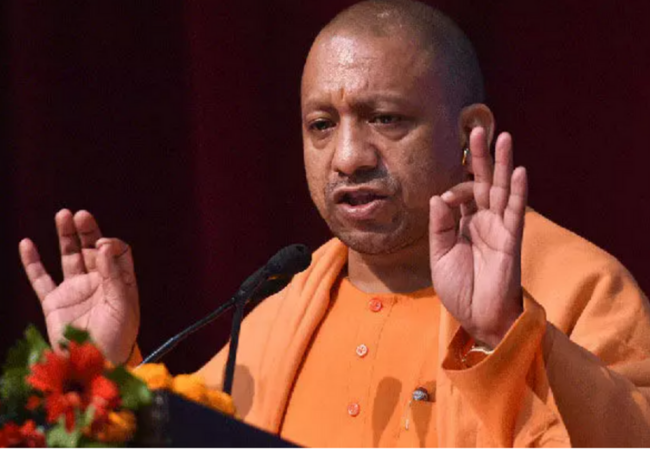
Lucknow (PTI): Uttar Pradesh Chief Minister Yogi Adityanath termed the defeat of the Constitution Amendment Bill to implement reservation for women in legislatures in 2029 and increase the number of seats of the Lok Sabha "betrayal of the woman power" of the nation.
A Constitution Amendment Bill to implement 33 per cent reservation for women in legislatures in 2029 and increase the number of Lok Sabha seats to 816 was defeated on Friday.
In a post on X in Hindi, late on Friday night, Adityanath said, "Today, a dark chapter has been added to the history of India's great democracy. The Opposition's obstruction of the passage of the Constitutional Amendment Bill essential for the 'Nari Shakti Vandan Adhiniyam' is a blow to the honour of 'Bharat Mata' (Mother India). It is a betrayal of the entire woman power of the nation; it is an infringement upon their democratic rights.
"The Congress-led 'INDI' alliance has exposed its anti-women mindset. The women of the nation are watching and understanding everything. They will remember this deceit and injustice, and when the time comes, they will surely give a reply. Under the leadership of our Prime Minister @narendramodi ji, the NDA alliance will continue its unwavering efforts to protect the honour, dignity, and rights of women, and to ensure their empowerment."
While 298 members voted in support of the Bill in the Lok Sabha, 230 MPs voted against it. The Bill required 352 votes for a two-thirds majority.
According to the Constitution (131st Amendment) Bill, Lok Sabha seats were to be increased to 816 from the current 543 to "operationalise" the women's reservation law before the 2029 parliamentary polls, following a delimitation exercise based on the 2011 Census.
Seats were also to be increased in state and Union Territory assemblies to accommodate 33 per cent reservation for women.
This was for the first time that a Bill under the Modi government was defeated in Parliament.