Water a priority for Karnataka voters: reveals a survey
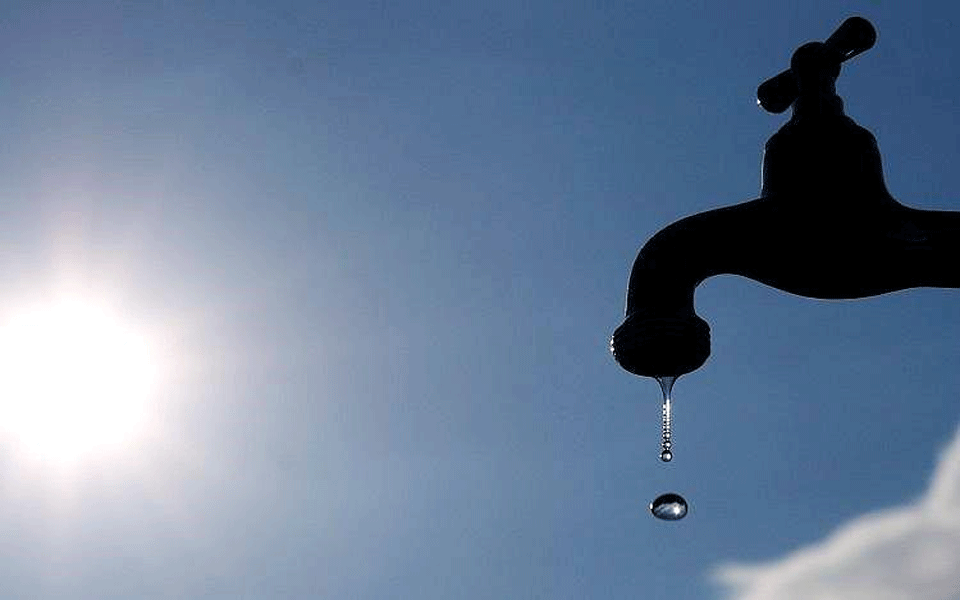
Bengaluru: Improving the quality and supply of water in the state is one of the most important issues for voters in poll-bound Karnataka, a survey released on Saturday said.
The Karnataka Voter Survey 2018 that was released by the Chief Election Commissioner (CEC) Om Prakash Rawat here stressed this point.
Several districts of Karnataka have been facing water crisis, with the state's north-western drought-prone districts of Bagalkot, Belagavi, Dharwad and Gadag lacking water even for drinking needs.
Better electricity supply, improved roads and environment protection were among the other most important issues for voters in the urban areas.
Voters in rural parts, meanwhile, stressed more on better schools, roads and an increase in the number of public health centres.
The most important factor for the electors to cast their vote was found to be the candidate, followed by the party and then the party's Chief Ministerial candidate.
About 42 per cent of the voters surveyed said they would vote for a particular political party based on their Chief Ministerial candidate, with 67 per cent of the total number of people surveyed agreeing that the candidate's party was a reason to cast vote for him/her.
According to the report, nearly 36 per cent of the voters considered the candidate's religion and caste important.
The survey's urban participants believed that the current government performed poorly on the issues of improving public facilities, eradicating corruption and job training.
Only 31 per cent of the people surveyed were happy with the state government's much-touted Indira Canteens, which provide food for the poor at subsidised rates.
About 79 per cent of the people had reported that they were happy with the state government's subsidised food scheme, "Anna Bhagya".
The Congress-led state government was given a score of 7.09 on 10 for its overall performance in the five years since 2013, as per the survey.
"The voters' perceptions highlight the need for awareness on the criminal, financial and other background of the candidates as well as transparency and accountability of political parties. Only then can a voter make an informed choice," asserted the survey.
Issues related to terrorism were among the least of the priorities for urban participants, the survey noted.
The survey was conducted by the New Delhi-based Association for Democratic Reforms (ADR), an organisation working for electoral reforms, and Daksh, a Bengaluru-based civil society body.
Let the Truth be known. If you read VB and like VB, please be a VB Supporter and Help us deliver the Truth to one and all.
KSRTC introduces gender ticketing in buses across Kerala
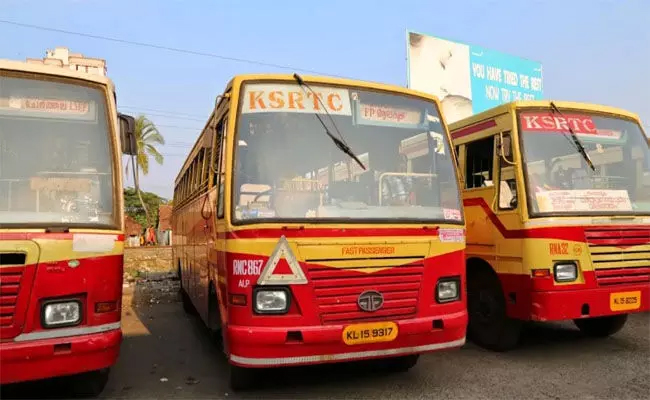
Thiruvananthapuram (PTI): The KSRCTC on Saturday began implementing gender ticketing in buses operating across the state.
According to a Kerala State Road Transport Corporation (KSRTC) circular issued on Friday, the gender ticketing system is intended to record whether a passenger is a woman, a man or a child in tickets issued on KSRTC buses from Saturday.
To facilitate the system, Electronic Ticketing Machines (ETMs) have been updated.
The circular stated that conductors in all KSRTC depots should record the gender category of passengers while issuing tickets through the ETMs.
Options for women, men, and children have been included in the ETMs to identify passenger categories when issuing tickets.
The printed tickets generated by the ETMs will also indicate the passenger's category, officials said.
The UDF had promised free KSRTC travel for women across the state during the Assembly election campaign.
UDF, which won 102 of 140 seats, would soon form the government after the Congress party finalises the discussion on the next Chief Minister.
The introduction of gender ticketing is being viewed as an effort to estimate the number of women travelling daily on KSRTC buses before implementing the poll promise.
Some conductors have reportedly raised concerns over the additional time required to record passenger details, especially during rush hours.