Water crisis hits Ballari’s jeans industry as over 100 units shut temporarily, hundreds left jobless

Ballari: A severe water shortage in Karnataka's Ballari is crippling the region’s jeans industry, leading to the temporary closure of over 100 jeans units and leaving hundreds of workers unemployed. The crisis, which has been ongoing for over a month, has reportedly left the industry in turmoil as many units that are still running are using tanker water, which is expensive.
Ballari, often referred to as the "Jeans Capital" of India, is home to 732 jeans production units, which rely heavily on water-intensive washing processes. The industry association has requested the administration to provide sufficient water to run the units, as reported by The New Indian Express on Tuesday.
All the 732 jeans factories in Ballari depend on fifteen washing units to finish their products. Although water shortages have been a recurring issue every summer for the past decade, no permanent solution has been found, the report added.
The situation has reached a critical point, with many units halting production due to the skyrocketing cost of water. Industry associations have appealed to the local administration for a more reliable water supply, but their repeated requests have largely been ignored by both officials and political leaders.
An owner of one of the units noted that summer started 15 days early this year which exacerbated the situation. “Instead of waiting and paying more money to wash jeans products, some owners have shut their units for four to five months. This has left a large number of people unemployed,” TNIE quoted the owner as saying.
Meanwhile, owners of the jeans washing units are pinning their hopes on the apparel park planned by the Karnataka state government, which is expected to provide a dedicated water pipeline from the Tungabhadra Dam to address the ongoing water shortage.
Let the Truth be known. If you read VB and like VB, please be a VB Supporter and Help us deliver the Truth to one and all.
SC notice to Centre on PIL against Muslim personal law sections being 'discriminatory' against women
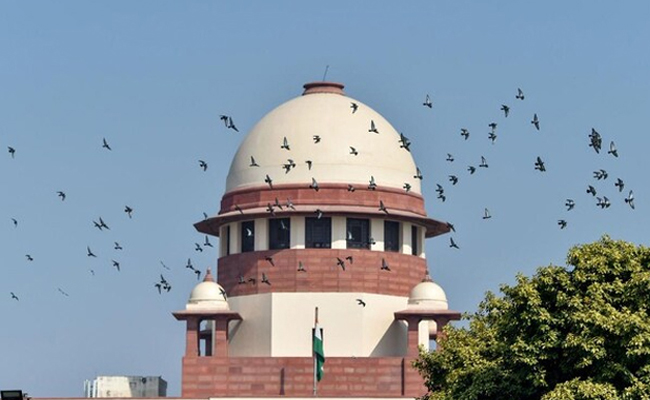
New Delhi (PTI): The Supreme Court on Thursday sought the Centre's response on a PIL challenging the constitutional validity of certain provisions of the Muslim Personal Law (Shariat) Application Act, 1937, on the ground that those are allegedly discriminatory against women.
A bench of Chief Justice Surya Kant and Justices Joymalya Bagchi and Vipul M Panchol took note of the submissions made by lawyer Prashant Bhushan, who appeared in the matter for petitioners Poulomi Pavini Shukla and the Nyaya Naari Foundation, and issued a notice to the Union Ministry of Minority Affairs.
The plea says the current Shariat inheritance rules are "manifestly discriminatory" against women, often granting them only half or less of the share allocated to their male counterparts.
Bhushan said the 1937 Act violates Article 14 (right to equality) of the Constitution.
He said matters of succession are civil in nature and do not constitute an "essential religious practice" protected under Article 25.
"Saying women will get half or even less than half compared to male counterparts is discriminatory," the lawyer said.